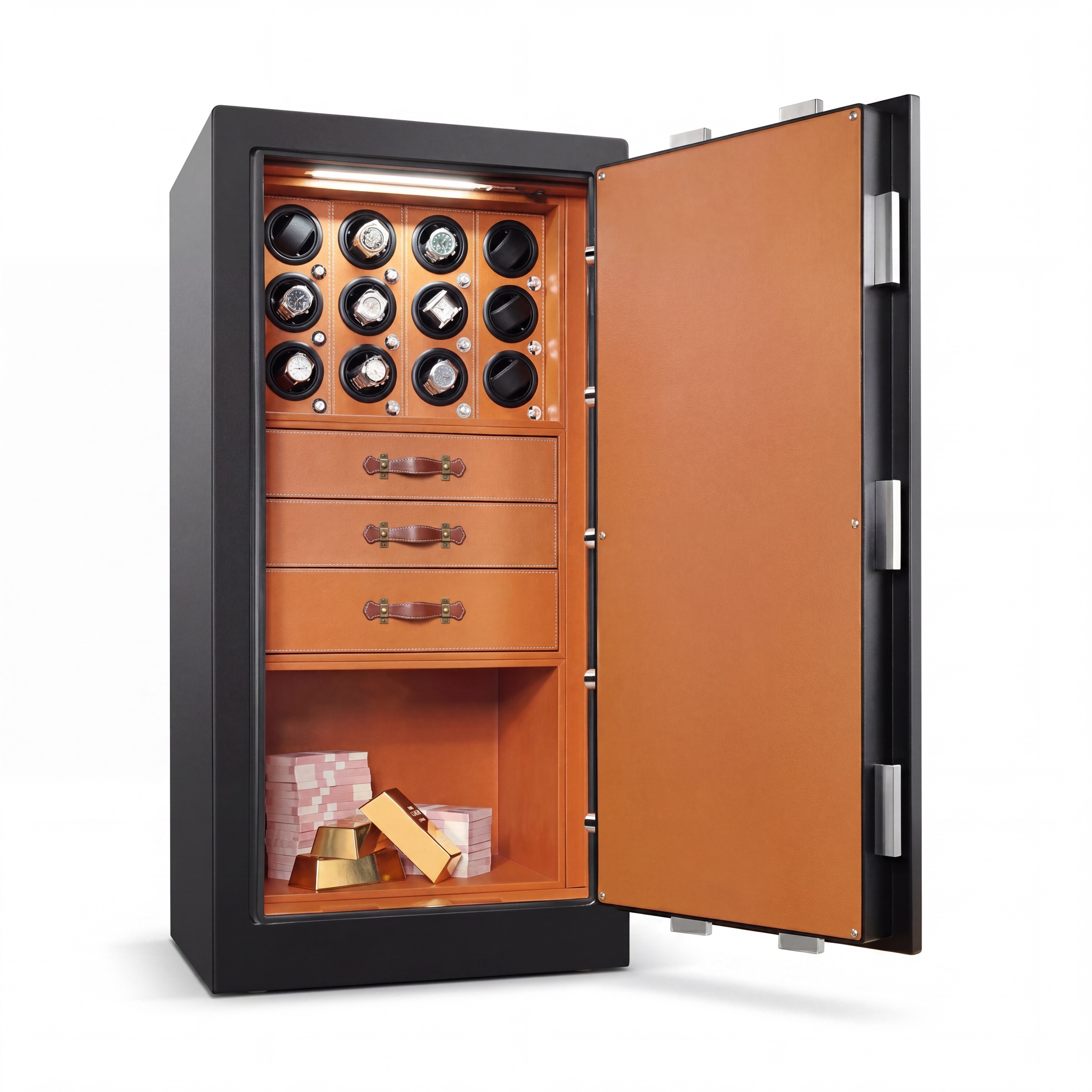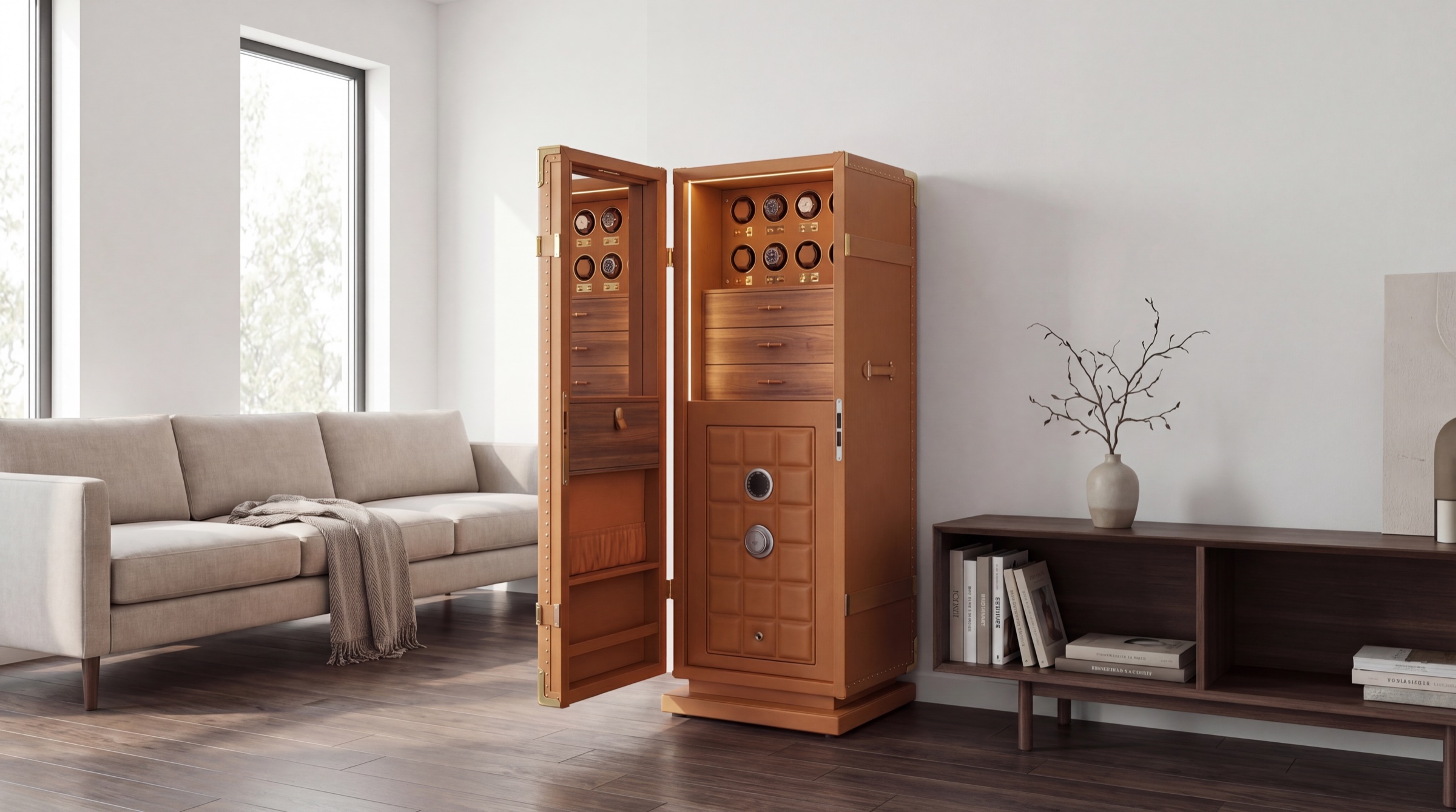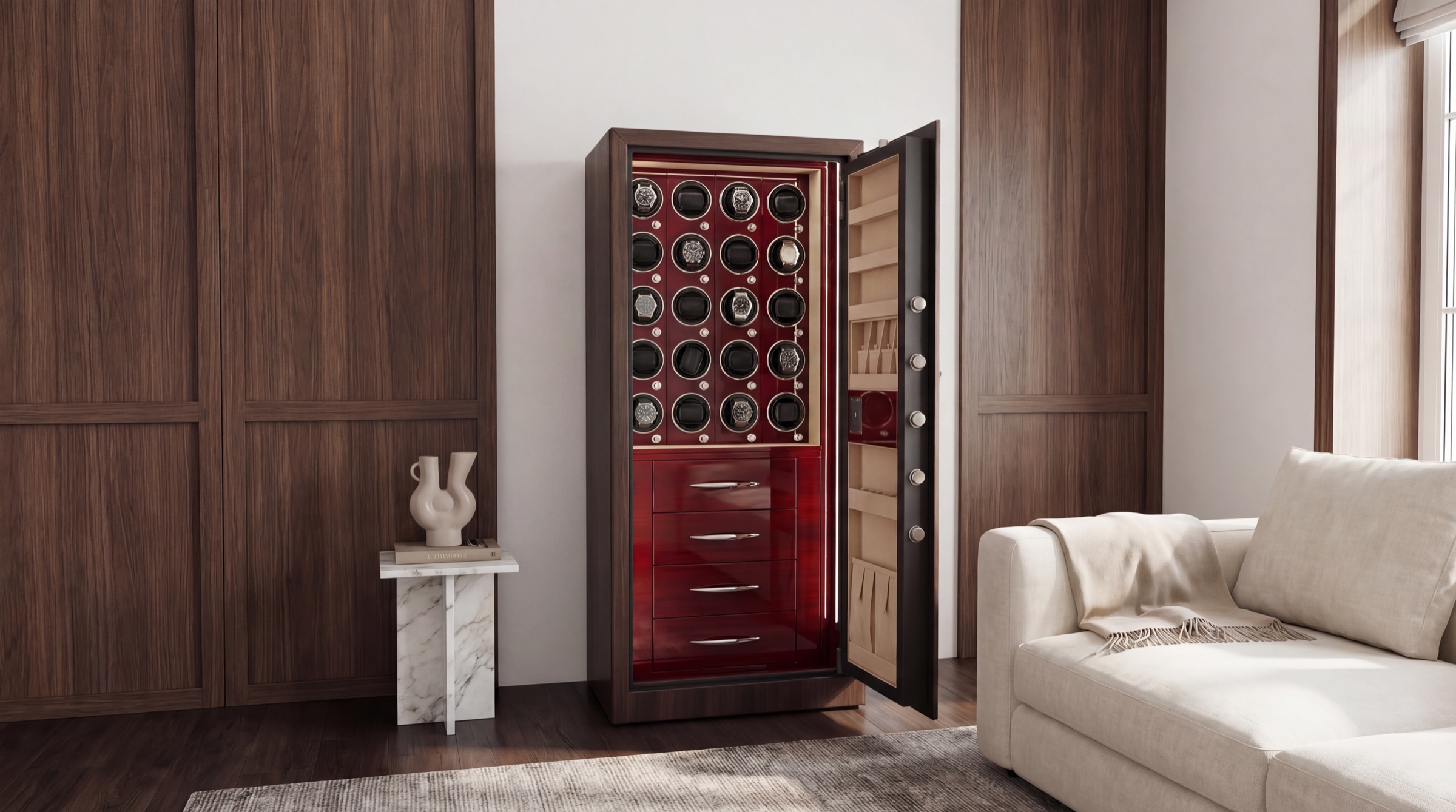
Safe anchoring means physically bolting your safe to the floor or wall so it cannot be carried out, tipped over or pried open. With a watch safe, weight is the first line of defence — a body of 200 to 600 kg cannot be moved on impulse — but only correct anchoring makes that protection permanent. Anyone installing a serious watch safe should plan weight, substrate and fixing method together from the start.
This is precisely where many installations fall short: the safe sits in the room weighing a quarter of a tonne, yet was never bolted down — and so loses part of the insurance-relevant protection it was bought for.
A heavy body raises the barrier but does not replace fixing. Two or three people with a sack truck and a little time will move 300 kg. Professional burglars rarely try to crack a safe on site — they carry the whole unit away and open it at leisure.
That is why most makers and insurers require anchoring above a certain value threshold. It stops the safe being carried off and, just as importantly, gives it a backstop so that pry and attack attempts have nothing to leverage. Weight is the foundation; anchoring is the lock between safe and building.
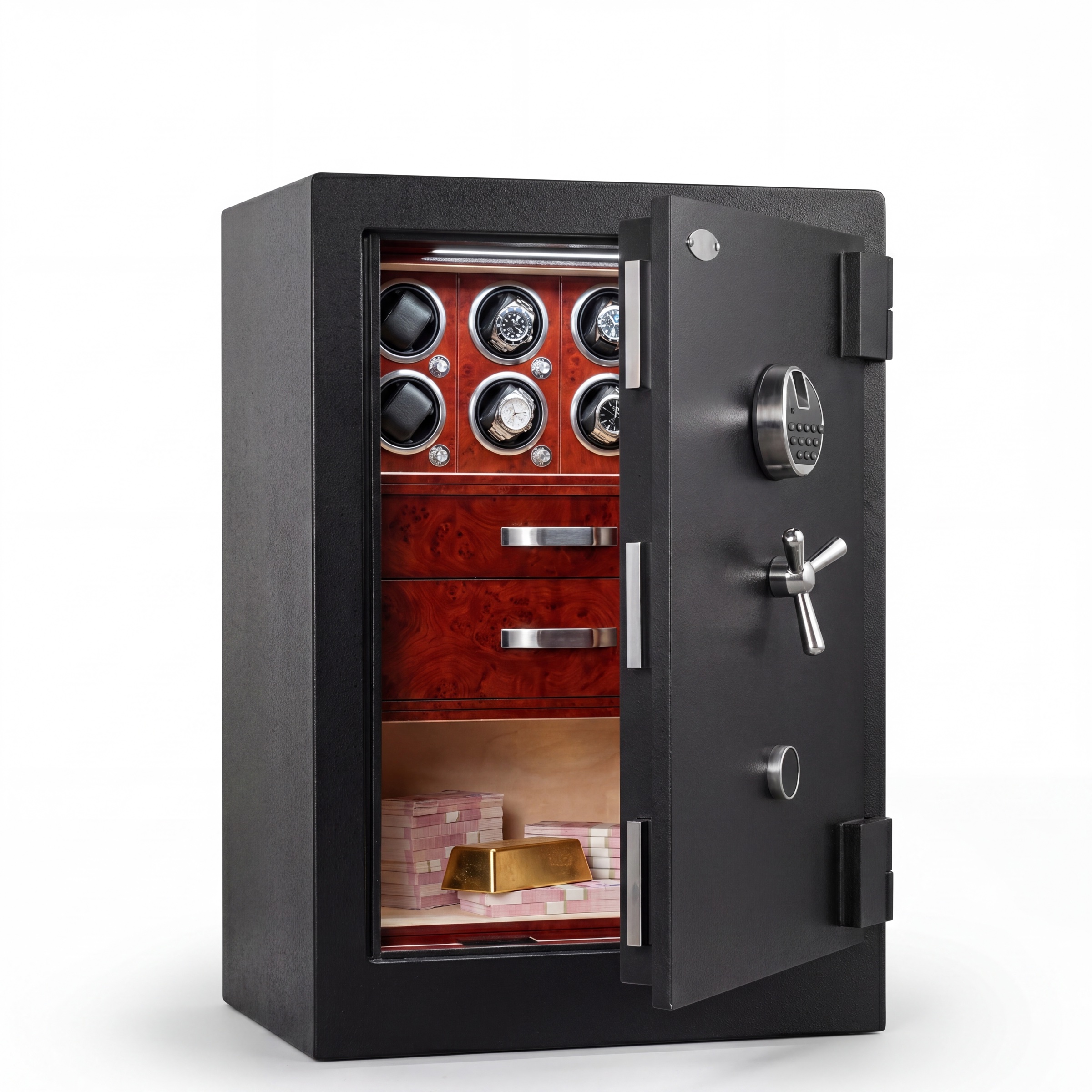
Most freestanding safes come with factory-prepared anchoring holes in the base, often with additional points in the back wall. Heavy-duty expansion or chemical anchors are set through these into the load-bearing substrate. The substrate is decisive: concrete carries the load effortlessly; screed or timber boards do not.
With the Grand Cabinet and our Standard Safes, this is handled by specialist delivery with professional installation: we assess the substrate, set the anchors to standard, and document the install.
"An unanchored safe isn't a safe — it's a heavy box with a good lock."
Many policies, however, make recognition of that grade conditional on lighter safes being correctly anchored. A common rule of thumb: below roughly 1000 kg, bolting down is mandatory.
Ignore that condition and the insurer can reduce a claim — even on a high-security safe. VdS and ECB·S, the recognised European certification bodies, explicitly assess the intended anchoring as part of certification. Confirm what your policy requires before the safe is in place.
The larger and heavier the safe, the more robust the foundation needs to be — and the more important it is to spread the load across several anchor points. The table below maps our build sizes to a sensible approach.
| Model | Height | Weight (approx.) | Recommended anchoring |
|---|---|---|---|
| Standard Safe 85 cm | 85 cm | 200–280 kg | Floor, 2–4 anchors |
| Standard Safe 120 cm | 120 cm | 300–400 kg | Floor + back wall |
| Standard Safe 170 cm | 170 cm | 450–600 kg | Multi-point floor + back wall |
| Grand Cabinet | bespoke | project-dependent | Structurally planned, multi-point |
If you are building or renovating anyway, you have a real advantage: the anchoring can be designed in from the outset. Three points are decisive — the load capacity of the floor slab for safes on upper storeys, the exact floor build-up, and a clear delivery route for 200–600 kg.
Thresholds, door widths, tight staircases and lift capacity all need checking too. Owners who work out the right safe size while choosing the location avoid the expensive discovery that the safe they want simply cannot reach the spot they want it in.
Drilling is not always possible — natural stone, underfloor heating or rented property all rule it out. In those cases the alternatives are wall anchoring, a bolted steel spreader plate to distribute the load, or integrating the safe into built-in furniture. For very heavy bodies, dead weight combined with a tight recess can suffice — but that has to be judged case by case.
Either way, fixing belongs in expert hands. Our atelier near Zürich plans anchoring and delivery logistics with you — reach us through the configurator or directly via the contact page before the first anchor is set.
Yes — weight slows a removal but does not prevent it. Most insurers require floor anchoring below roughly 1000 kg, and skipping it can let them reduce a claim even on the best-built safe.
Depending on the build size, between about 200 and 600 kg. The Standard Safe 85 cm is around 200–280 kg and the 170 cm reaches up to 600 kg, while the Grand Cabinet is project-dependent.
Yes. For natural stone, underfloor heating or rented property, options include wall anchoring, a bolted steel spreader plate, or integrating the safe into built-in furniture. The right method depends on the substrate and should be assessed professionally.
A load-bearing concrete floor is ideal because expansion or resin anchors grip securely. With screed the anchor must reach into the concrete below, and timber floors usually need a steel spreader plate or wall anchoring instead.
Yes. Professional installation is available on request: we assess the substrate, set the anchors to standard, and document the install so it satisfies your insurer.
Indirectly, yes. The cover limit follows the EN 1143-1 resistance grade, but many policies only recognise that grade if the safe is correctly anchored. Confirm your policy's exact conditions before installation.
Book a no-obligation personal consultation with a Kronberg advisor. We'll guide you through every option.