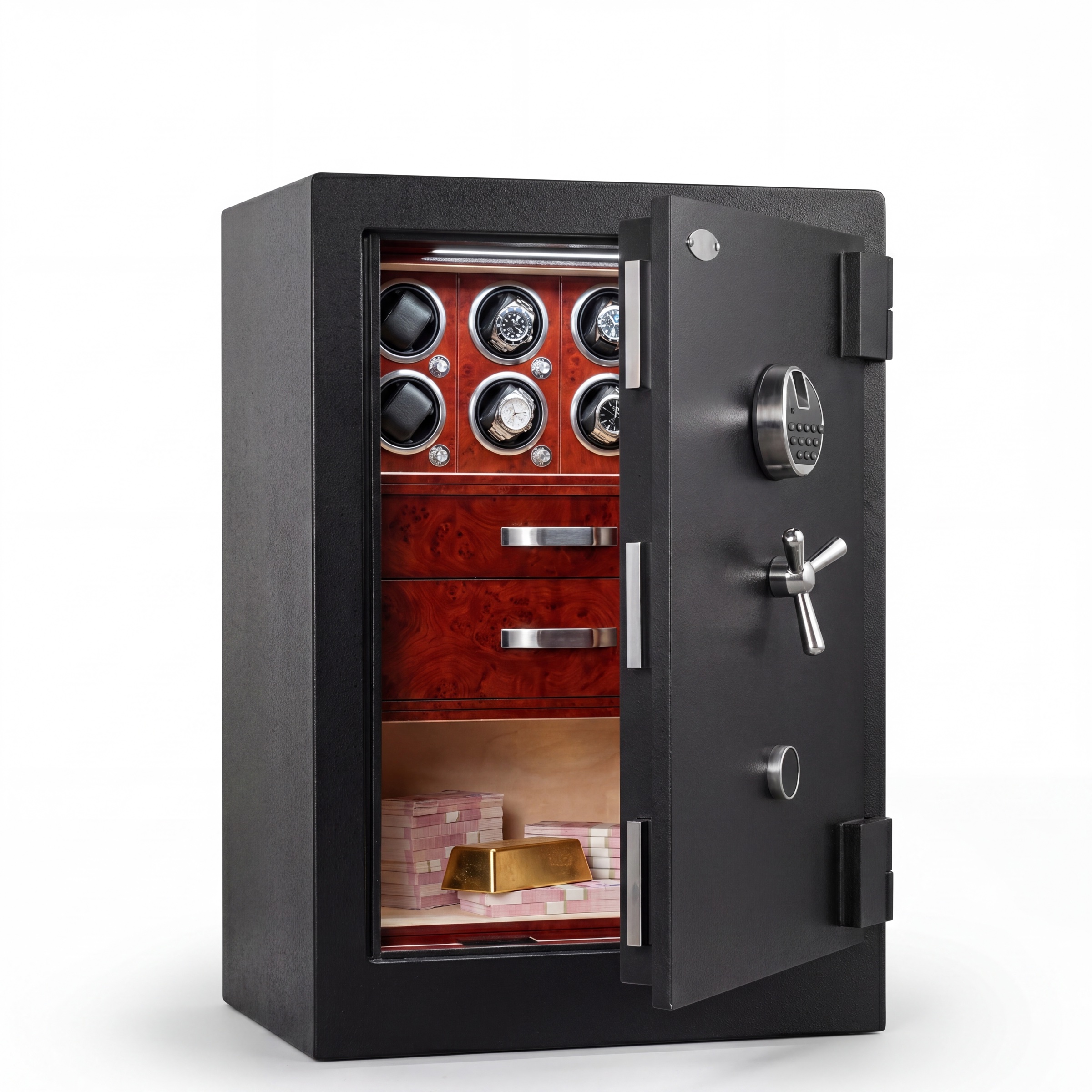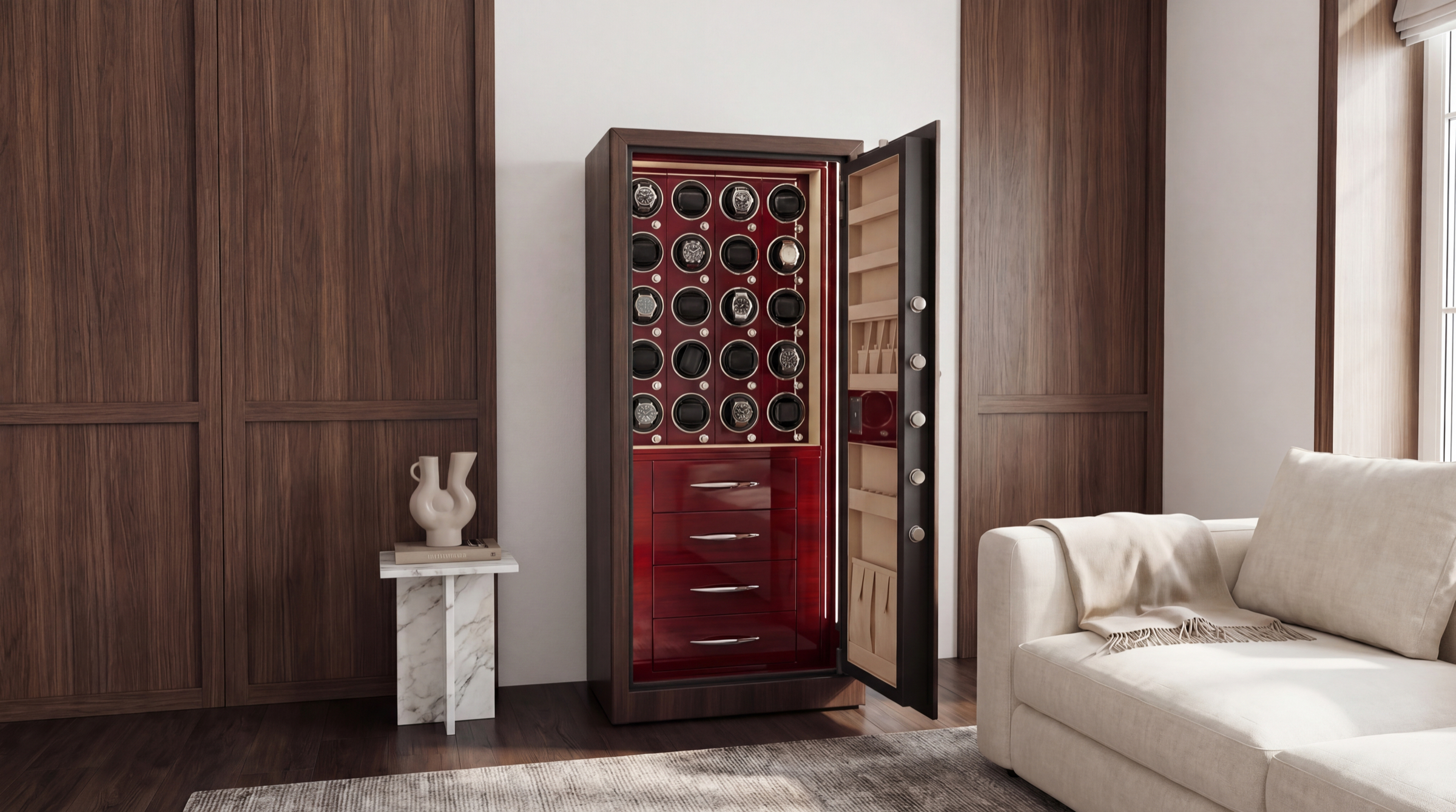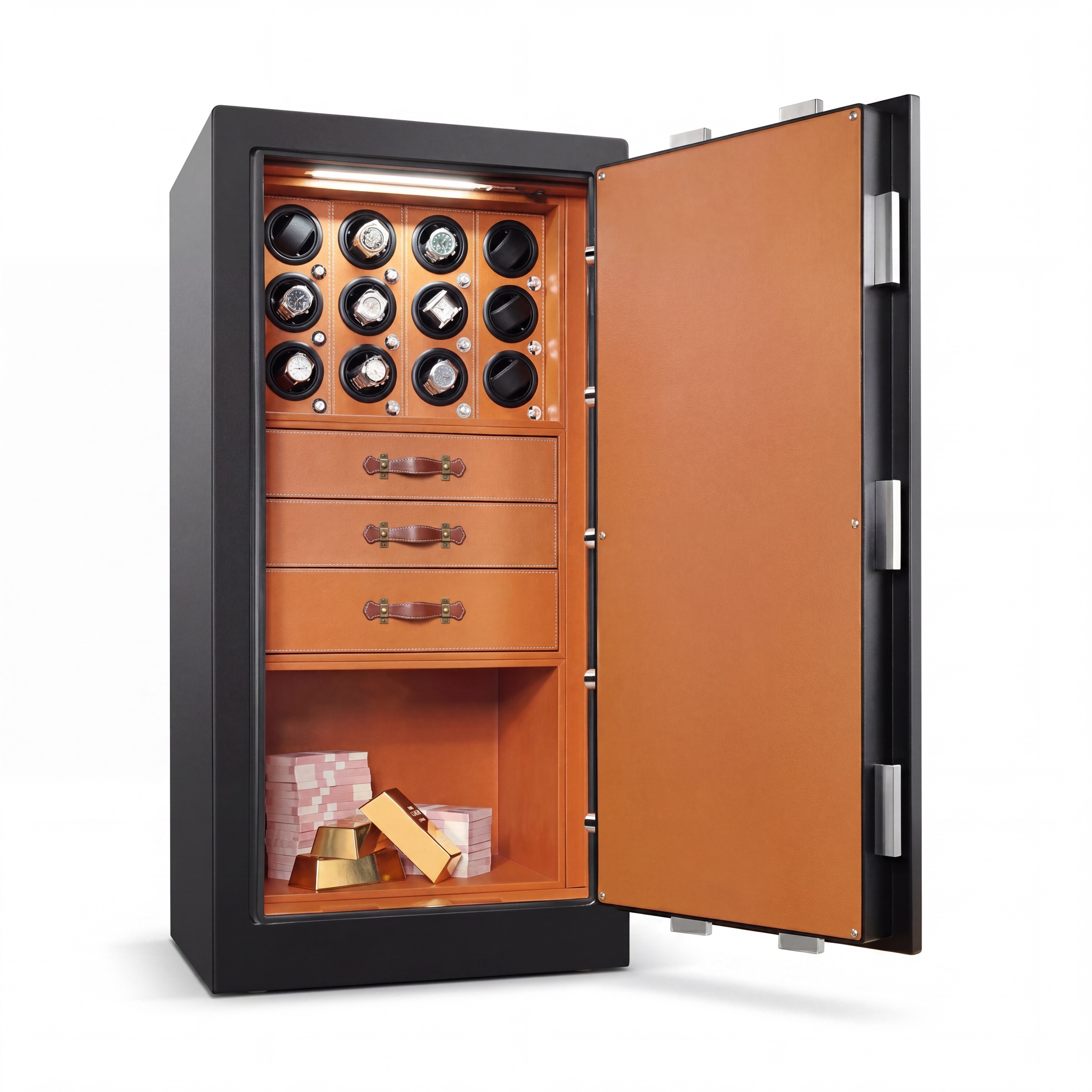
When choosing a safe lock for a watch safe, collectors face two paths: an electronic safe lock with a keypad code, or a mechanical safe lock opened by a dial combination or double-bit key. Correctly certified, both are equally secure — the real differences are convenience, lifespan and maintenance. What matters is not the technology itself but the tested lock class under EN 1300.
A mechanical combination safe lock works purely through a wheel pack turned by a dial. It needs no power, no battery and no electronics — the combination is read off precision-machined wheels. This design has been proven for over a century and is virtually immune to ageing.
An electronic safe lock uses a battery-powered keypad that releases a bolt via a small motor or solenoid. The code is verified digitally, often with features such as a penalty lockout after wrong entries, multiple user codes and an audit trail. Importantly, the battery sits in the external keypad — when it runs flat, your stored code is never lost.
Security is defined by testing, not by technology. The relevant standard is EN 1300, which classifies locks from A to D — the higher the class, the more resistant to manipulation. A Class B electronic lock is exactly as resistant as a Class B mechanical one.
At Kronberg Collection the lock is always matched to the construction of the body.
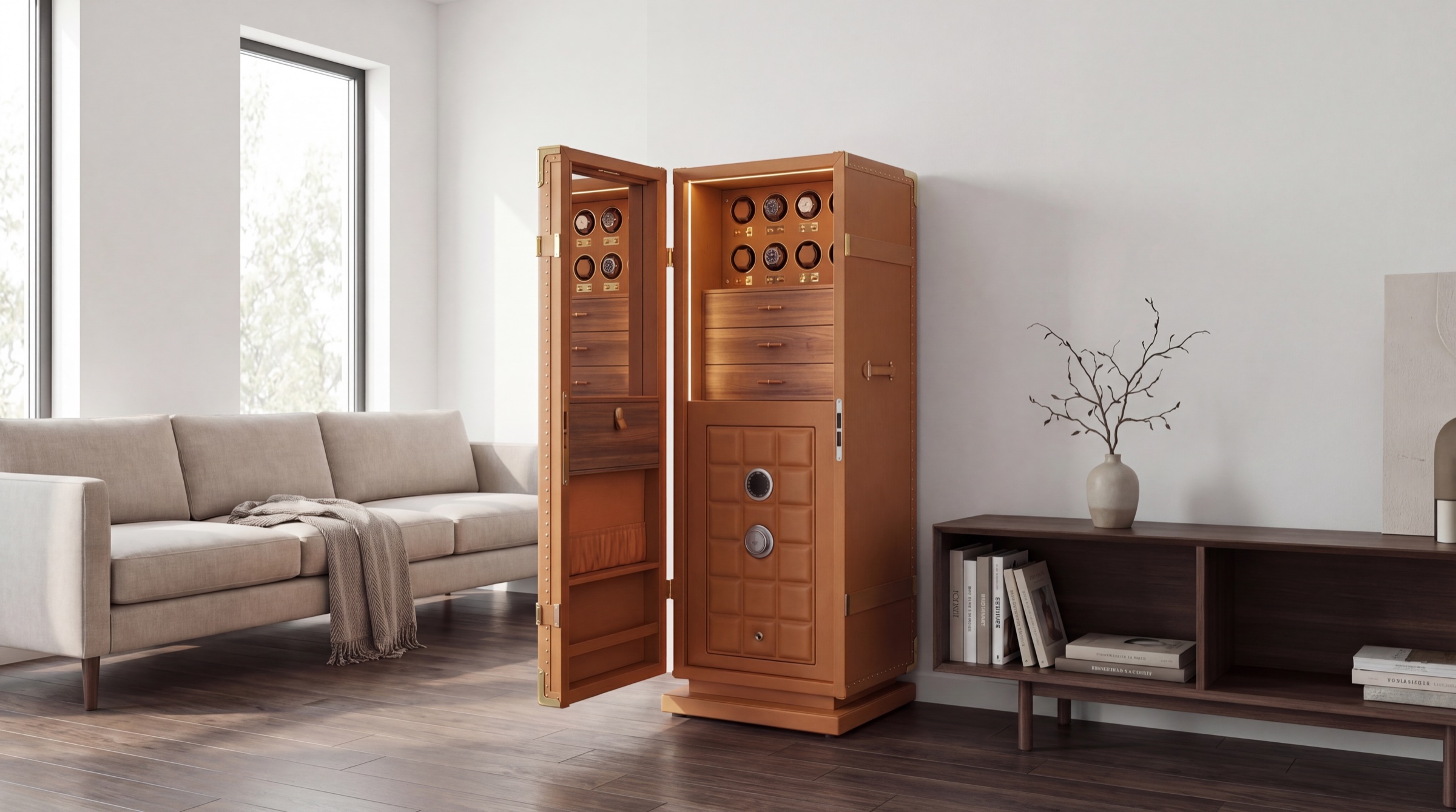
The decision is ultimately about convenience within the same security class. The table below sums up what genuinely matters in a collector's daily life.
| Criterion | Electronic lock | Mechanical lock |
|---|---|---|
| Opening speed | Very fast (type the code) | Slower (spin the dial) |
| Power source | Battery (external, swappable) | None |
| Multiple user codes | Yes, programmable | No |
| Audit trail | Often included | Not possible |
| Changing the code | Yourself, anytime | Only by a technician |
| Lifespan | 15–20 years (electronics) | Decades |
| Maintenance | Battery changes | Virtually none |
A common worry is what happens if the electronics fail. In practice, quality electronic safe locks are highly fail-safe — a good maker fits certified locks from specialists such as La Gard or Tecnosicurezza, who have been in the market for decades. The most frequent issue is simply a flat battery, replaced from the outside without losing the code.
A mechanical combination safe lock has one inherent advantage here: there is no electronics to age, which makes it the quieter choice for a safe meant to serve across generations. Collectors who want to secure a collection for the long haul appreciate that simplicity.
"It is not the technology that makes a lock secure, but the tested EN 1300 class behind it."
These three scenarios worry collectors most — needlessly, when the lock is chosen well. The points below show how each system behaves when it counts.
For daily access — choosing the right watch each morning, say — the electronic safe lock wins on speed, programmable user codes and the audit trail. In a household with several authorised users, that is a genuine advantage. Collectors who keep their watches in a Grand Cabinet with integrated winder modules pair that quick access with proper care of the automatic movements; learn more in our watch winder guide.
Collectors seeking maximum longevity and independence from any electronics are best served by a mechanical safe lock, or a combination of a key lock and dial. At Kronberg Collection both can be specified in the configurator and matched to the body — or discuss your requirements directly with our atelier through the contact page.
Our atelier near Zürich specifies only high-security locks matched to the construction of each safe. In practice most collectors choose a quality electronic safe lock for the convenience; those who prize a near maintenance-free, generation-spanning solution opt for the mechanical variant. Both are secure — the right choice is the one that fits your daily life.
Both are equally secure provided they are certified to the same EN 1300 class (A–D). What matters is the tested lock class and how it is matched to the body's resistance grade, not the technology itself.
The stored code is retained because the data does not depend on the battery. You simply replace the external battery on the keypad, and the safe then opens normally with your existing code.
Usually not. Changing a mechanical safe lock combination should be done by an authorised safe technician, whereas an electronic lock can be reprogrammed by the owner at any time.
The lock class should match the EN 1143-1 resistance grade and the insurance cover you require. For higher-value collections a Class B lock or above is typical, and Kronberg Collection always matches the lock to the body.
Yes. Electronic safe locks are powered by their own battery and are independent of the mains supply, so a power cut has no effect on opening the safe.
Standard Safe models start at CHF 12,900 and the Grand Cabinet from CHF 29,900. Every model includes a certified electronic or mechanical lock matched to its resistance grade.
Book a no-obligation personal consultation with a Kronberg advisor. We'll guide you through every option.