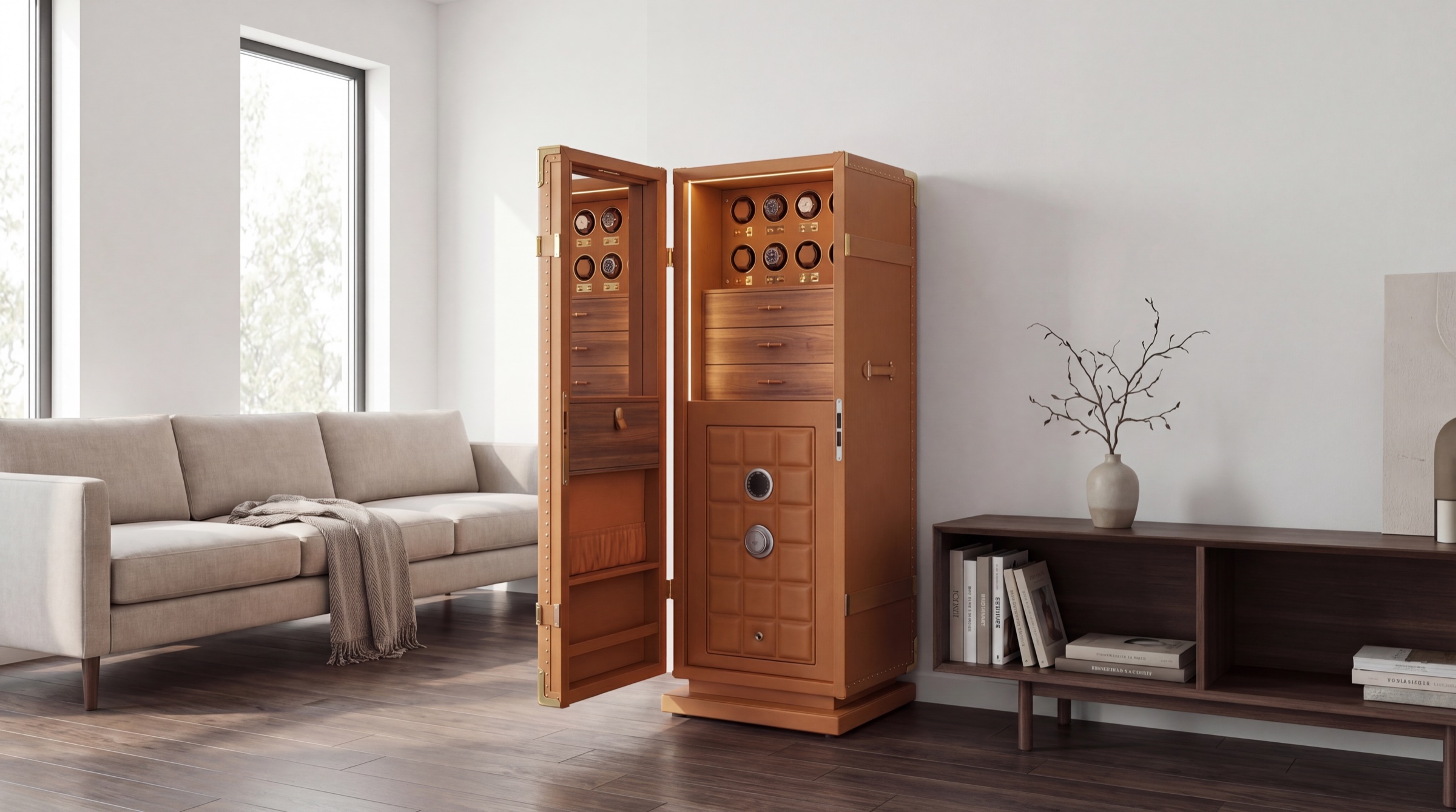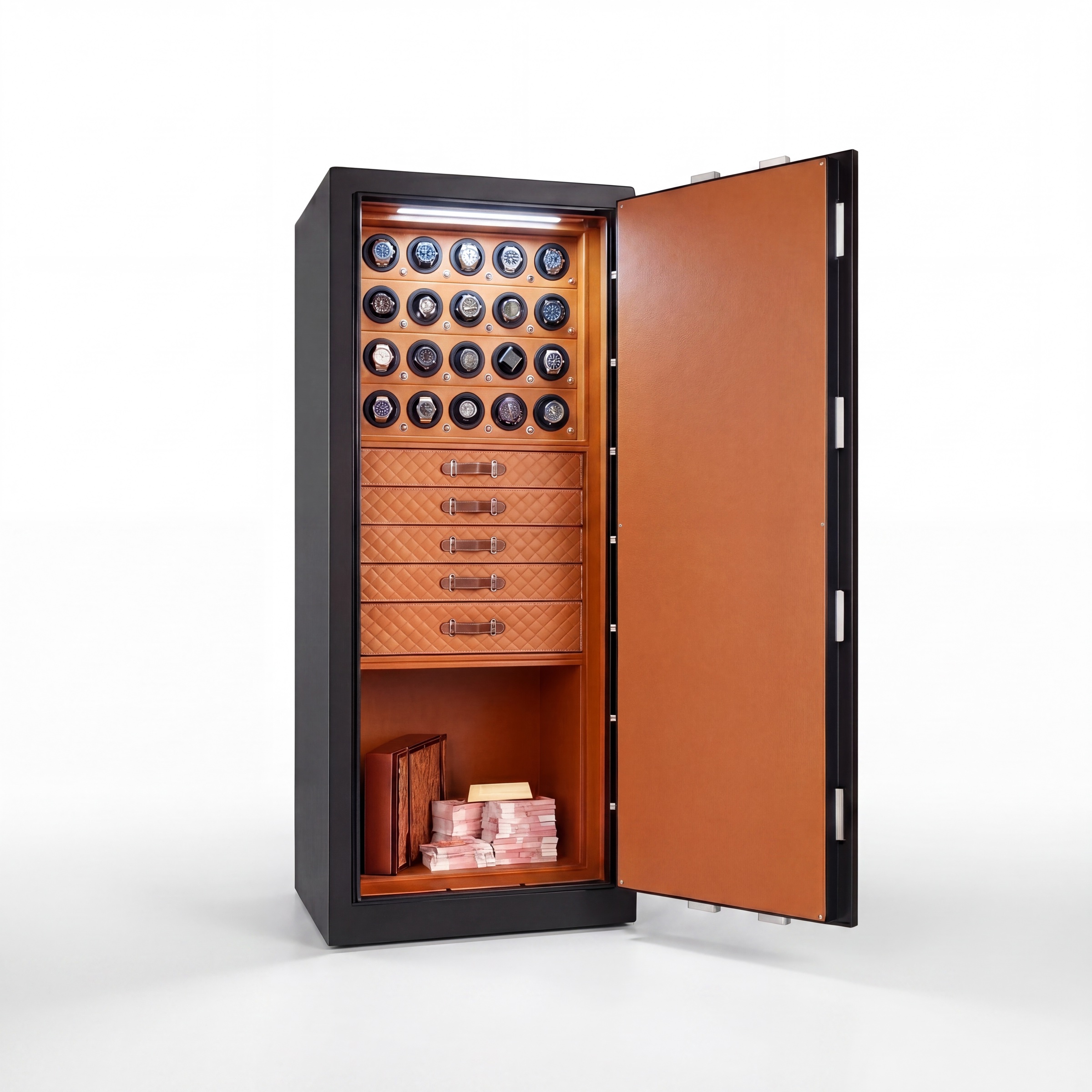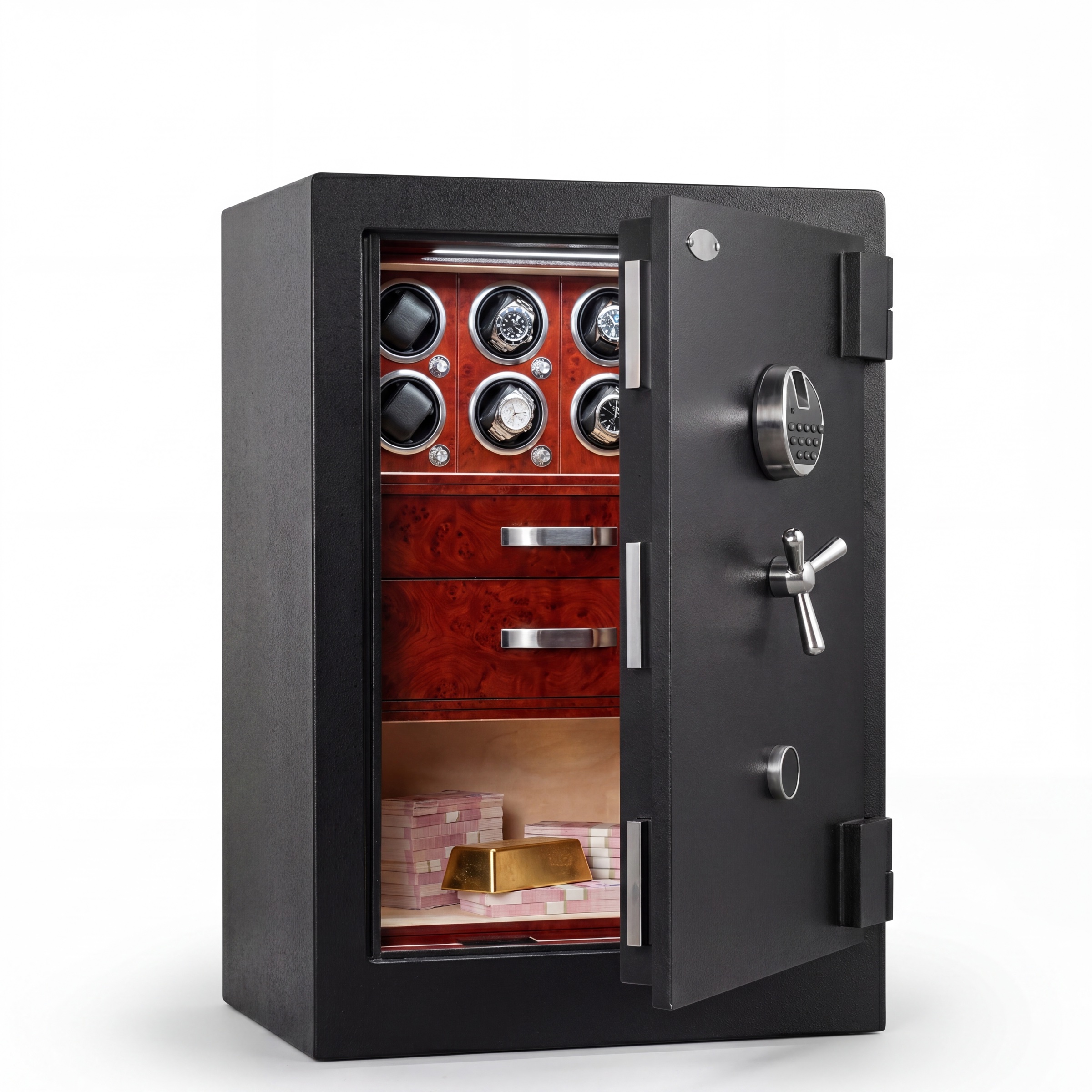
This watch safe checklist walks you through the twelve questions that decide every purchase worth making: the EN 1143-1 security grade, the capacity you need, the lock type, your insurance cover and where the safe will stand. Clarifying these before you buy avoids the most common — and most expensive — mistakes: a safe that's too small, a grade your insurer won't accept, or a location that can't carry the weight. Run through the list before you commit to any model.
At Kronberg Collection, every project starts with exactly these questions. The guide below distills what experienced collectors weigh when buying a watch safe — concise enough to sit beside the quote you're considering.
The first question is the most important, because it shapes everything else. Count your current collection, add a realistic estimate of the next few years' growth, and leave headroom. Collections almost always grow faster than expected — a safe that's too small is the regret collectors voice most often.
Our Standard Safe 85 cm holds up to around 30 watches, the 120 cm model up to 50, and the 170 cm model up to 75. If you need more room or a specific internal layout, step up to the Grand Cabinet.
The burglary resistance grade under EN 1143-1 (Grade 0 to VI, measured in resistance units, RU) defines how long a safe withstands an attack — and how much of its contents your insurer will cover. The rule of thumb: the insured value of your collection sets the minimum grade. What matters is genuine certification by VdS or ECB·S, not a vague marketing claim.
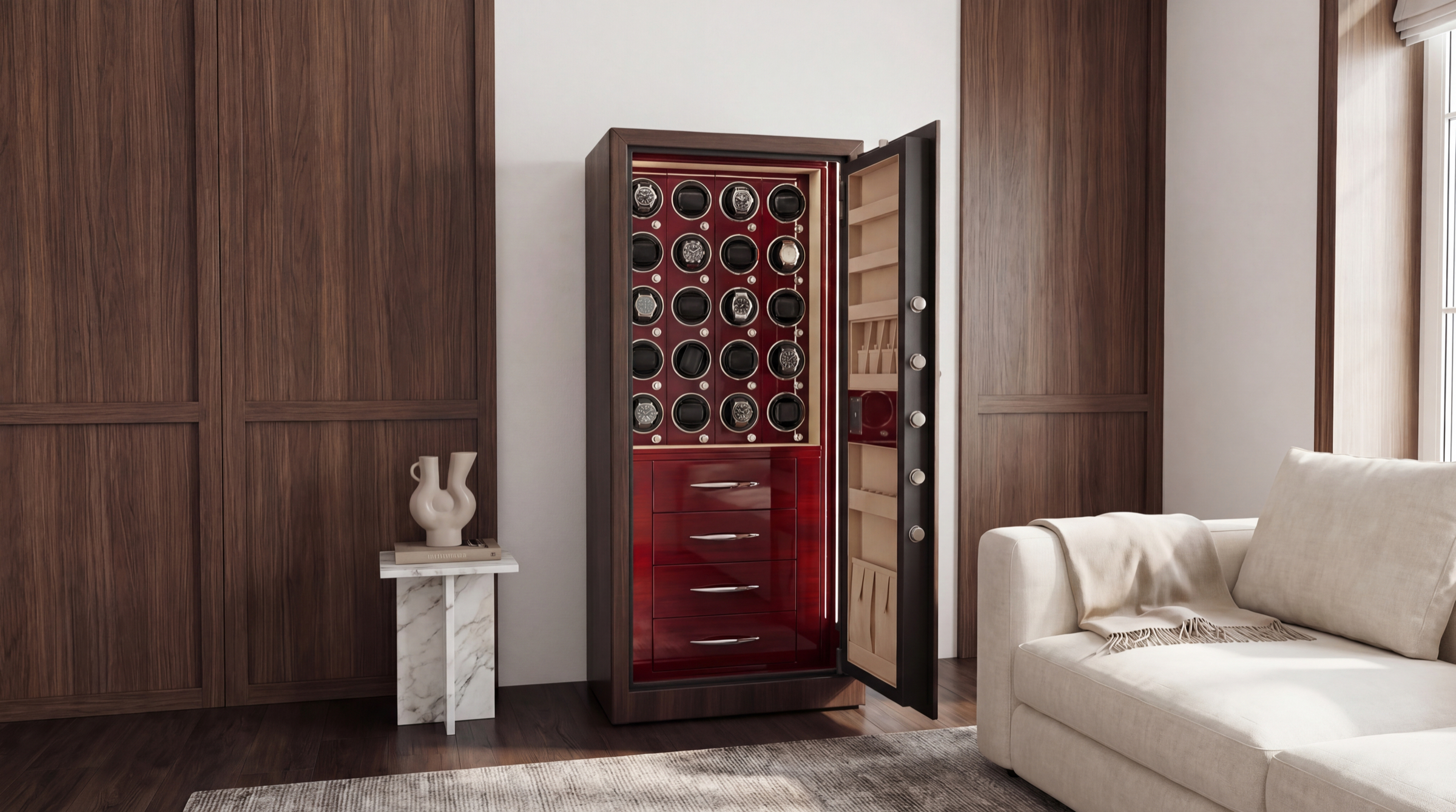
Settle the cover limit before you buy, not after. Each EN 1143-1 grade is tied to a ceiling up to which an insurer will replace the contents after a loss; higher values demand a higher grade. Get written confirmation from your insurer of which grade satisfies your sum insured.
Both lock types can be built with a high-security lock (classes A to B). An electronic combination lock is fast and supports multiple codes; a mechanical lock needs no battery and is prized for longevity. Security comes from the class, not the mechanism — we cover this in full under electronic vs. mechanical safe locks.
"The right watch safe isn't the most expensive one — it's the one whose grade matches your sum insured and whose size matches your collection."
Automatic watches you wear rarely benefit from a watch winder. Each winder module is individually programmable for turns per day (TPD) and direction. Decide how many automatics should stay running — the 85 cm model takes up to 12 winders, the 170 cm model up to 40.
A watch safe weighs roughly 200 to 600 kg depending on the model. Clear the delivery route before you order: door widths, stairs, lift capacity and the final position. Kronberg Collection provides specialist delivery with professional installation and proper anchoring — this single point often decides whether placement goes smoothly.
The table below gathers the twelve questions to tick off before you buy — from capacity to warranty.
| # | Question | What to check |
|---|---|---|
| 1 | Capacity | Current collection plus the next 5 years' growth |
| 2 | Security grade | EN 1143-1 Grade 0–VI, matched to insured value |
| 3 | Certification | Genuine VdS or ECB·S testing, not marketing alone |
| 4 | Insurance | Written confirmation of the cover limit |
| 5 | Lock | EN 1300 class A–B, electronic or mechanical |
| 6 | Watch winders | Number of modules, TPD and direction programmable |
| 7 | Fire protection | EN 1047, if fire risk is relevant |
| 8 | Location | Load capacity for 200–600 kg |
| 9 | Anchoring | Floor or wall fixing |
| 10 | Interior | Material, colour, layout |
| 11 | Delivery | Access, professional installation |
| 12 | Warranty & service | Maker, maintenance, point of contact |
The final question is about the maker. A watch safe stays with you for decades — craftsmanship, materials and service all have to hold up. Kronberg Collection builds every safe by hand at our atelier near Zürich, with full-grain leather interiors and exteriors in lacquer, leather-wrap or wood veneer to your specification. Once you have your answers, we're glad to settle the open points in person; start with the configurator or the contact page.
The three things that matter most are the right size (current collection plus growth), an EN 1143-1 security grade matched to your insured value, and genuine VdS or ECB·S certification. Lock type, winders, location and service come after those.
The grade you need depends on the insured value of your collection, because each EN 1143-1 grade (0 to VI) carries a cover ceiling. Ask your insurer to confirm in writing which grade satisfies your sum insured.
Plan for your current number of watches plus the next five years of growth. As a guide, the Standard Safe 85 cm holds about 30 watches, the 120 cm model up to 50, and the 170 cm model up to 75.
Security comes from the quality of the lock, not from the mechanism type. An electronic lock is faster and supports multiple codes, while a mechanical lock needs no battery and is valued for its longevity.
Yes. A watch safe weighs roughly 200 to 600 kg, so the floor or slab must carry the load and the delivery route through doors, stairs or a lift must work. Kronberg Collection delivers worldwide and offers professional installation and anchoring on request.
Yes. Kronberg Collection handcrafts every safe to order and tailors the internal layout, number of winders, material and colour; for larger projects there is the Grand Cabinet from CHF 29'900.
Book a no-obligation personal consultation with a Kronberg advisor. We'll guide you through every option.