An automatic watch is a mechanical marvel — self-winding, self-sustaining, requiring no battery and no deliberate winding provided it stays in motion. The engineering involved in creating a reliable automatic movement is genuinely impressive, and for decades it represented the pinnacle of horological achievement. But this elegance comes with a condition: the watch must keep moving. When it stops, it stops. And for collectors with more than two or three automatics, keeping all of them moving becomes a logistical challenge that a watch winder solves elegantly.
Understanding watch winders properly means understanding how automatic watches work — and understanding which winder specifications actually matter versus which are merely marketing.
At the heart of every automatic watch is a mainspring: a coiled strip of metal that stores potential energy. When the spring is tensioned (wound), it releases energy gradually and precisely, driving the gear train, the escapement, and ultimately the hands. A manual watch requires you to wind this spring by turning the crown. An automatic watch winds itself.
The mechanism that makes this possible is the rotor: a semicircular weighted segment mounted on the movement, free to pivot in any direction. As the watch moves on your wrist — as you walk, gesture, turn your hand — the rotor swings. That swinging motion transfers through a series of gears and a ratchet mechanism directly to the mainspring, keeping it tensioned. After a full day on the wrist, an automatic watch should be fully wound. After two days in a drawer, it will likely have stopped.
Most modern automatic movements have a power reserve of 38 to 72 hours, with some high-beat movements or complications reaching 8 to 10 days. But the majority of watches in most collections will be stopped within three days of being unworn.
A watch winder replicates the motion of the wrist. It holds the watch on a cushioned mount and rotates it — slowly, continuously, and with precise control — simulating the movement patterns of daily wear. Done correctly, this keeps the mainspring tensioned without ever touching the crown, maintaining accuracy, power reserve, and, crucially, any perpetual or annual calendar complications that would otherwise require resetting every time they stop.
Resetting a perpetual calendar complication — on a Patek Philippe 5270, for instance, or an A. Lange & Söhne Datograph Perpetual — is not simply a matter of pulling out the crown. It requires following a specific protocol, sometimes over multiple days, and can risk damaging the delicate mechanism if done incorrectly. For collectors of grand complications, a watch winder is not a convenience — it is a form of protection.
The key specification of any watch winder is TPD: turns per day. This is the number of complete rotations the winder performs in a 24-hour period, and it needs to be matched to the requirements of each watch movement. Too few turns and the spring remains underwound; too many and the mechanism's automatic clutch is stressed unnecessarily.
Most modern automatic movements require between 650 and 1,800 TPD. Rolex movements, for instance, wind in both directions (bidirectional) and typically require around 800 TPD. Some Jaeger-LeCoultre calibres are more sensitive and may require lower TPD settings. A quality winder will allow you to programme TPD independently for each module and to set the direction: clockwise (CW), counterclockwise (CCW), or bidirectional. This programmability is not a luxury feature — it is essential for a mixed collection.
Not every collector does. If you wear your automatic watches daily and rotate through them regularly, they may never need a winder. But for collectors with more than three automatic watches, the arithmetic becomes challenging. If you own seven automatics and wear a different one each day, the one you wore a week ago has likely stopped. If you own twenty, most of them are stopped most of the time.
A winder is particularly valuable for: collectors with perpetual or annual calendars that are complex to reset; collectors who travel frequently and cannot always wear their watches; those whose collections include high-beat movements where a complete wind-down and restart can affect timekeeping accuracy; and anyone who finds the ritual of resetting stopped watches time-consuming or anxiety-inducing.
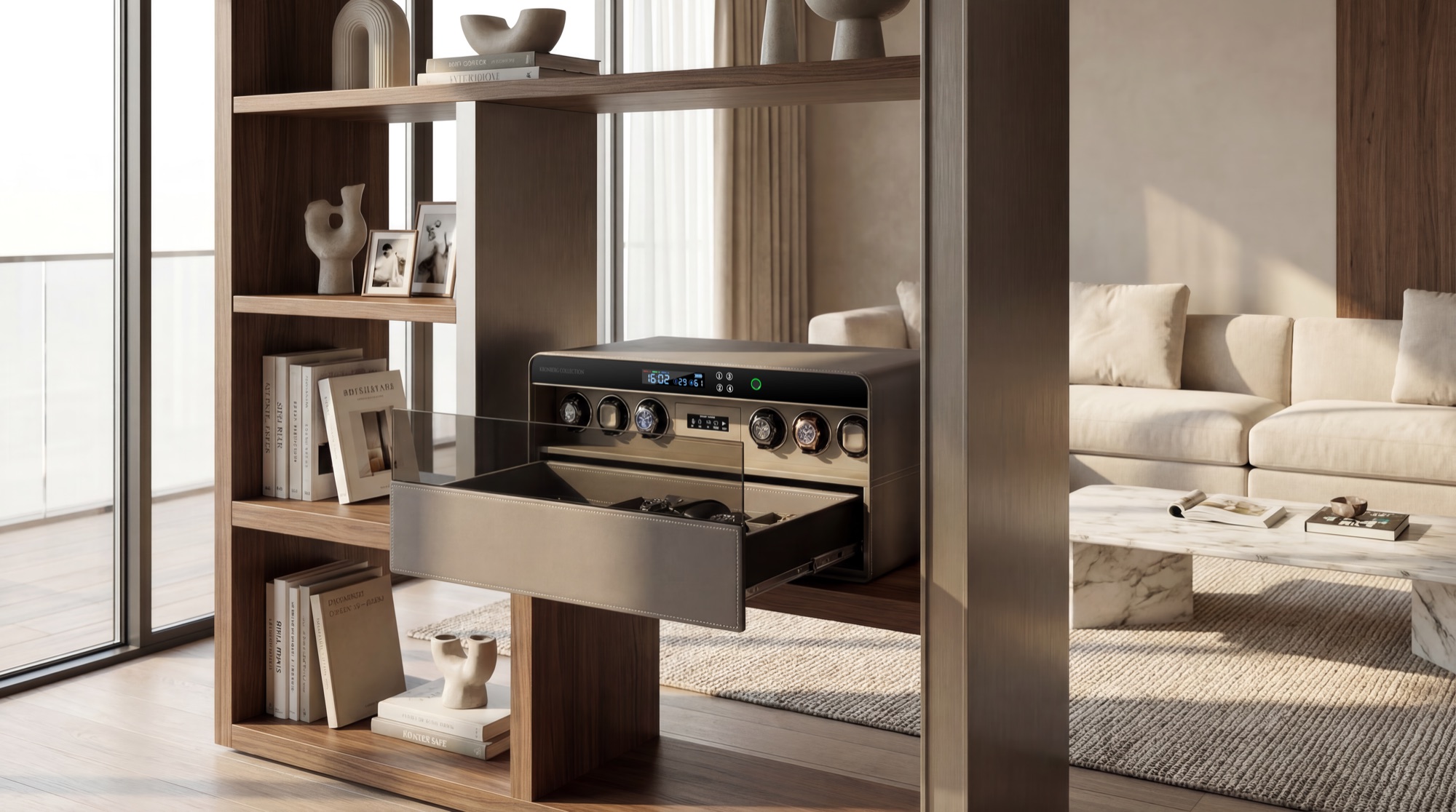
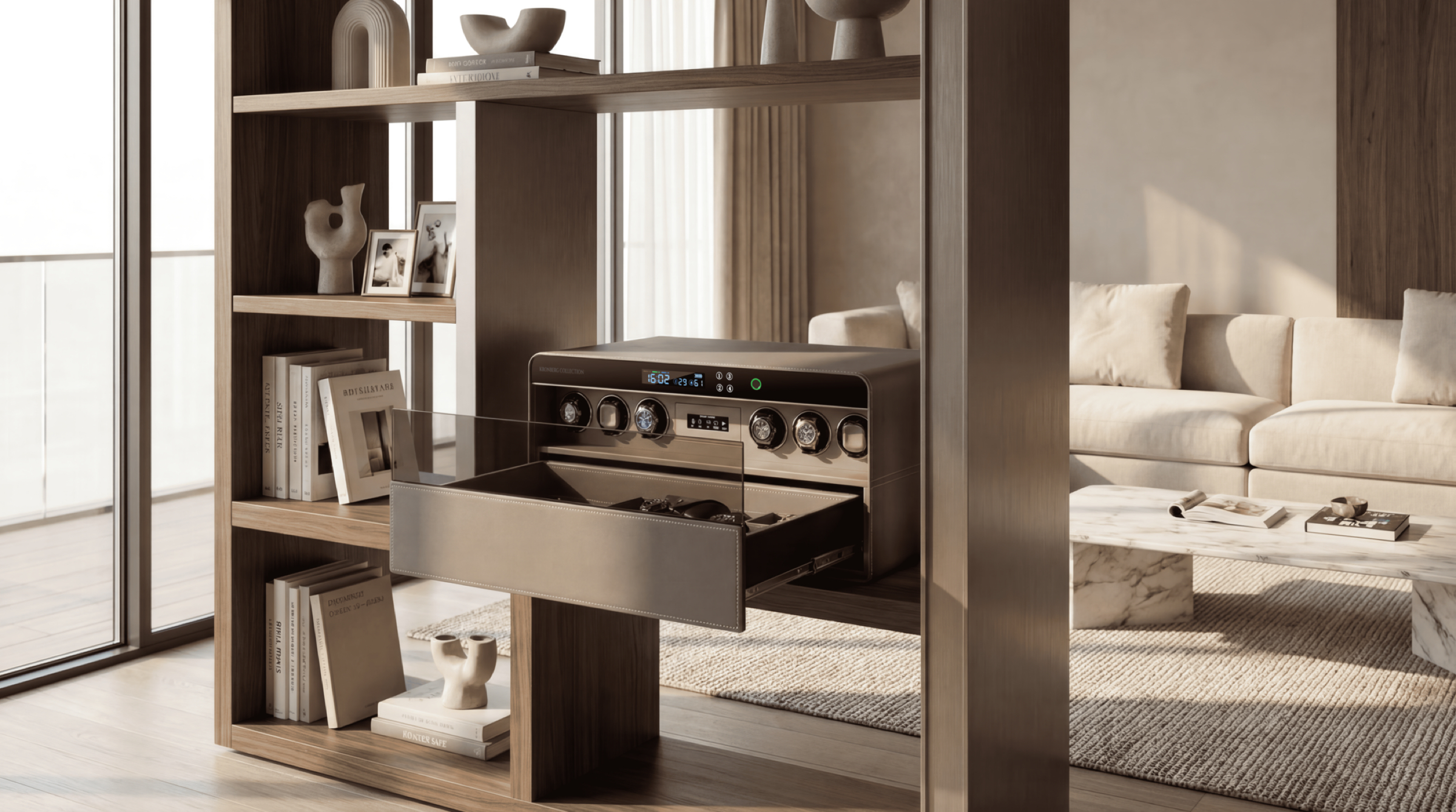
There are two fundamental approaches to watch winding. Standalone winders — like our ChronoVault series — are independent units housing 3, 6, or 12 winder modules, designed to sit on a desk or shelf. They are ideal for collectors who do not yet need a full safe, or who want supplementary winding capacity alongside their main safe.
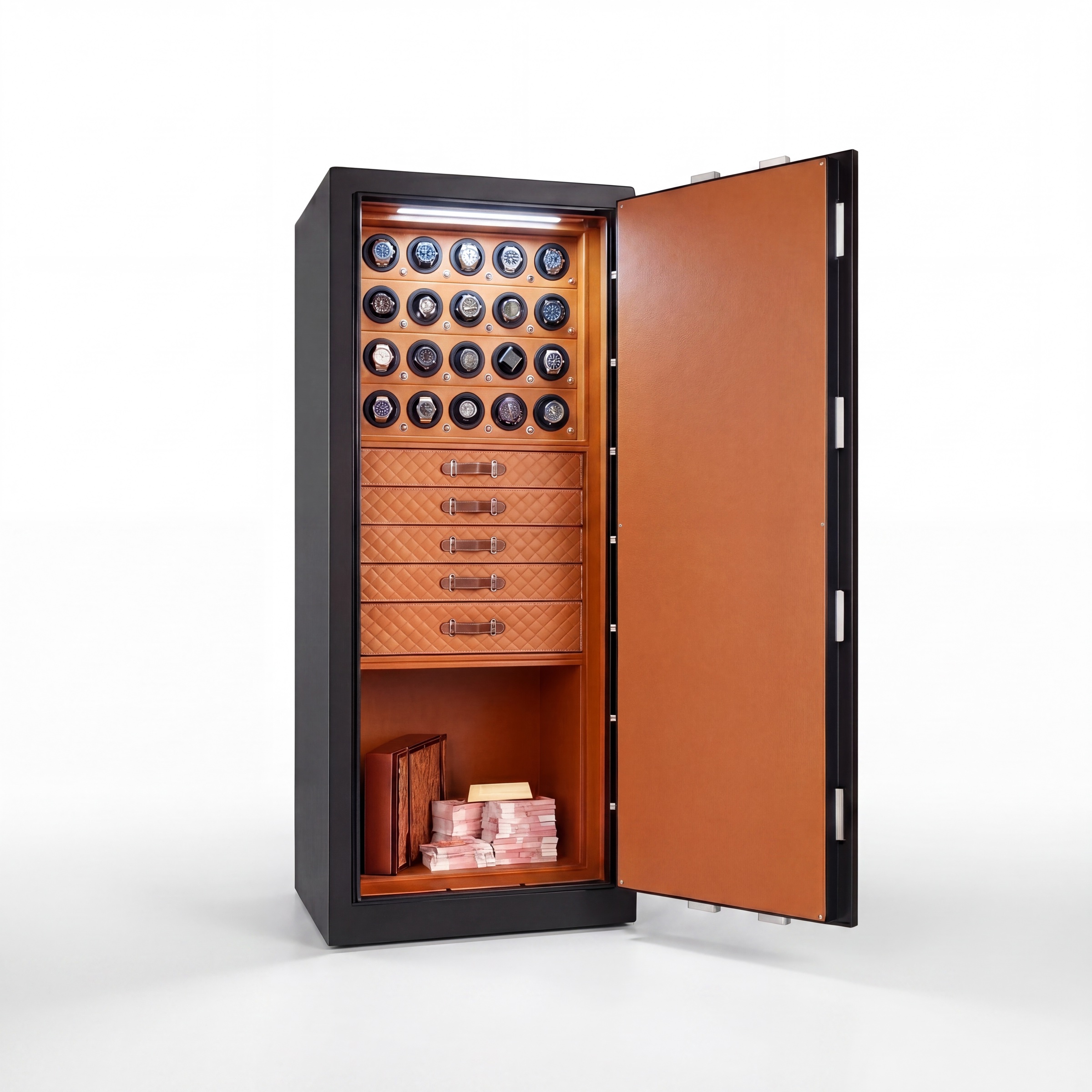
Integrated winders are built directly into a Standard Safe or Grand Cabinet. Each winder module is mounted in the interior of the safe, programmed independently, and powered through a concealed cable management system. This approach is cleaner, more secure, and eliminates the need for separate units. For collectors planning a full safe, integrated winders are almost always the better solution — they ensure that your entire collection is wound, secured, and beautifully displayed in one coherent piece.
Motor noise is the most overlooked quality indicator. A cheap winder makes itself known — you can hear it from across the room. A quality winder is silent. Our motors run below 25 decibels: quieter than a library, inaudible in a bedroom at night. If you can hear the winder, it is not a quality winder.
The second criterion is the cushion or mount. The watch must be held securely without stress on the crown, crystal, or bracelet. Leather-padded cushions in a range of sizes — to accommodate everything from a slim dress watch to a 47mm diver — are the right approach. Finally, the winder should be programmable without requiring technical expertise: a clear interface, intuitive controls, and settings that are stored even during power interruptions.
"A watch not worn is a watch slowly dying. A winder keeps it alive — precise, ready, and exactly as you left it."
A watch winder is a device that holds an automatic watch on a cushioned mount and slowly rotates it to replicate the motion of the wrist, keeping the mainspring tensioned without touching the crown. This keeps the watch running, accurate, and ready to wear, and preserves perpetual or annual calendar complications that would otherwise need resetting every time the watch stops.
Most modern automatic movements require between 650 and 1,800 TPD, with 900 to 1,200 TPD covering the majority of calibres. Rolex movements, for example, are bidirectional and typically need around 800 TPD, so a quality winder lets you set TPD and direction independently for each watch.
You only need one if you own more than two or three automatic watches and cannot wear each regularly, since an unworn automatic usually stops within about three days. Winders are especially valuable for perpetual or annual calendars that are complex to reset, frequent travellers, and high-beat movements where a full wind-down can affect accuracy.
Standalone winders are independent units holding 3, 6, or 12 modules that sit on a desk or shelf, while integrated winders are built directly into the interior of a Standard Safe or Grand Cabinet with concealed cable management. Integrated winders are cleaner and more secure, making them the better choice for collectors planning a full safe.
A quality watch winder should be virtually silent, running below 25 decibels, which is quieter than a library and inaudible in a bedroom at night. Audible motor noise is the clearest sign of a cheap winder, so if you can hear it across the room it is not a quality unit.
Book a no-obligation personal consultation with a Kronberg advisor. We'll guide you through every option.