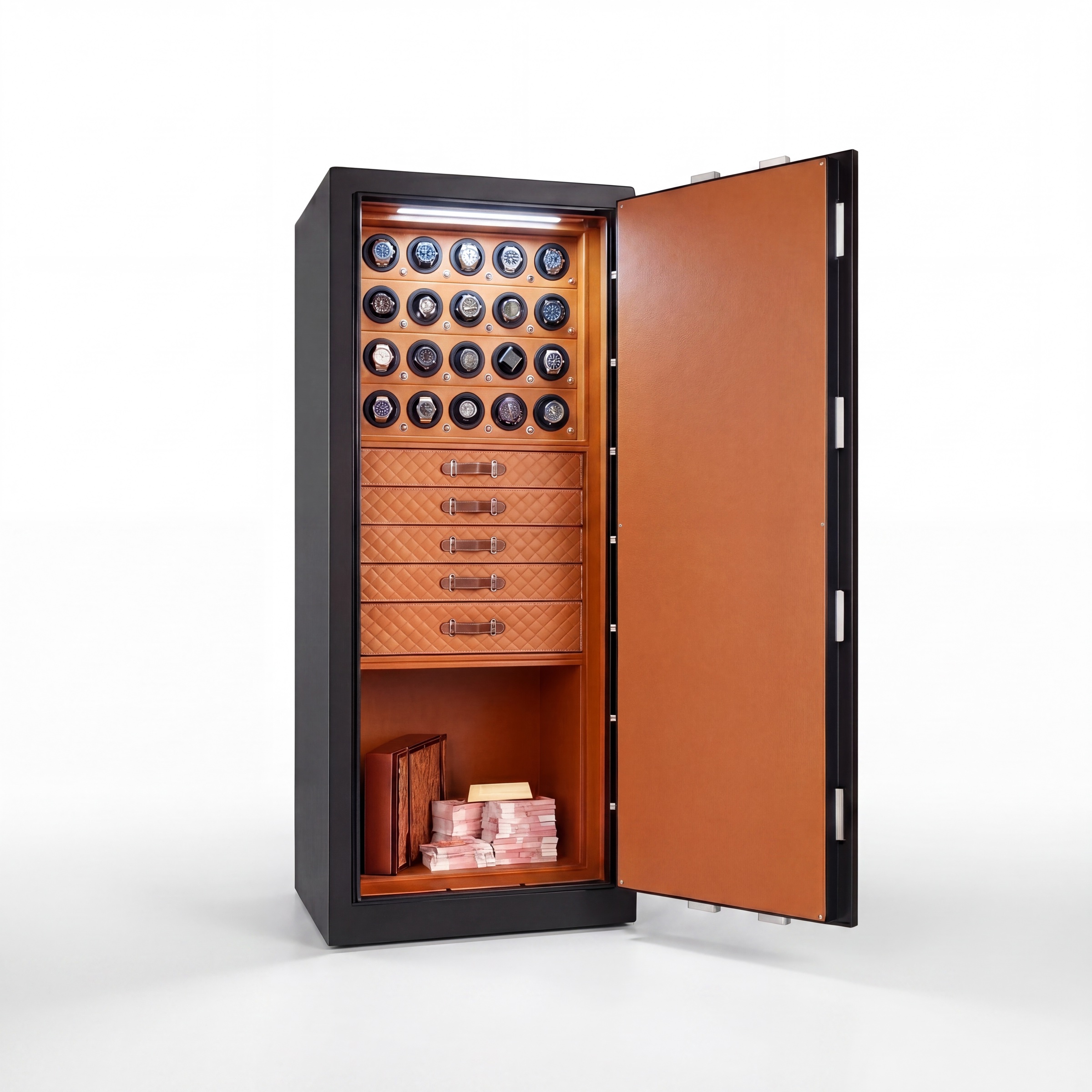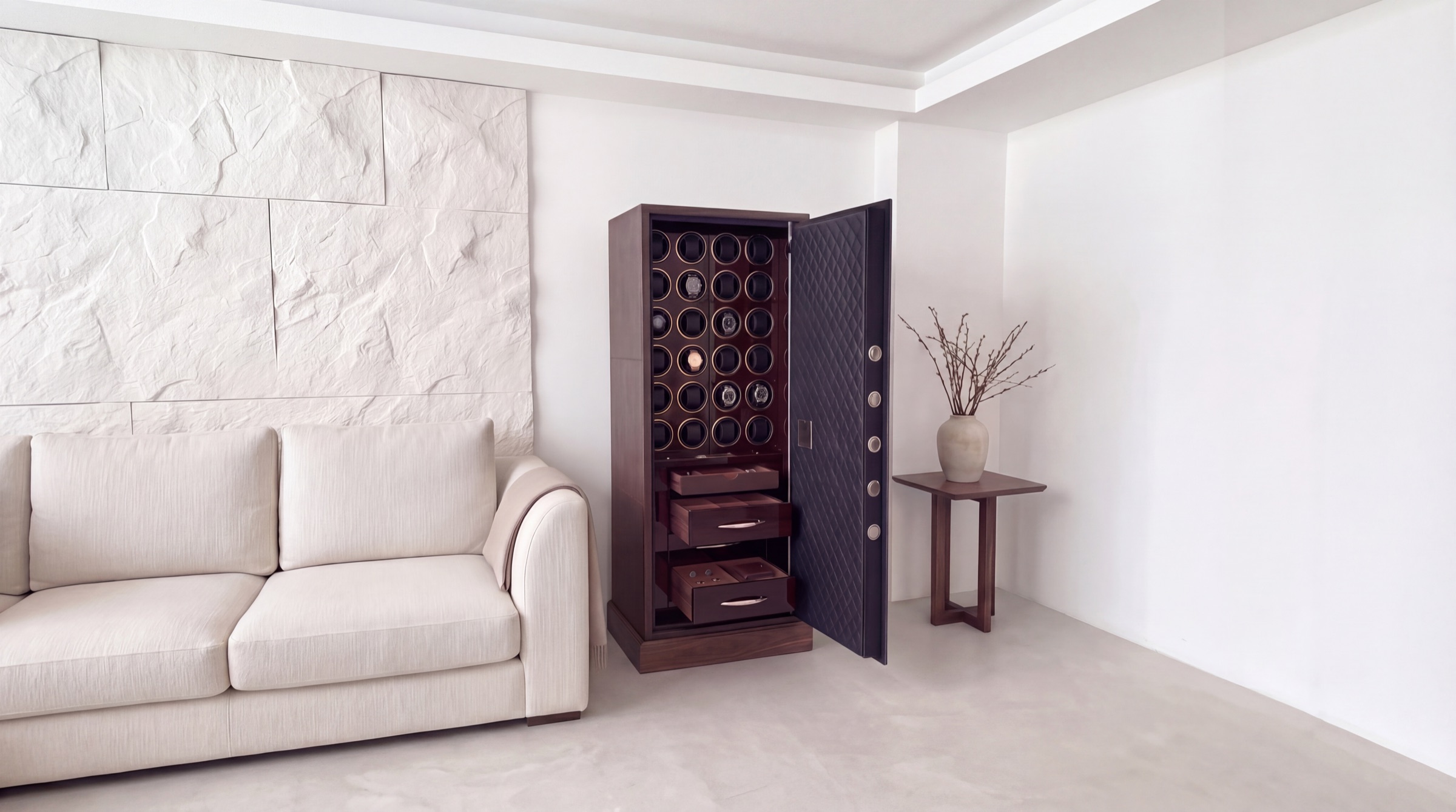
There is no single moment that is universally right. The collector who owns one watch worth CHF 80,000 has a different risk profile to the collector who owns fifteen watches worth CHF 5,000 each — even though the total values are comparable. The collector who travels frequently, employs household staff, or has a public profile faces different considerations to the collector who lives simply and quietly. The right moment to commission a watch safe is personal, contextual, and — in most cases — earlier than most collectors expect.
There are, however, clear and consistent signals that indicate when the question is no longer hypothetical. If any of these signals apply to you, the conversation is overdue.
CHF 20,000 is the approximate point at which standard Swiss home contents insurance becomes inadequate for a watch collection. The majority of standard Hausratversicherung policies cap jewellery and watch coverage at CHF 30,000 to CHF 60,000 in total — but with a per-item limit of CHF 5,000 to CHF 10,000 in many policies. A single watch worth CHF 25,000 may exceed your per-item limit; three watches worth CHF 10,000 each may not fully exhaust your total limit but may trigger underinsurance concerns when considered alongside other valuables in the property.
The practical advice: read your policy carefully. Call your broker with a current estimate of your collection's value. Ask specifically about per-item limits, total valuables limits, and what the policy requires for coverage above those limits. In most cases, you will discover that the coverage you assumed you had is significantly less than the value you actually own. This conversation typically accelerates the safe decision considerably.
Five or more watches is the size at which the practical complexity of managing a collection begins to exceed what a watch box can handle gracefully. At five watches, you face choices every morning: which one needs winding? Which case needs attention? Where did you put the one you wore three weeks ago? At ten watches, the complexity compounds. At fifteen, the watches you are not wearing regularly are likely stopped, wound down, and slowly accumulating the kind of neglect that affects both mechanical health and resale value.
A watch safe with integrated winders resolves this complexity entirely. Every watch in the safe is wound, maintained, and precisely where you expect it to be. The morning ritual becomes a pleasure rather than a logistical puzzle. This is a quality-of-life argument as much as a security argument, and it is one that many collectors find unexpectedly compelling when they experience it for the first time.
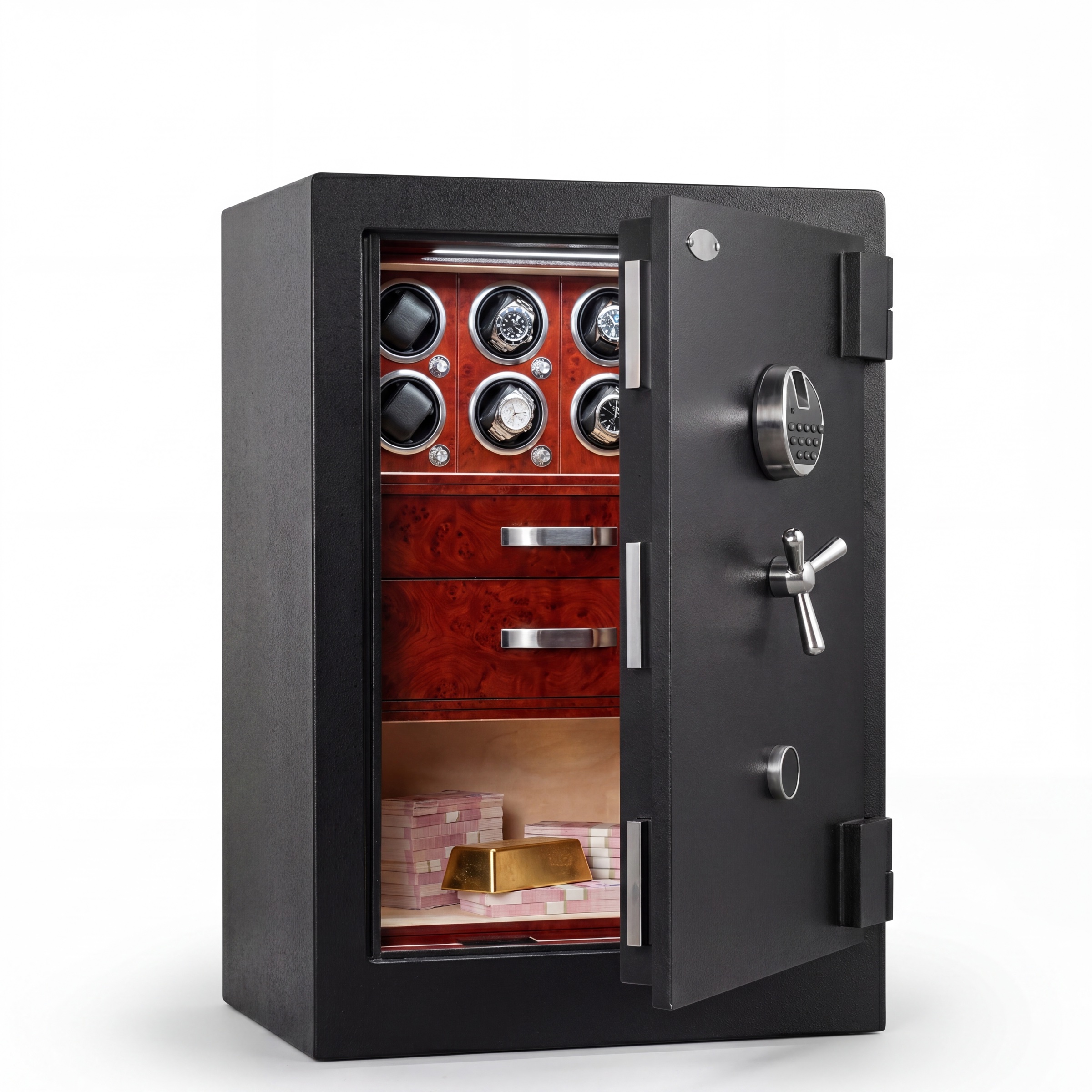
Three lifestyle factors significantly increase the risk profile of an unprotected collection, each of which may apply independently or in combination.
When your insurer or broker begins asking questions — about the location of valuables, about the security of your home, about whether you have a high-security safe — they are doing so because your claims history or your declared values have reached a threshold that triggers their underwriting concern. This is a signal worth taking seriously. It means your current arrangement is close to the limit of what your insurer is willing to cover without additional precautions. A certified safe addresses this precisely and typically results in either lower premiums or wider coverage.
The least quantifiable but perhaps the most honest signal is the emotional one: you feel uncomfortable leaving your watches at home. You think about them when you travel. You check the drawer when you return. You feel a low-level anxiety about their security that you have normalised but would prefer not to have. This feeling is your intuition telling you that the gap between what your collection is worth to you and the protection you have provided for it has become unacceptable.
Acting on it is straightforward. The conversation with a Kronberg advisor typically takes thirty minutes, is entirely free of charge, and at the end of it you will know exactly what you need, what it will cost, and when you could have it. The discomfort you have been carrying tends to resolve immediately.
If any of these signals apply to you: first, get a current valuation of your collection from a specialist watchmaker or auction house. Second, read your insurance policy carefully, or call your broker, and ask about your actual coverage limits. Third, book a consultation with us — it costs nothing and commits you to nothing. We will tell you honestly what you need, and what you do not need, based on your specific situation.
"The question is not when you can afford a safe. It is whether you can afford the consequences of not having one."
A watch safe becomes worthwhile from around CHF 20,000, because standard Swiss home contents insurance (Hausratversicherung) typically caps total watch and jewellery cover at CHF 30,000 to CHF 60,000 with a per-item limit of just CHF 5,000 to CHF 10,000. Above that threshold your existing policy usually leaves a significant part of your collection uninsured.
Five or more watches is the practical tipping point, because managing winding, maintenance and storage of that many pieces exceeds what a watch box can handle gracefully. A safe with integrated winders keeps every watch wound, maintained and in a known place, solving the problem at fifteen pieces just as much as at five.
Yes, a high-security safe typically results in either lower premiums or wider coverage, because it directly addresses the security concern that prompts your insurer to ask about valuables and home protection. When your broker starts asking these questions, you have usually reached the limit of what they will cover without additional precautions.
Yes, a single watch worth CHF 25,000 can already exceed the CHF 5,000 to CHF 10,000 per-item limit in many standard policies, leaving it underinsured. Value, not just the number of pieces, drives the decision, so one high-value watch can warrant a high-security safe on its own.
Frequent travel, a public profile and a high-value property each raise your risk independently, because unoccupied homes face higher burglary rates, a known collection becomes a target, and premium properties with regular staff or tradespeople access are more exposed. If any of these apply, watches left at home should be in a high-security safe.
Book a no-obligation personal consultation with a Kronberg advisor. We'll guide you through every option.