To store your first luxury watch correctly, get four things right: dry air (45–55% relative humidity), distance from strong magnetic fields, a padded scratch-free resting surface, and a lockable place out of plain sight. If you own a single expensive watch you rarely need a full-size safe straight away — but you do need a deliberate routine so the piece stays in peak condition for years.
Most new collectors underestimate how much can go wrong in the first months. Sweat dries onto the leather strap, the dial sits in the sun, the watch rests beside a laptop speaker — and suddenly your first expensive watch is magnetised or the strap has stiffened. This guide shows you how to avoid all of that from day one.
The ideal spot is dark, dry, temperature-stable and not obvious. A bedroom wardrobe beats the hallway dresser, and a lockable drawer beats an open tray. Avoid windowsills, bathrooms and the immediate vicinity of radiators.
Keep the original box and papers separate from the watch, ideally in a second location. The box and warranty card prove authenticity and value — if they disappear together with the watch, an insurance claim or a future sale becomes far more complicated.
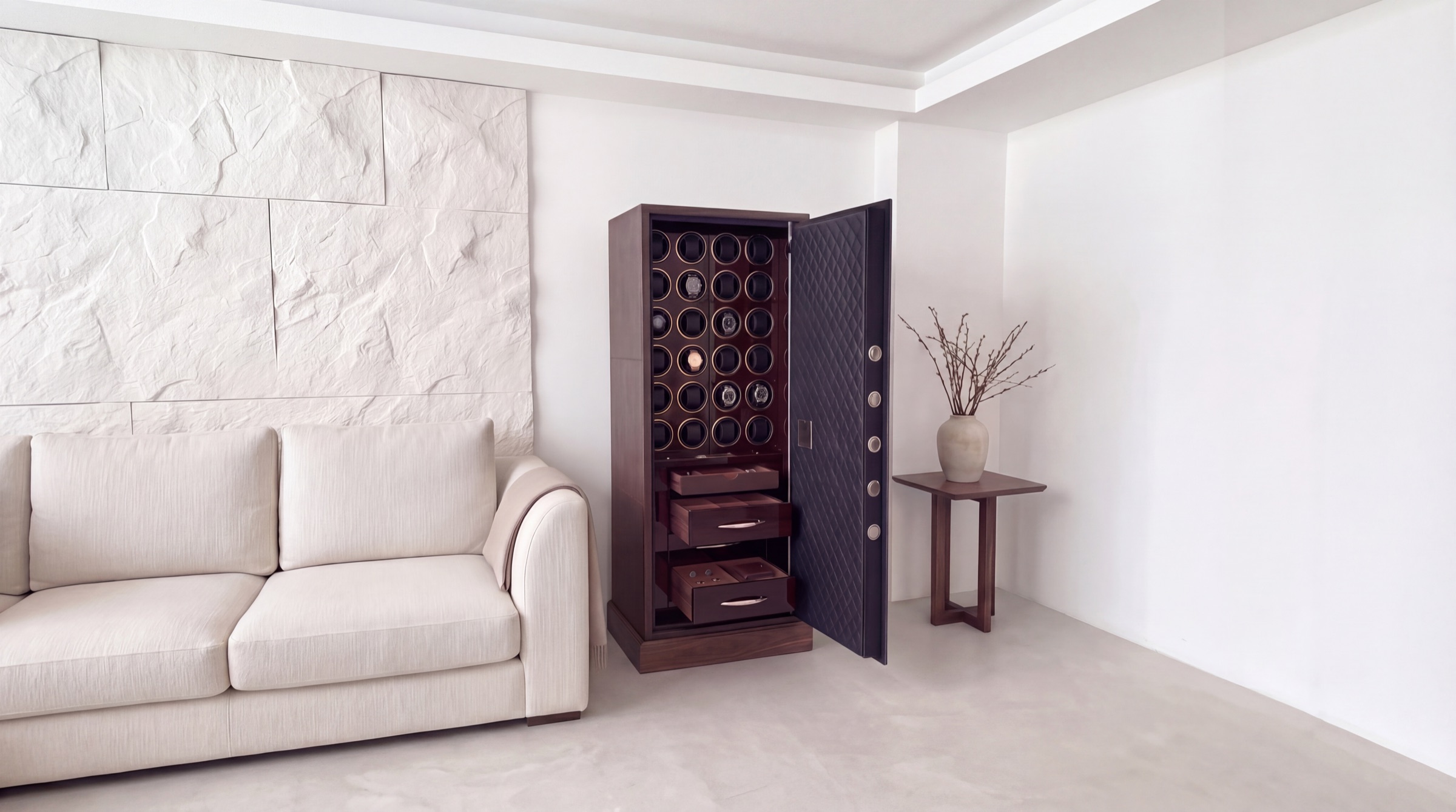
Not strictly — but a baseline of protection pays off the moment you cross into four-figure territory. A small certified safe guards against opportunistic theft and fire, and is often the condition for your home insurance to cover the full value. Whether the watch lies open on a nightstand or stays locked away makes all the difference when something goes wrong.
If your collection is likely to grow, plan one size up. Our Standard Safe 85 cm holds up to around 30 watches and grows with you, sparing you a quick second purchase when more pieces arrive. For when the move to a safe makes sense, see our piece on the point a collection needs a safe.
"The most expensive watch is the one you have to replace in five years because you stored it badly."
Three invisible enemies wear on any luxury watch. Humidity encourages rust on the movement and clasp; hold 45–55% relative humidity, and add a small silica-gel sachet inside leather interiors. UV light fades dials and hardens leather straps, so keep the watch in the dark. Magnetic fields from speakers, tablets or magnetic closures can hurt accuracy; keep at least a hand's width of distance.
Getting started is cheaper than you'd think. A silica-gel sachet, a hygrometer and a soft cloth together cost barely more than dinner for two. A high-security safe begins in the mid four figures; our Standard Safe 85 cm starts at CHF 12,900. If you want an automatic watch ready to wear daily, add a watch winder — our watch winder guide explains how they work.
| Storage method | Protection | Best for |
|---|---|---|
| Original box in a wardrobe | Dust, scratches — no theft or fire protection | Very short term, one watch |
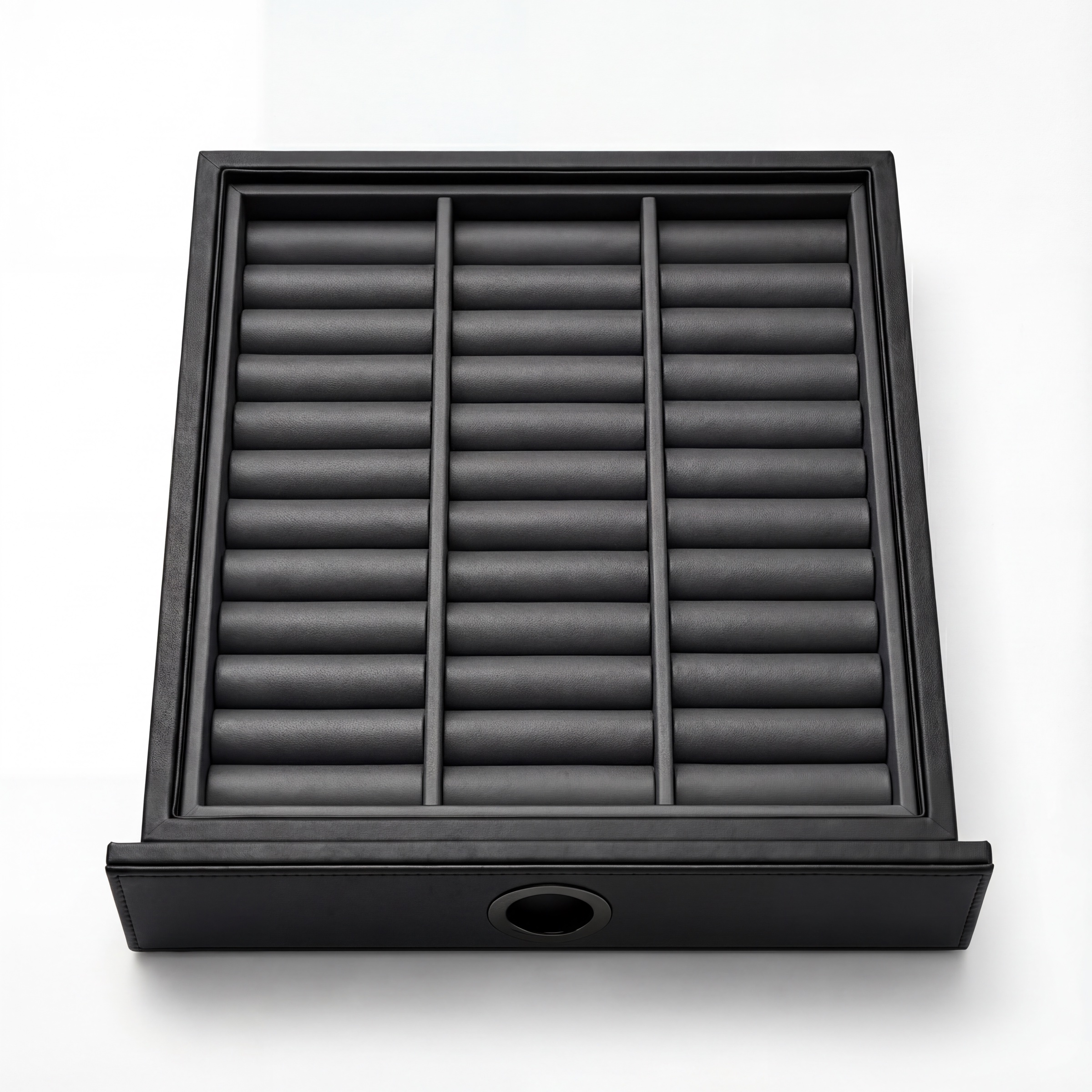
| Padded watch box | Scratches, organisation — no safe-level security | 2–6 watches, in the bedroom |
| Small watch safe (EN 1143-1) | Theft, often fire, insurance-compliant | From your first valuable watch |
| Safe with a watch winder | Theft plus the watch stays wound | Automatic owners, a growing collection |
Yes. Metal bracelets are forgiving; an occasional wipe is enough. Leather straps react to sweat and moisture and should dry completely before you put them away. Store them flat or gently curved, never sharply folded, and give well-worn straps a rest by rotating them.
Photograph the front and back, note the reference and serial numbers, and keep the invoice and warranty card secure. These records are your proof of value if anything happens. There is more in our guide to securing a watch collection — and as the collection grows, a clean inventory list you start early will save you trouble later.
Unsure which solution suits your first piece? Our atelier near Zürich advises you personally — write to info@kronbergcollection.com or call +41 44 974 27 19.
Keep it dark, dry (45–55% relative humidity), away from magnets and on a padded surface. Wipe the case clean before putting it away, and store the box and papers separately in a secure place.
Not strictly, but a small certified safe protects against opportunistic theft and fire and is often required for home insurance to cover the full value. If your collection is likely to grow, it is worth taking the step early.
No. For short pauses the power reserve of typically 38–72 hours is enough. A winder makes sense when you want to keep an automatic watch with a calendar or other complications ready to wear at all times.
Store the watch in the dark and keep it off sunny windowsills. UV light fades dials over the years and hardens leather straps, so a closed, dark storage spot is ideal.
Let the strap dry after wear, wipe off sweat with a dry cloth, and store it flat or gently curved, never sharply folded. This keeps the leather supple and prevents it from cracking prematurely.
Book a no-obligation personal consultation with a Kronberg advisor. We'll guide you through every option.