Documenting watches for insurance rests on three things: sharp photographs showing the serial number, the original purchase receipt, and a current dated valuation. Together these decide whether a watch is reimbursed at full replacement value or whether the insurer reduces the payout. Without clear proof of ownership and value, few insurers will pay the real market price of a luxury watch.
A collection is only truly protected when every watch is recorded individually and verifiably. Below we set out which documents matter, what a credible valuation should contain, and how to store the records safely — both physically and digitally.
Insurers want three things evidenced: that the watch is yours, what it cost, and what it is worth today. The purchase receipt — showing retailer, date, model and serial number — is the cornerstone. Where it is missing, as with an inherited piece or a private sale, an independent watch valuation takes its place.
For higher-value pieces, many policies also ask for proof of ownership and details of how the watch is stored. For how those storage requirements connect to a safe's grade, see our guide to insuring a watch collection.

Good photographs are the cheapest and most effective part of documentation. Shoot each watch in daylight against a neutral background and capture every detail that uniquely identifies it. The serial number between the lugs and the reference number are the most important.
A professional watch valuation is prepared by a certified appraiser or an authorised dealer and states the current replacement value. It becomes essential the moment the purchase receipt is missing, the market value sits well above the original price, or the policy schedules individual pieces by name.
Because prices for sought-after steel sports models swing sharply, refresh the valuation every two to three years. An outdated appraisal almost always leads to underinsurance when you claim.
"A watch is only as well insured as the evidence you can produce on the day of the claim."
Not every document carries the same weight. The table below shows which records insurers typically accept and how binding each is when value is assessed.
| Record | Proves | Refresh |
|---|---|---|
| Original receipt | ownership & price paid | once, retain |
| Warranty card / papers | authenticity & serial | once |
| Valuation / appraisal | current market value | every 2–3 years |
| Photo documentation | condition & identity | on any change |
| Service records | upkeep & originality | after each service |
Records are worthless if they vanish in the same burglary or fire as the watches. Keep one copy off-site — encrypted in the cloud or in a bank deposit box — and keep the original papers separate from the watches. A serious watch safe protects both at once: the piece and its evidence.
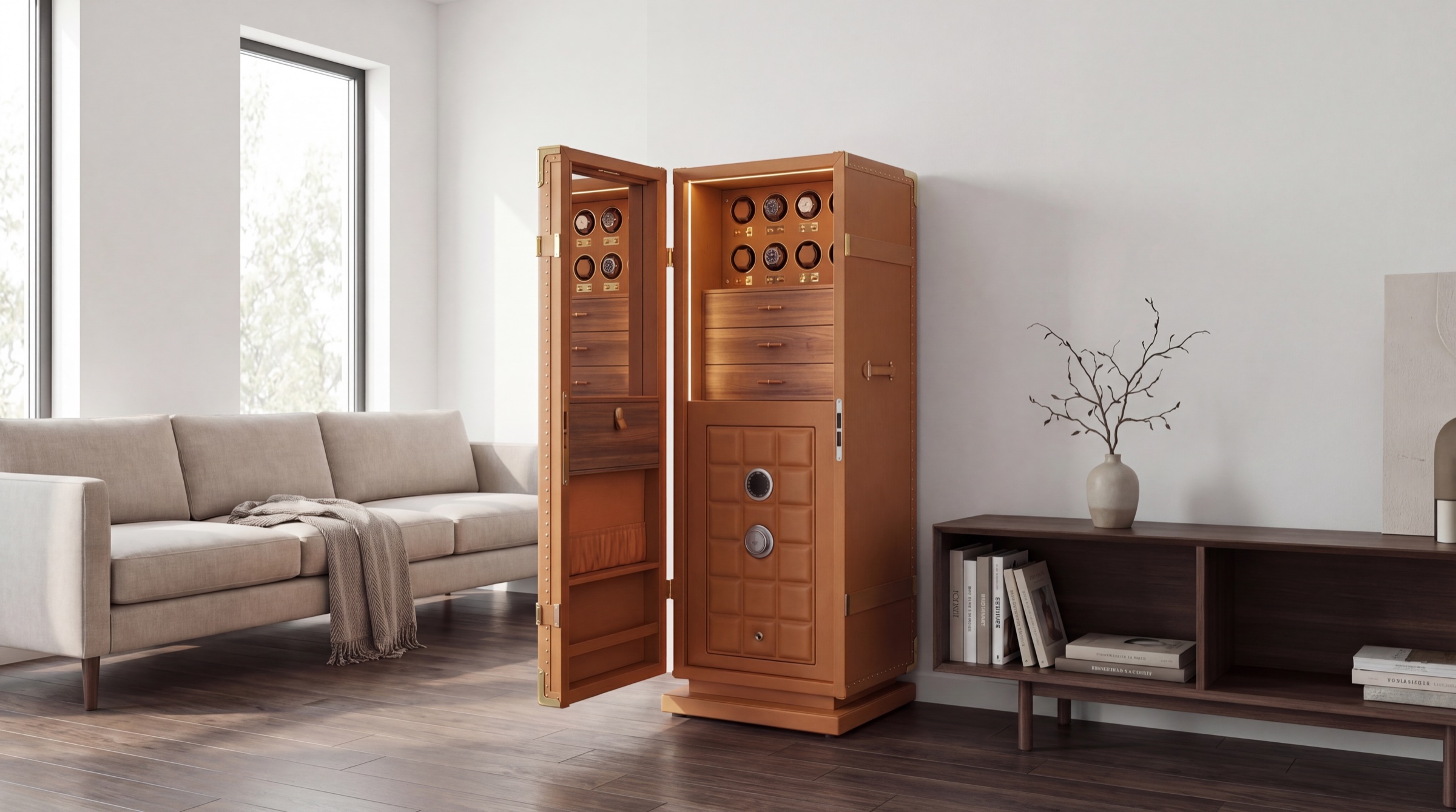
In a Grand Cabinet or one of our standard safes, warranty cards and valuations can sit in a separate protected compartment, so proof and property share the same secure place. For ordering the whole collection in parallel, a system for cataloguing your watch collection works hand in hand with insurance records.
Documentation is not a one-off task. Set a fixed annual date to add new purchases, file service records and review market values. Note auction results for comparable references — they are the best basis for a realistic valuation.
If you also treat your watches as an investment, the payoff is twofold: a complete history improves both insurance certainty and resale value. A well-documented watch sells faster and at a better price than a piece without papers.
Have questions about storing watches and their records together? Speak with our atelier near Zürich about the right solution for your collection.
You need the original purchase receipt showing the model and serial number, photographic documentation of the watch, and for higher-value pieces a current dated valuation. If the receipt is missing, a professional valuation provides the proof of ownership and value instead.
Generally every two to three years, because luxury watch prices move sharply. An outdated valuation almost always results in underinsurance, since the payout is based on a figure below today's replacement value.
Yes, sharp phone photos are sufficient as long as the dial, case back, serial number and bracelet are clearly visible. Shoot in daylight against a neutral background and also photograph the box, papers and warranty card.
Commission an independent valuation from a certified watch appraiser or authorised dealer. It documents authenticity, condition and current market value, and most insurers accept it as equivalent proof of ownership and worth.
Keep the original papers separate from the watches and also store an encrypted digital copy off-site, such as in the cloud or a bank deposit box. That way the evidence survives even if the watches are lost to burglary or fire.
Book a no-obligation personal consultation with a Kronberg advisor. We'll guide you through every option.