A well-kept watch inventory is the document that matters most when something goes wrong: for each watch it records the brand, reference, serial number, purchase date, value and a photograph, stored somewhere safe. Cataloguing your watch collection does not require expensive software — a single, disciplined record with the right fields is enough to prove what you own, what it is worth and where it came from at any moment.
Below we set out which details belong in a reliable inventory, how to document a watch collection without it becoming a chore, and where the list itself should live. The aim is a system you can update in ten minutes per new arrival — and that is instantly complete after a loss, a sale or a succession.
An inventory is first a proof of ownership. Without recorded serial numbers and receipts, a stolen watch cannot be identified and a claim cannot be quantified. We cover the claims side in our guide to insuring a watch collection.
Second, a catalogue protects value. Unbroken provenance — first ownership, service history, original papers — is itself a value driver for collectible watches. Third, the inventory creates clarity for your family: in a succession, no one remembers from memory what a collection contains and what it is worth.
"A watch with no recorded serial number is just a story after a theft — with an inventory, it becomes a claim."
Capture a fixed set of fields per watch rather than writing free-form notes. That keeps the watch inventory searchable and comparable. The details below form the dependable core of every entry.
Add a field for the storage location — which drawer in the safe or which winder holds the watch. For larger collections this makes the annual review far easier and reveals a missing piece immediately.
For most collectors, a structured spreadsheet (Excel or Google Sheets) with one row per watch and the columns above is ideal. It is free, exportable and easy to back up in encrypted form. Dedicated apps add market-value tracking and photo management, but they tie your data to one provider.
What matters is not the tool but the discipline: enter every new watch on the day you buy it and scan the receipt and warranty card straight away. We address how to prepare the supporting evidence for claims separately in documenting watches for insurance.
| Method | Strengths | Limits |
|---|---|---|
| Spreadsheet | Free, flexible, exportable, fully under your control | No automatic valuation; photos kept separately |
| Collector app | Market values, photo gallery, reminders | Subscription; data tied to provider |
| Notarised valuation | Legally robust, ideal for top pieces | Costs money; not continuously current |
| Cloud vault (PDF) | Secure, accessible anywhere, versioned | Requires manual upkeep |
Update the inventory the moment a watch arrives or leaves — and review it in full once a year. During the annual review you align values with the current market, add service receipts and confirm that every listed watch is physically where the record says it is.
That yearly check is also the right moment to reconcile replacement values with your policy. If the collection's worth climbs above your agreed sum insured, both the cover and, where relevant, the specification of your safe should grow with it.
The most important rule: the inventory must not sit in the same place as the watches. A printed list inside the safe is worthless if the safe and its contents are stolen together. Keep at least one copy elsewhere — encrypted in the cloud or with a trusted person.
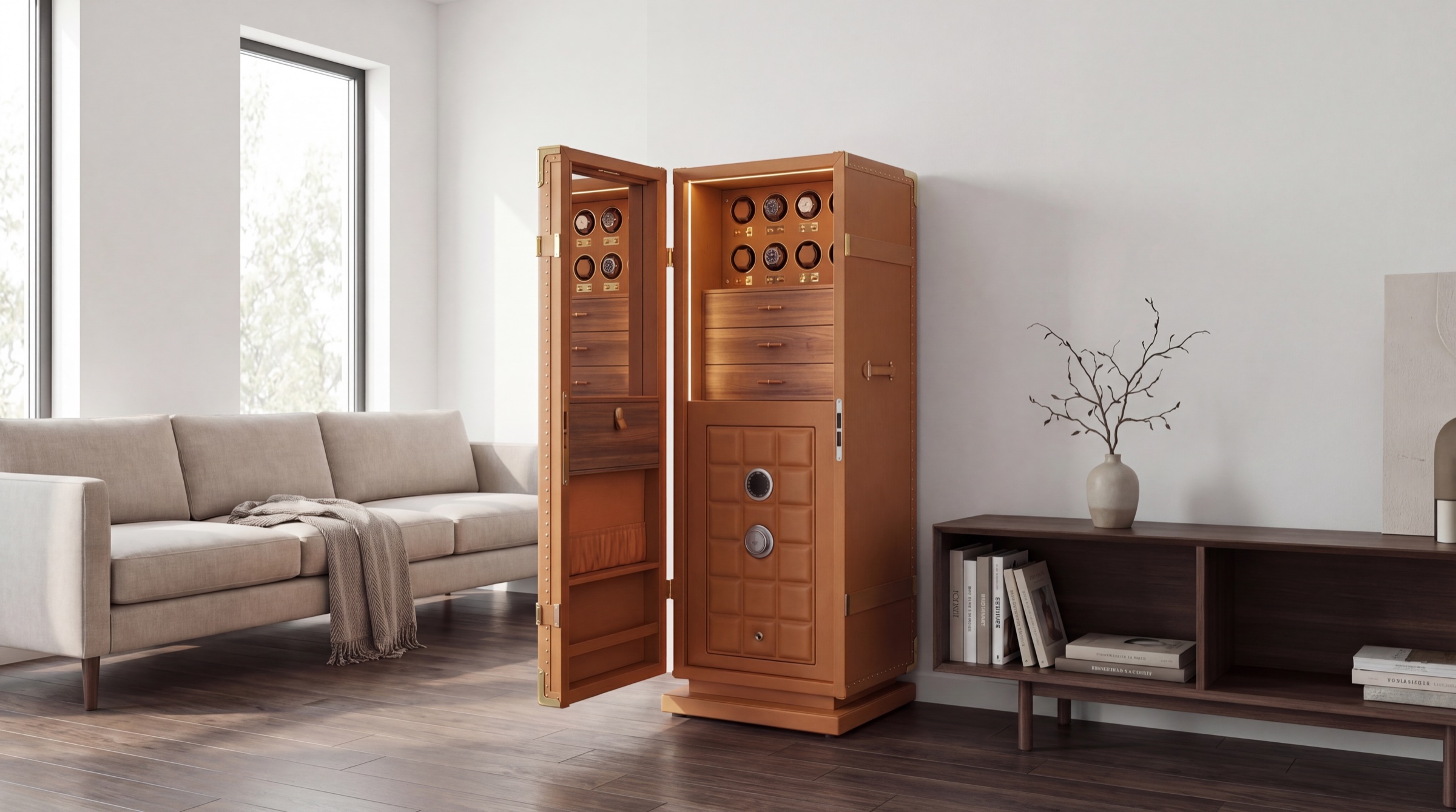
The watches themselves belong in tested storage. A Standard Safe or a Grand Cabinet from Kronberg Collection offers serious burglary resistance, with insurance cover that scales with the grade. Record which drawer holds which watch in your inventory; the configurator helps you plan the layout. If you view a collection as an asset, our article on watches as an investment adds further thinking on storage.
A current, findable inventory is the foundation of an orderly handover. Leave access to the list where heirs will find it — and add a short note on the significance of individual pieces. We explore planning ahead in passing on a watch collection.
Done this way, a list of reference numbers becomes a clearly documented, insured and traceable holding — your overview today, your family's security later. For questions on secure storage, our atelier near Zürich is reachable on +41 44 974 27 19.
Create one entry per watch with the brand, reference number, serial number, purchase date, price, condition and photos — most easily in a spreadsheet. Add each new watch the day you buy it and review the whole inventory once a year.
The serial number, the purchase receipt or valuation, and current photographs matter most, because only these prove ownership and the size of a claim. Also record the current replacement value and reconcile it with your sum insured.
The serial number is usually engraved on the case, often between the lugs, on the case back, or printed on the warranty card. It is the unique identifier and should appear in every inventory entry.
For most collections a structured spreadsheet is enough — it is free, exportable and stays under your control. Dedicated apps add market-value tracking and photo management but tie your data to one provider.
Do not keep the inventory in the same place as the watches; hold at least an encrypted copy elsewhere, such as in the cloud or with a trusted person. That way the list survives even if the safe is taken.
Book a no-obligation personal consultation with a Kronberg advisor. We'll guide you through every option.