Effective burglary protection for a watch collection does not start with the lock; it starts with the order of your defences: a safe built for high burglary resistance, bolted firmly in place, discreetly located and connected to an alarm will reliably stop an opportunist and buy the minutes that matter. To truly protect a watch collection, you layer mechanical resistance with discretion, documentation and insurance — no single layer replaces the others.
This guide ranks the measures by their real-world effect. It is written for collectors who keep their watches at home and want a clear, workable plan for home security — without scare tactics and without unnecessary technology.
Most residential break-ins last only a few minutes, and burglars look specifically for small, high-value items — exactly what watches are. A retail furniture safe can be forced open with a crowbar and a cordless drill in moments; it offers concealment but almost no resistance.
Real protection means a thief must invest tools, time and noise before they stand any chance. A certified safe with adequate weight and firm anchoring creates precisely that barrier. For how attacks actually unfold, see our article on how safes are attacked and what real protection looks like.
The decisive standard is EN 1143-1, which measures burglary resistance in grades 0 to VI and in resistance units (RU). The higher the grade, the longer the safe withstands an attack — and the higher your insurance cover. The complementary EN 1300 standard governs lock quality (classes A–B). The recognised European certification bodies are VdS and ECB·S.
For a growing collection, choose a grade that matches your insured value — not the most expensive, but the right one.
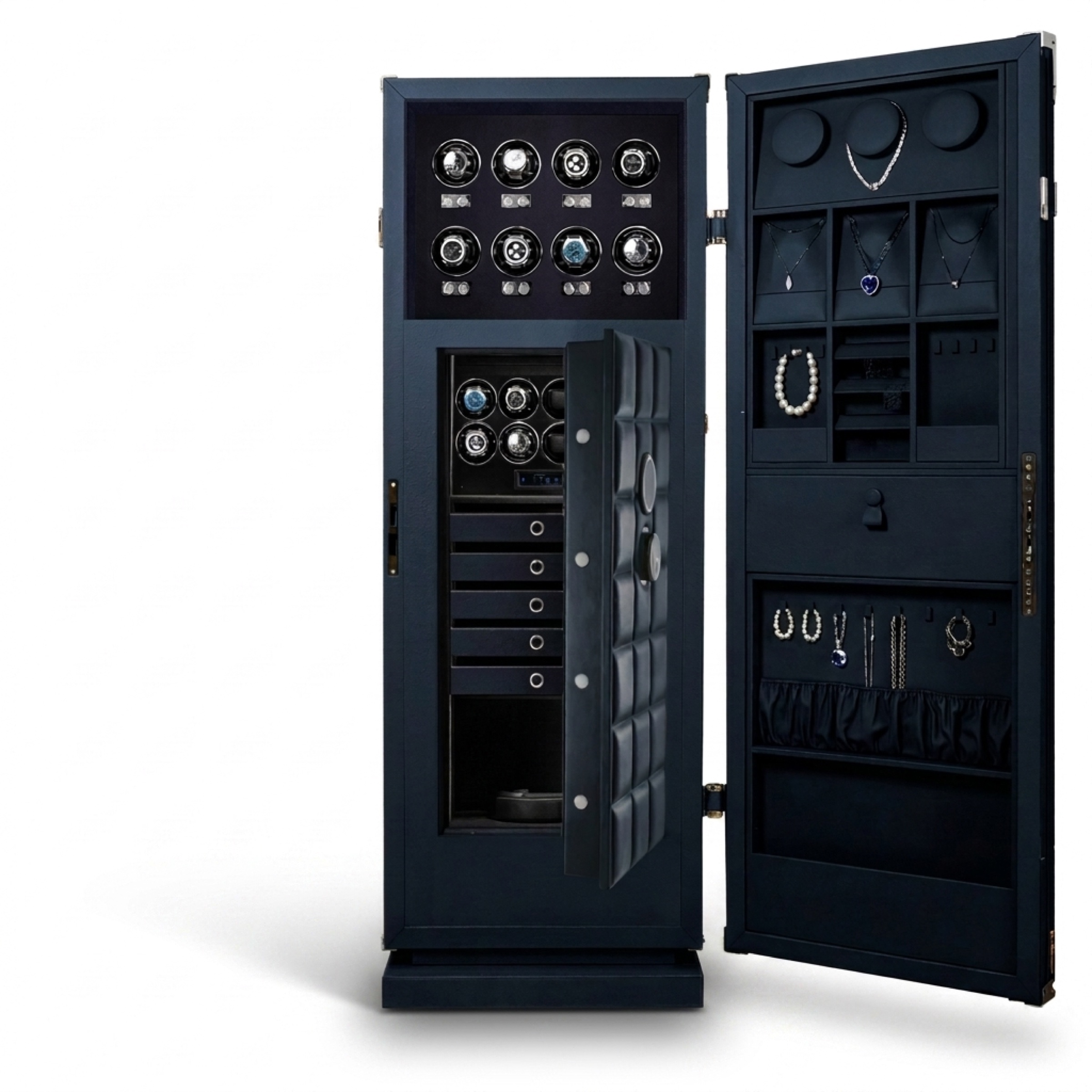
The strongest body means little if the safe can simply be carried off. Our models weigh roughly 200 to 600 kg depending on size and are professionally anchored into the floor or wall on delivery. That makes removal effectively impossible and turns the safe into a fixed part of the building.
"The best safe is one a burglar can neither find nor move — and cannot open in the time available."
Security comes from several layers that reinforce one another. The order below reflects what actually makes the difference during a real break-in:
Thieves work to a pattern: bedrooms, wardrobes and desks are searched first. A safe in a dressing room, a utility space or behind an unremarkable panel buys valuable time. What matters is a placement that allows solid anchoring and stays convenient to use day to day.
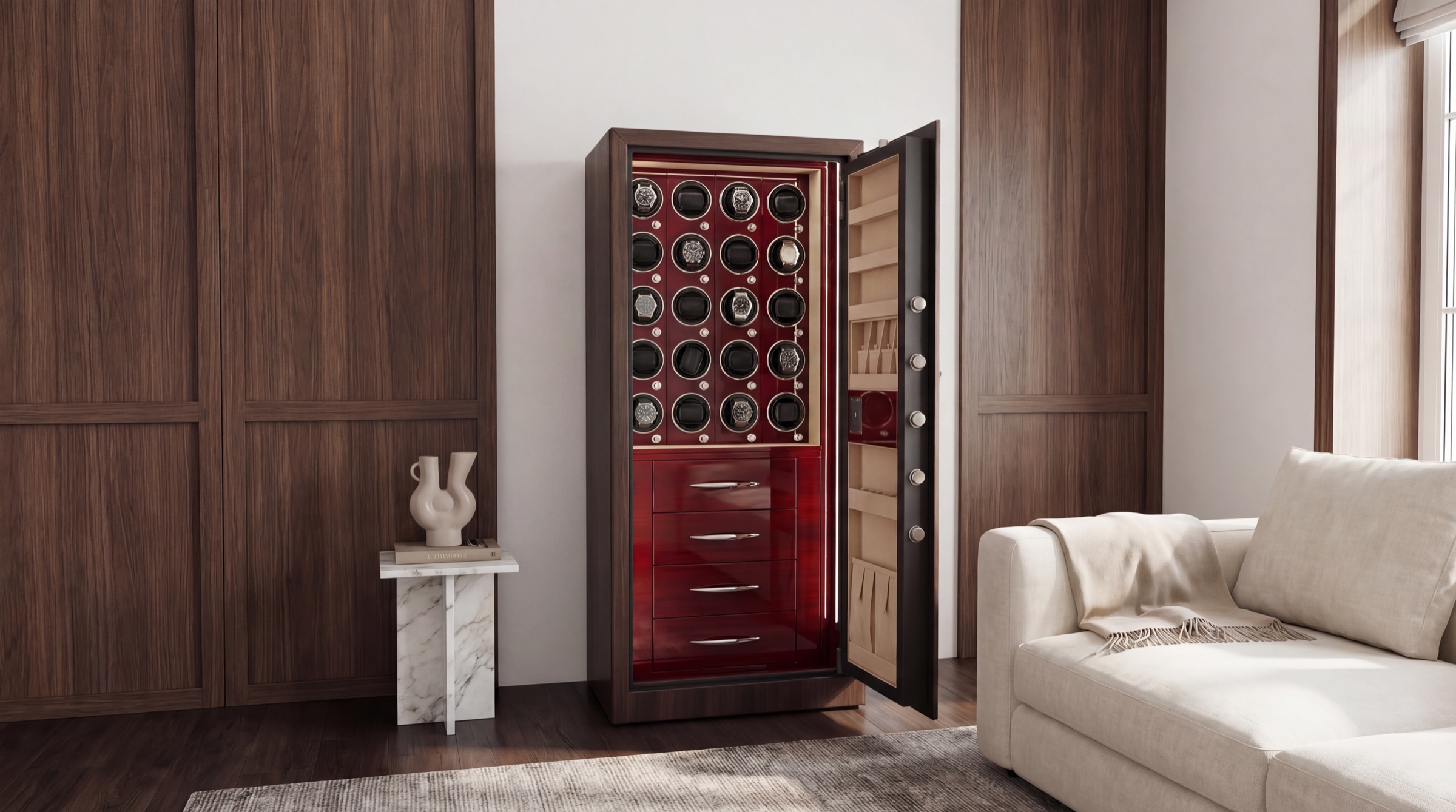
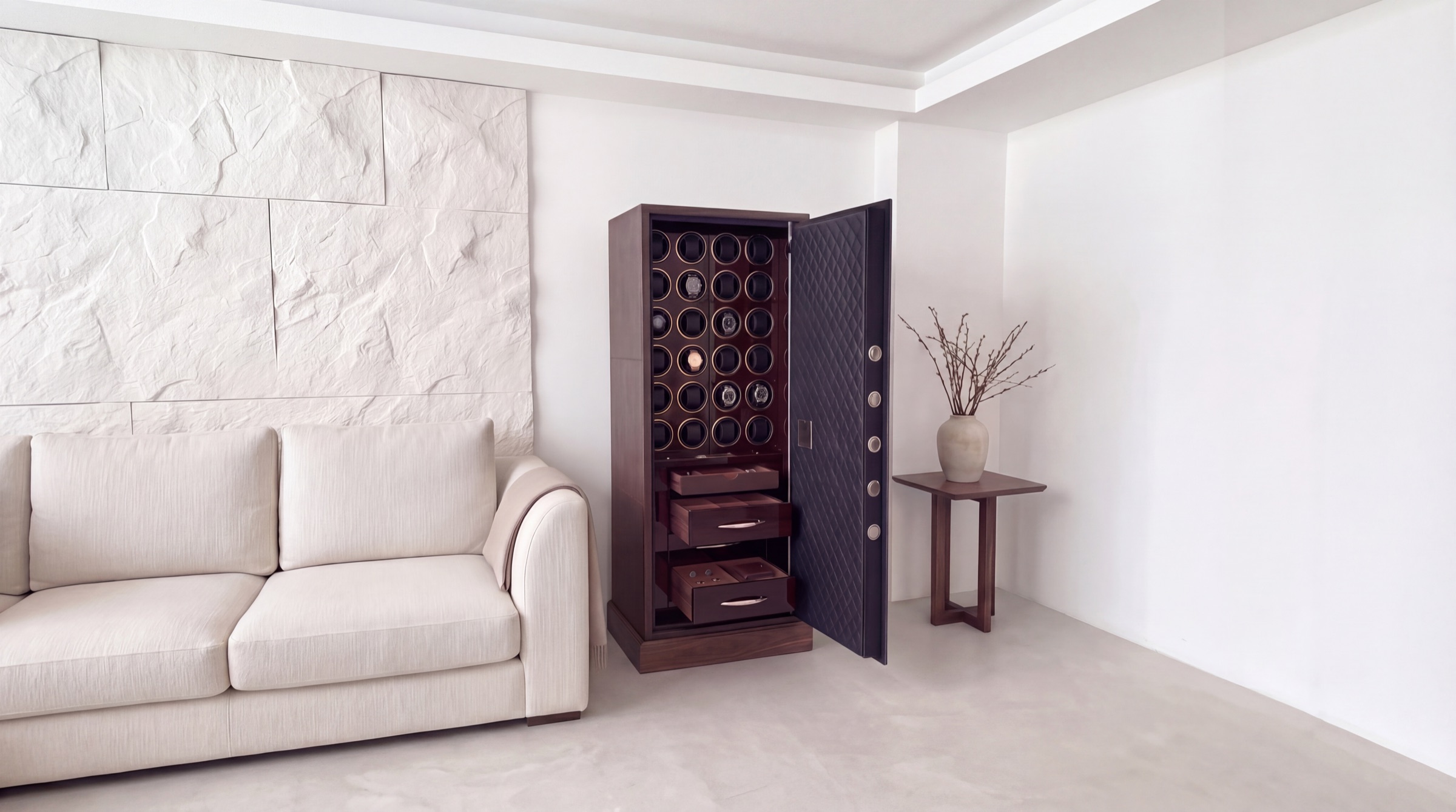
If you are building or renovating, plan the safe in early — for example as a Grand Cabinet that integrates into the room as furniture, or as a built-in solution in a dressing room.
A safe delays the attack; a monitored alarm ensures someone responds before time runs out. Modern systems report shock and door events to a smartphone in real time — more on that in our article on smart safes and alarm integration.
In parallel, the collection should be insured. Insurers tie their cover limits to the safe's specification; without an adequate safe, payouts often fall sharply. We summarise the exact requirements in insurance safe requirements.
| Measure | Protects against | Effect |
|---|---|---|
| Certified safe (EN 1143-1) | forced entry | high — core protection |
| Floor / wall anchoring | safe being carried off | high |
| Discreet placement | quick discovery | medium to high |
| Monitored alarm | unnoticed attack | high when responded to |
| Documentation & insurance | total financial loss | decisive after a loss |
Thorough burglary protection takes less effort than many collectors assume — provided the measures work together. Start with the safe and anchoring, add the alarm and documentation, and your watches are well positioned against the realistic threats. If you are planning from the ground up, our guide on securing a watch collection covers the fundamentals.
Our atelier near Zürich is glad to advise which configuration suits your collection, your home and your insurance — build yours in the configurator or speak to us directly.
No. A basic furniture safe offers concealment but little resistance and can often be opened or removed within minutes. A valuable collection needs a heavy, high-security safe firmly anchored in place.
Kronberg safes weigh roughly 200 to 600 kg depending on size and are additionally anchored into the floor or wall. It is this anchoring that makes removal effectively impossible — weight alone is not enough.
The right EN 1143-1 grade depends on your collection's insured value, because cover limits rise with the grade. For most private collections, a mid-range grade with VdS or ECB·S certification is the sensible balance of cost and protection.
Yes. The safe delays the attack, while a monitored alarm with shock and door sensors ensures someone responds before the burglar has enough time. The two layers complement each other.
Avoid obvious spots such as the bedroom, which thieves search first. A dressing room, utility space or a discreet built-in position works well — the key requirement is a solid base that allows proper anchoring.
Record photos, the serial number, the reference and the purchase receipt for each watch, and store these records safely off-site, for example in the cloud. This documentation is the basis for a full payout if the worst happens.
Book a no-obligation personal consultation with a Kronberg advisor. We'll guide you through every option.