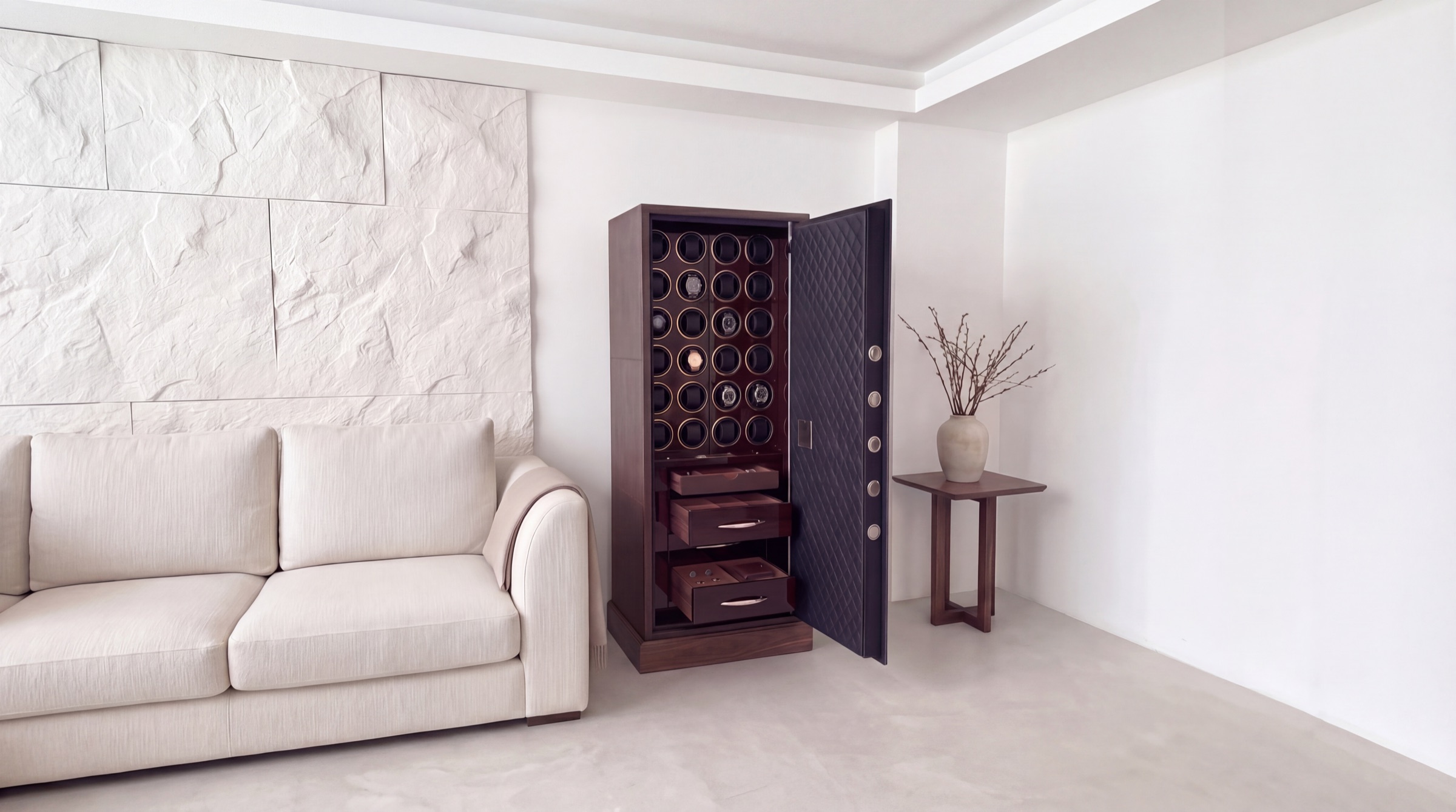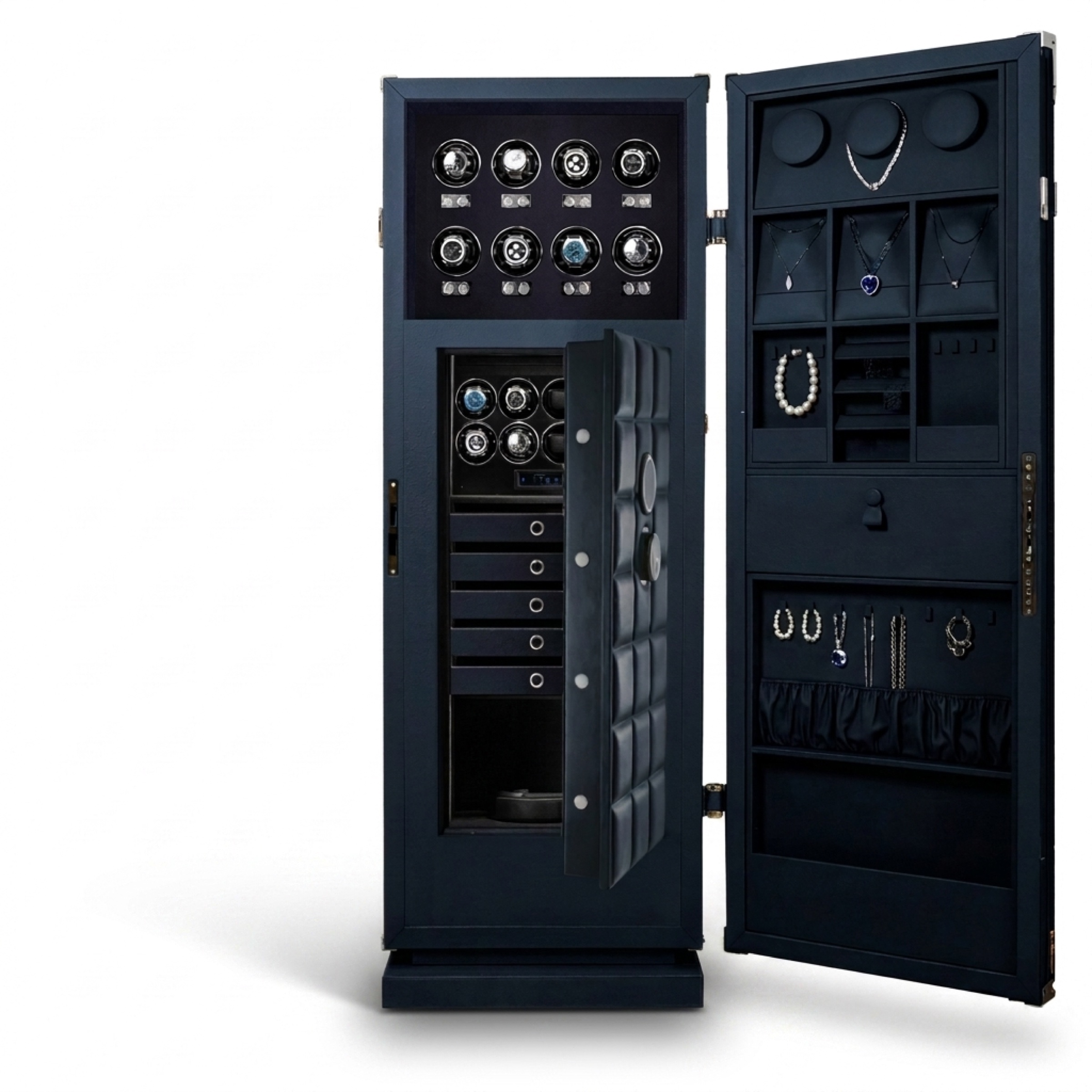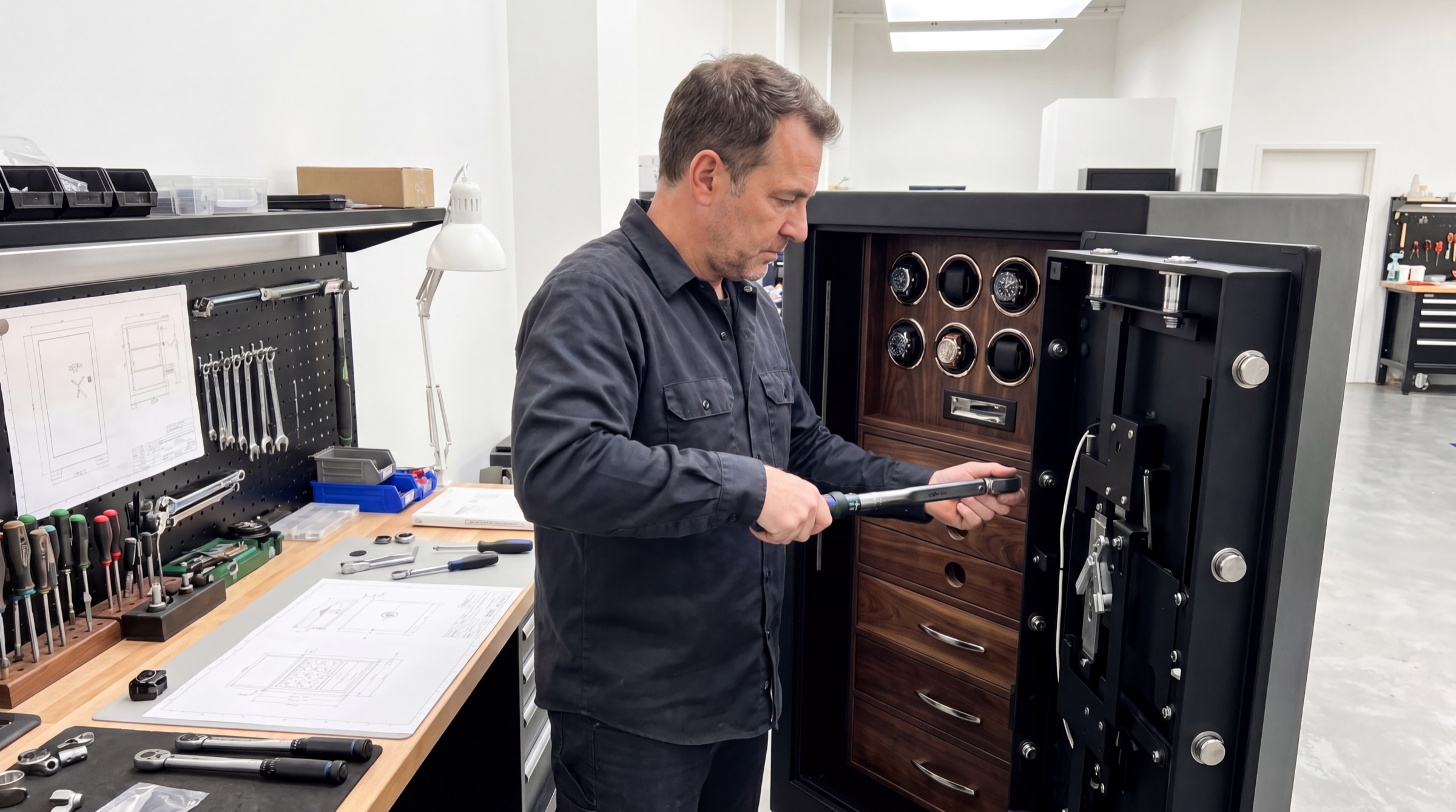
The core insurance safe requirements are simple to state: insurers tie the cover limit for your watches to the safe's tested resistance grade under EN 1143-1, to independent certification by VdS or ECB·S, and to correct anchoring. The higher the grade, the higher the insured limit — and an uncertified furniture safe is usually not accepted at all for a valuable collection.
For collectors that means one thing comes first: before you think about leather or colour, you need a firm figure for the insured value of your watches. That figure decides which safe rating your policy demands, and therefore which safe is even eligible.
Insurers work from the burglary-resistance scale in EN 1143-1, which runs from Grade 0 to Grade VI and is measured in resistance units (RU). The more RU a safe achieves, the longer it withstands a skilled attack — and the higher the value an insurance approved safe can cover in a domestic setting.
The figures below are typical industry guide values; the binding number always sits in your policy.
| EN 1143-1 grade | Typical domestic cover | Suited to |
|---|---|---|
| Grade 0 | up to ~CHF 40,000 | A first, smaller collection |
| Grade I | up to ~CHF 65,000 | A growing collection |
| Grade II | up to ~CHF 100,000 | An established collection |
| Grade III | up to ~CHF 200,000 | Several high-value pieces |
| Grade IV | up to ~CHF 400,000 | A significant collection |
| Grade V–VI | CHF 500,000 and above | A top collection, often with monitoring |
The safe grade is the most important condition, but not the only one. Insurers routinely check three further points before they grant full cover.
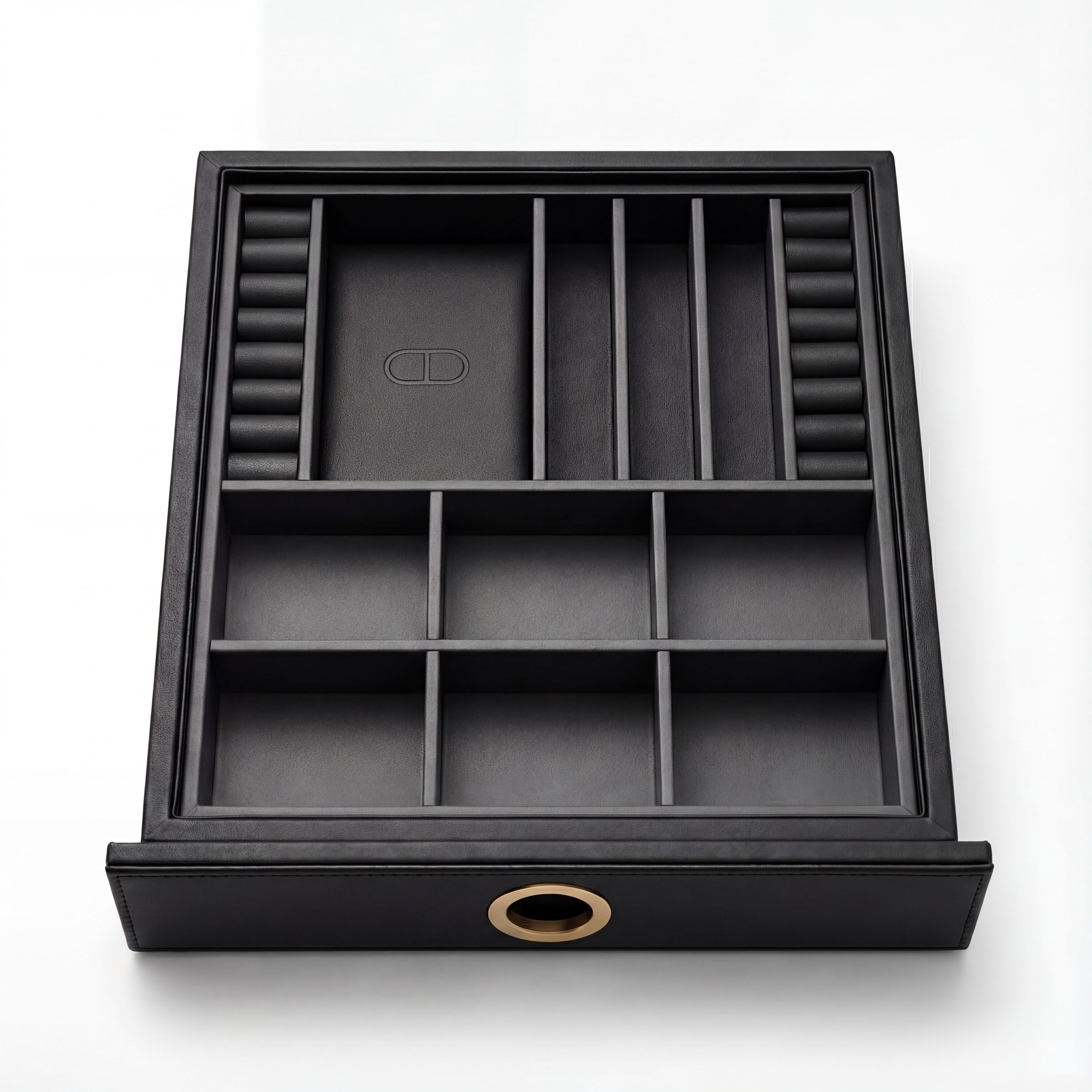
The insured value is the sum of your watches' current replacement values, not their original purchase price. For sought-after references the market value often sits well above what you paid, which is why an annual update is worth the effort.
Keep a receipt, serial number, box-and-papers status and a sharp photograph for each watch, stored separately from the safe — in the cloud, for instance. Our guide on insuring a watch collection shows how to record everything cleanly.
It isn't the safe that sets your cover — it's the certificate that proves the safe is what your policy demands.
For the safe rating insurance recognises, only the tested value counts, not the marketing label. Phrases like "high security" or "security class" with no EN norm and no certificate number carry no weight on a claim. Look for the plate in the door rebate showing grade, norm and test house.
If your collection's value sits on the border between two grades, choose the higher one: the shortfall from being under-insured falls on the owner when a loss occurs. For an honest side-by-side of the options, see our Standard Safe overview.
A certified safe is the foundation, but many policies require extra measures above a given safe grade. Common conditions are a monitored intruder alarm, a minimum front-door specification or anchoring carried out by a professional installer.
Settle these points with your insurer before you buy. Choosing the right grade and fittings alongside the policy and the atelier avoids costly retrofits — our configurator accounts for grade, size and anchoring from the very start.
Three European norms appear again and again in policies, and they measure different things. Keeping them apart lets you read your terms correctly.
EN 1143-1 rates burglary resistance (Grade 0–VI, RU). EN 1300 classifies the lock (classes A–B), which must match the safe's grade. EN 1047 covers fire protection — relevant if you also insure against fire. Ask your insurer which requirements apply to your policy. For collectors in Switzerland we advise personally on +41 44 974 27 19.
Insurers require a safe built for high burglary resistance whose resistance grade matches the insured value; a collection worth six figures usually needs at least Grade II or III with a VdS or ECB·S certificate.
Cover rises with the grade — Grade 0 often covers up to about CHF 40,000 in a home, Grade II up to roughly CHF 100,000 and Grade IV up to around CHF 400,000, though the binding figure always appears in your policy.
VdS and ECB·S are recognised European test houses; their certificate with a unique number proves the safe genuinely achieves the stated EN 1143-1 grade and is the precondition for the cover limit your insurer promises.
Yes, safes under roughly 1,000 kg generally must be properly anchored to floor or wall; our models weigh about 200 to 600 kg depending on size and are professionally installed on delivery.
Keep a receipt, serial number, box-and-papers status and a sharp photo for each watch, store these records separately from the safe, and update replacement values annually because the market value of sought-after references often exceeds the purchase price.
If the certified safe grade is lower than your collection's actual value, the insurer may reduce a payout proportionally or refuse cover — which is why you should choose the higher grade when your value sits on the border between two.
Book a no-obligation personal consultation with a Kronberg advisor. We'll guide you through every option.