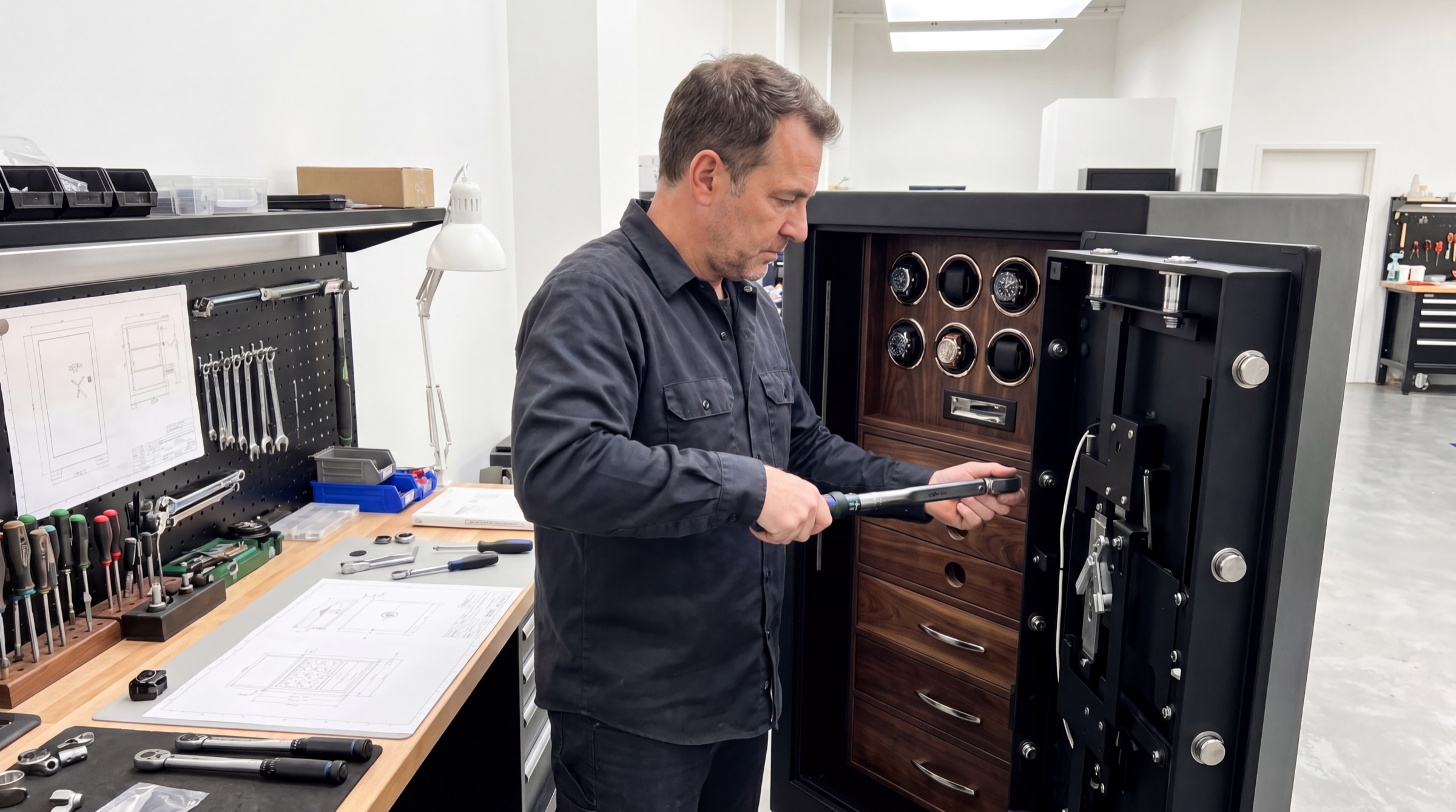
A biometric safe lock opens the safe with your fingerprint instead of a code, which makes it faster and more convenient to use. For actual burglary resistance, however, what matters is not the sensor but the bolt-and-lock mechanism rated to EN 1300 and the burglary-resistance grade of the body to EN 1143-1. A fingerprint safe is therefore only as secure as the mechanical lock it drives.
At Kronberg Collection we see it every week: collectors equate biometrics with security. That is a misunderstanding worth clearing up, because a fingerprint is a way of operating the safe, not a level of protection.
A biometric safe recognises you by a physical trait — usually a fingerprint, occasionally a vein pattern or face. The sensor compares the trait against stored templates and, on a match, sends an electronic signal to release the bolt.
The key distinction is between identification (who opens it) and containment (what withstands attack). Biometrics only replaces entering a code or turning a key. The real barrier against a break-in remains the boltwork mechanism and the wall thickness of the body.
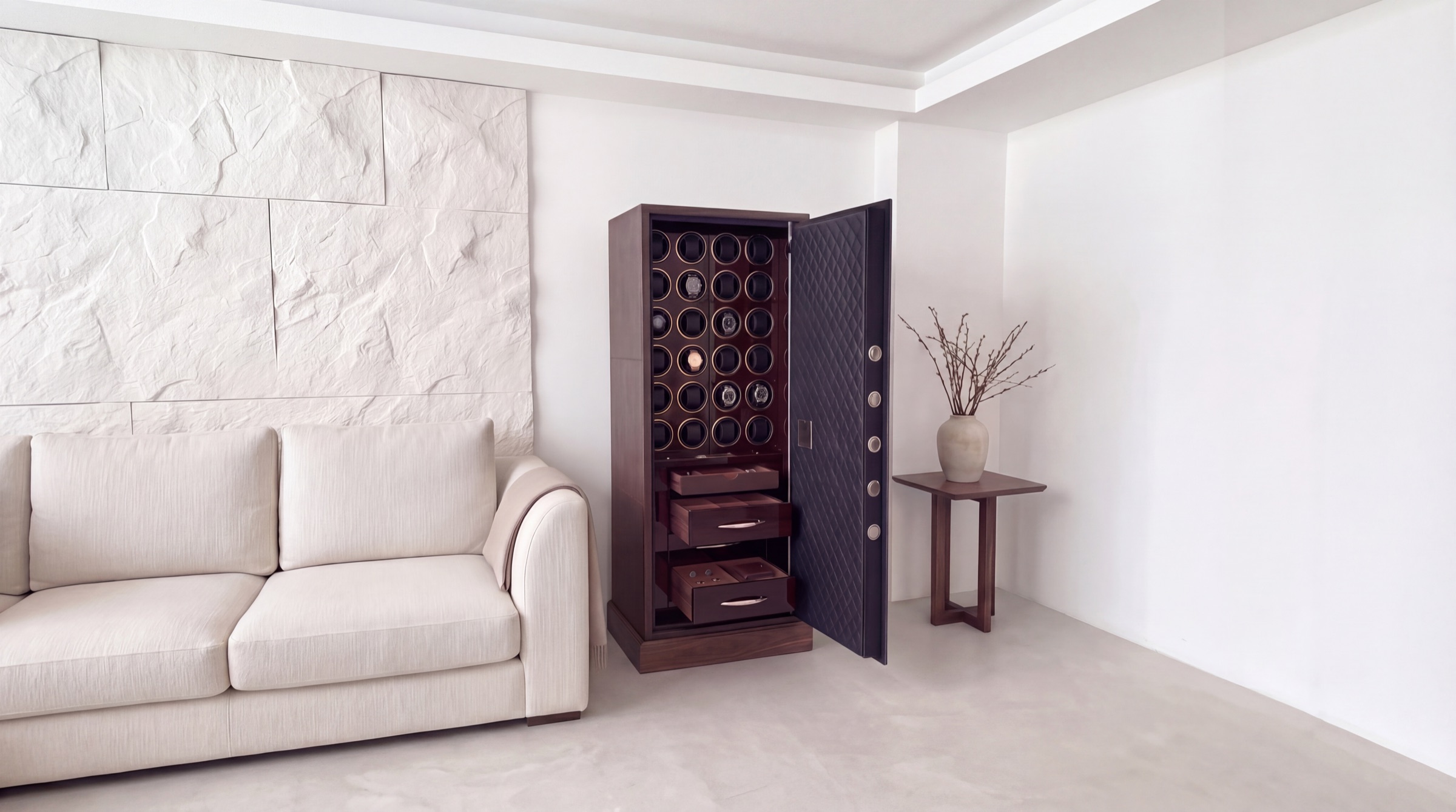
Modern capacitive sensors are dependable but not infallible. Two figures describe their performance: the false rejection rate (your own finger is not recognised) and the false acceptance rate (a stranger's finger is wrongly accepted). Wet, cold or injured fingers noticeably raise the rejection rate.
In practice that means enrolling several fingers and the same finger at slightly different angles. Reputable makers also pair the fingerprint with a code or key backup, so a sensor fault or a flat battery can never lock you out of your own collection.
"A fingerprint decides who opens the safe — not what survives an attack on it."
In real terms, no. Against a burglar it is the safe's resistance that counts, not the way you operate it. A biometric watch safe without a certified boltwork and an EN 1143-1 grade offers little genuine protection despite its high-tech sensor. Conversely, a mechanical or electronic lock of EN 1300 class A or B inside a certified body is the more dependable foundation.
If you want maximum protection, look first at the resistance grade and only then at the convenience feature.
Safe locks are classified under EN 1300 in classes from A to B (and above), regardless of whether they are operated mechanically, electronically or biometrically. For insurance, what counts is the combination of a certified lock and the body's EN 1143-1 grade; the cover limit scales with that grade.
So check whether a fingerprint safe carries a VdS or ECB·S certification at all. Many inexpensive biometric safes are uncertified and therefore unsuitable for a serious valuables policy.
| Lock type | Convenience | Backup | Security contribution |
|---|---|---|---|
| Mechanical combination | Medium | None needed | Class A/B to EN 1300 |
| Electronic keypad | High | Override key / reserve code | Class A/B to EN 1300 |
| Biometric (fingerprint) | Very high | Code or key required | Only via boltwork & body |
| Redundant (biometric + code) | Very high | Built in | Recommended for collectors |
Biometrics is ideal if you wear your watches daily and need the safe to open and close quickly several times a day. It also shines in households with more than one authorised person. If you rarely open the safe and use it as long-term storage, a robust electronic or mechanical lock usually offers a calmer, lower-maintenance experience.
At Kronberg Collection, every safe — from the Standard Safe to a bespoke Grand Cabinet — can be fitted with an electronic or biometric lock, and always with a code backup. To decide what suits your collection, see our piece on choosing a watch safe or use the configurator.
Look for a certified boltwork, a clearly documented backup and a high-quality, replaceable sensor. A good biometric safe stores fingerprint templates locally and encrypted — never in a cloud. If you want connected protection, also read our guide to smart safes and alarm integration.
Do not be dazzled by the technology: a biometric safe lock is a pleasant way to open a safe, but the real protection of your watches comes from the body, the anchoring and the certification. Talk to us directly on +41 44 974 27 19 — we advise every client personally.
A safe's security depends not on the fingerprint sensor but on the boltwork rated to EN 1300 and the body's burglary-resistance grade to EN 1143-1. Biometrics is a way of operating the safe and does not add to its resistance.
High-quality capacitive sensors detect living tissue and are hard to spoof, while cheap models are more vulnerable. Either way, what matters to a burglar is mechanical resistance, not defeating the sensor.
A reputable biometric safe always includes a backup by code or override key so you are never locked out. At Kronberg Collection this backup is provided as standard.
Yes, provided the safe and its lock meet the specification your insurer requires. The cover limit follows that resistance grade, not the way you open the safe.
Biometrics is more convenient and faster, but security-wise it is equivalent as long as the same certified boltwork sits behind it. It is ideal for daily use, while a rarely opened long-term store is well served by a robust code or mechanical lock.
Book a no-obligation personal consultation with a Kronberg advisor. We'll guide you through every option.