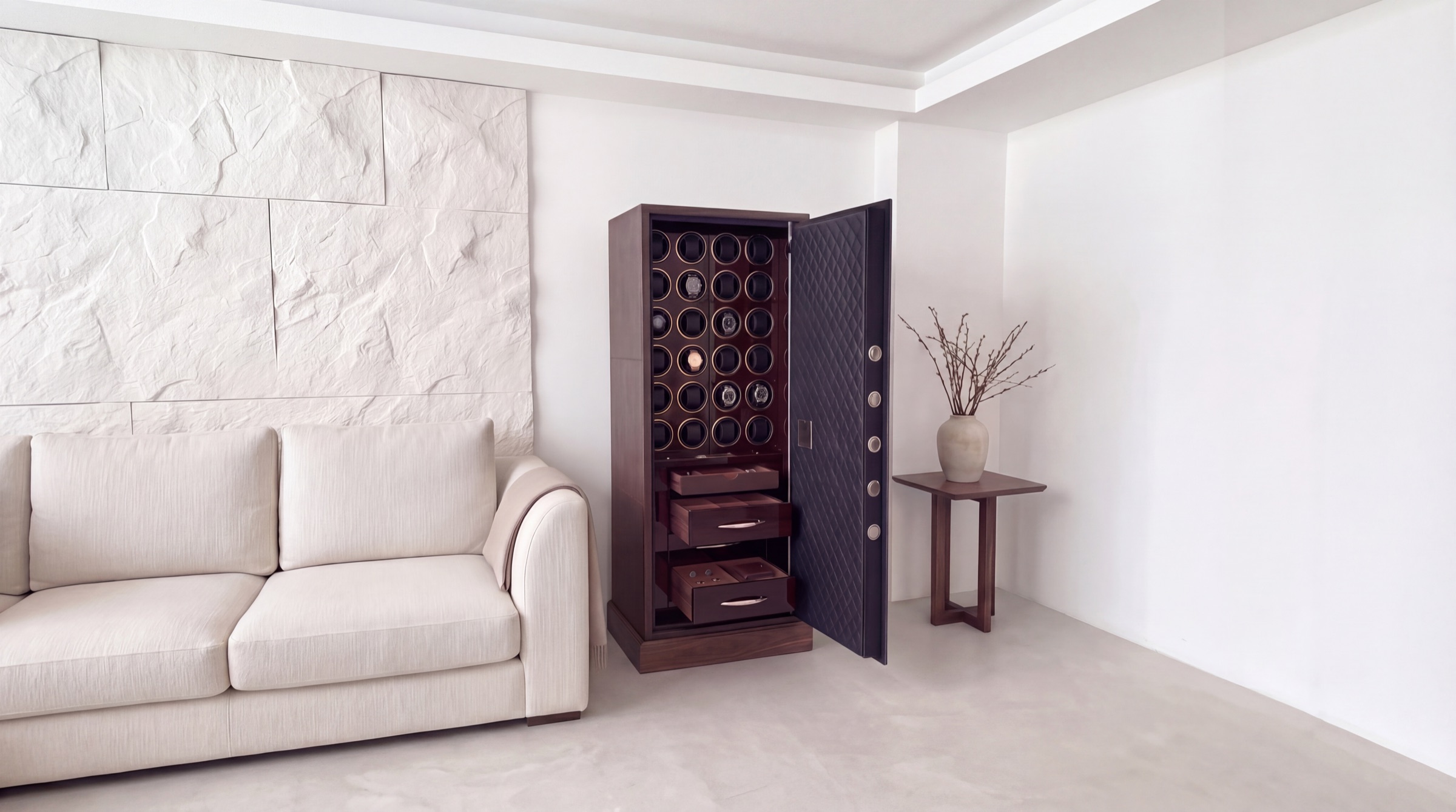
Watch theft is rising across Europe, and the picture the watch theft statistics paint is sobering for collectors: high-value timepieces are increasingly targeted in burglaries, street robberies and confidence tricks. The most important takeaway is that an expensive watch without documented proof of ownership and a high-security safe is often neither replaced nor recovered. Treating stolen watches as a real risk means combining discretion, documentation and a tested place to keep them.
Affluent, low-crime regions can lull collectors into a false sense of security — yet that very stability makes luxury watches a rewarding target. A steel sports watch sells in minutes, is hard to identify uniquely and travels easily across borders. This article frames the numbers and shows what genuinely protects a collection.
There is no single, clean dataset that counts only stolen watches — watches almost always fall under the broader headings of burglary and robbery. What the available watch crime figures consistently show, however, is that sought-after models from well-known brands are over-represented, precisely because they convert to cash quickly.
For collectors, the lesson is not to be reassured by a low overall crime rate. The relevant risk is not the probability of a break-in itself, but the potential loss in a single incident — and for a collection that figure climbs into six figures fast.
Most losses come not from professional safe-crackers but from opportunists who spend a few minutes searching the bedroom, the bedside drawer and the sock drawer — exactly where watches most often sit. Observation and social media also play a larger role than many collectors assume.
Anyone who displays their watches publicly or shares locations is, in effect, publishing a target list. Discretion is one of the cheapest and most effective defences available.
The financial loss is only part of the story. Many home-contents policies cover valuables only up to a flat sub-limit — beyond that you need a dedicated valuables policy, and often proof that items were kept in a high-security safe. Without that proof, a payout can be reduced or refused outright.
Then there is the irreplaceable loss: heirlooms, discontinued references and limited editions cannot simply be re-bought. Knowing the first steps to take after a watch theft before it happens makes a real difference to recovery odds.
"The break-in is rarely the real problem — it's that the most valuable watch was sitting in the least secure piece of furniture."
Genuine protection is always a combination of discretion, mechanical security and documentation. A safe tested to EN 1143-1 denies opportunists their prize because it can be neither opened nor carried off in the time available. Insurance cover limits scale with the resistance grade, measured in resistance units (RU).
Thinking about storage and insurance together from the outset avoids nasty surprises. How to protect a collection against burglary and which safe requirements insurers actually impose are covered in their own guides — the two are inseparable.
The reference below links resistance grade to typical cover. Your individual policy always governs, but the logic is consistent everywhere: more value demands a higher grade.
| EN 1143-1 grade | Typical private cover limit | Suited to |
|---|---|---|
| Grade 0 / I | up to ~ CHF 40,000–65,000 | First watches, small collection |
| Grade II | up to ~ CHF 100,000 | Growing collection with sports watches |
| Grade III | up to ~ CHF 200,000 | Established multi-brand collection |
| Grade IV+ | higher, per policy | High-value and limited pieces |
These figures are practical guide values; what binds is your insurer's terms and the safe's VdS or ECB·S certification.
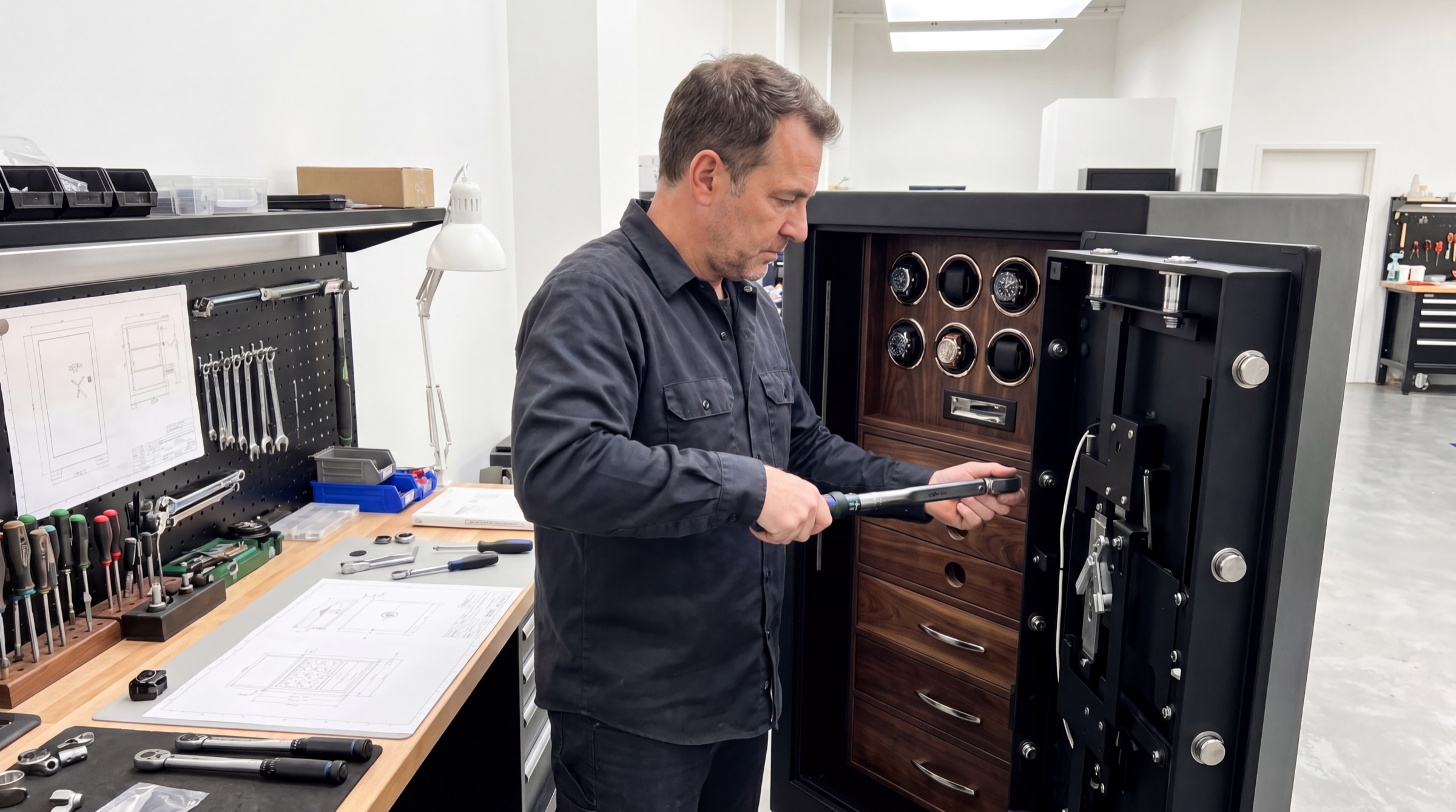
The most effective lever is low visibility combined with a heavy, anchored safe. A Kronberg Collection Standard Safe weighs roughly 200–600 kg depending on size and is professionally anchored, so it cannot be removed whole.
Keep watches out of the obvious bedroom jewellery box, document every piece with photos and receipts, and never broadcast your location or collection. Collectors wanting a larger or especially discreet solution will find a bespoke, furniture-integrated alternative in the Grand Cabinet, while our collection gives a first overview of the options.
Handmade in our atelier near Zürich, we are happy to advise you personally on +41 44 974 27 19 or via our contact page — from the right size to correct anchoring.
There is no single dataset that counts only stolen watches, because they fall under broader burglary and robbery figures. Those figures consistently show that sought-after models from well-known brands are over-represented, since they convert to cash quickly and travel easily across borders.
No. Many home-contents policies cover valuables only up to a flat sub-limit; beyond that you need a dedicated valuables policy and often proof that items were kept in an high-security safe, or the payout can be reduced or refused.
A safe tested to EN 1143-1, professionally anchored and carrying VdS or ECB·S certification offers the strongest protection, because opportunists can neither open nor carry it off in the time available. The grade you need depends on the total value of your collection.
Thieves typically search bedrooms, bedside tables and jewellery boxes first, because that is where watches most often sit. Keeping valuable pieces in an anchored safe rather than an obvious piece of furniture removes the easy target.
Yes, considerably. Publicly shown watches or shared locations effectively hand thieves a target list, so restraint online is a simple but genuinely effective part of burglary protection.
Book a no-obligation personal consultation with a Kronberg advisor. We'll guide you through every option.