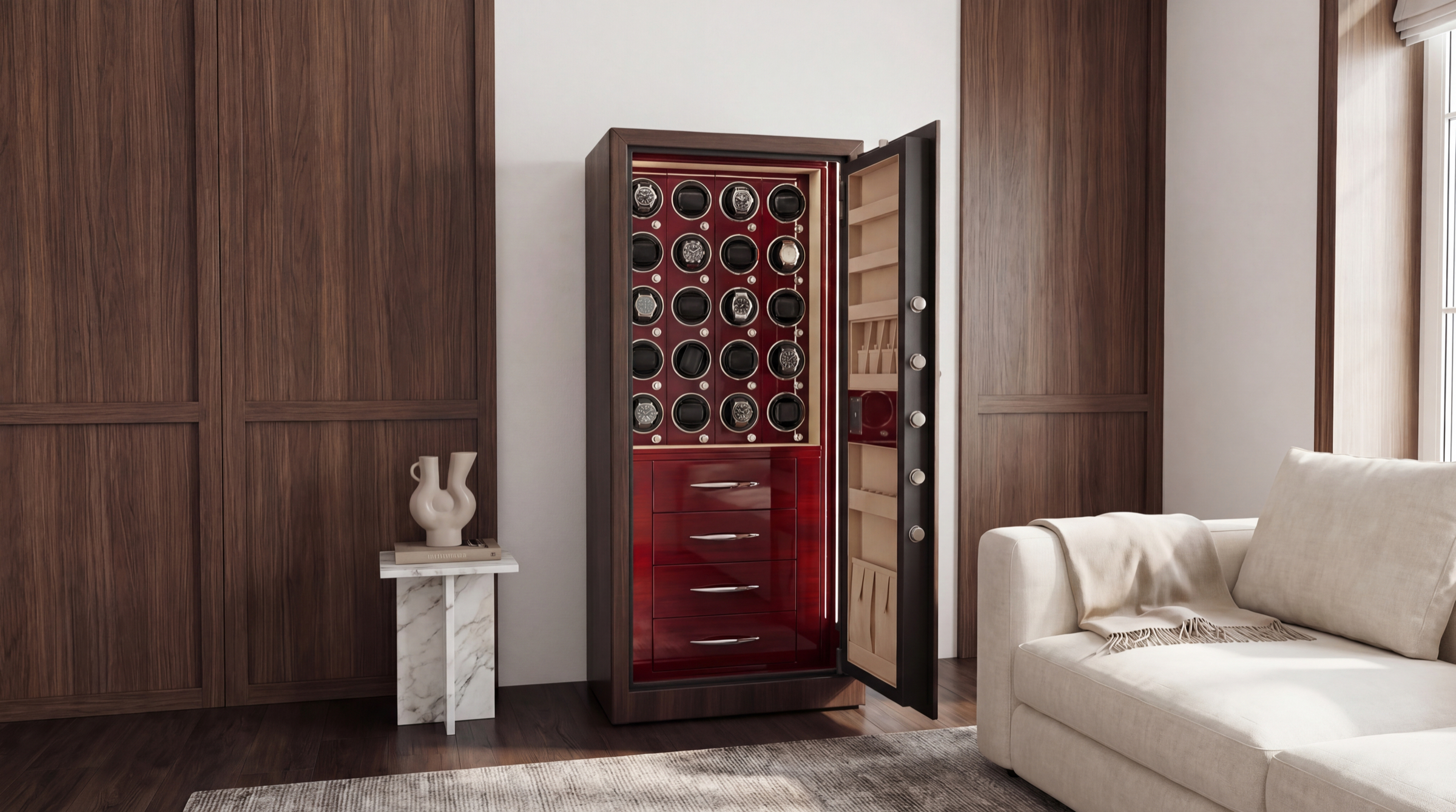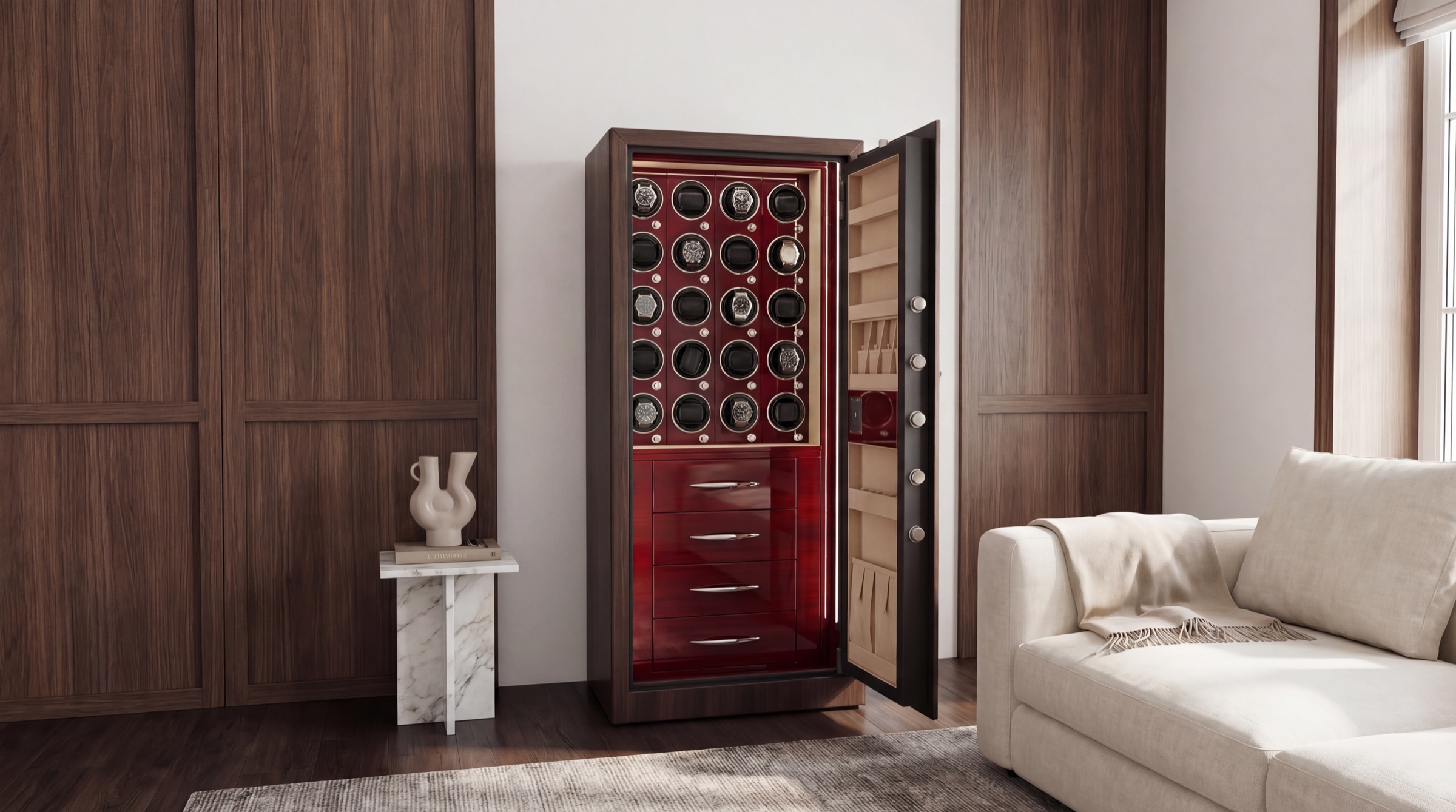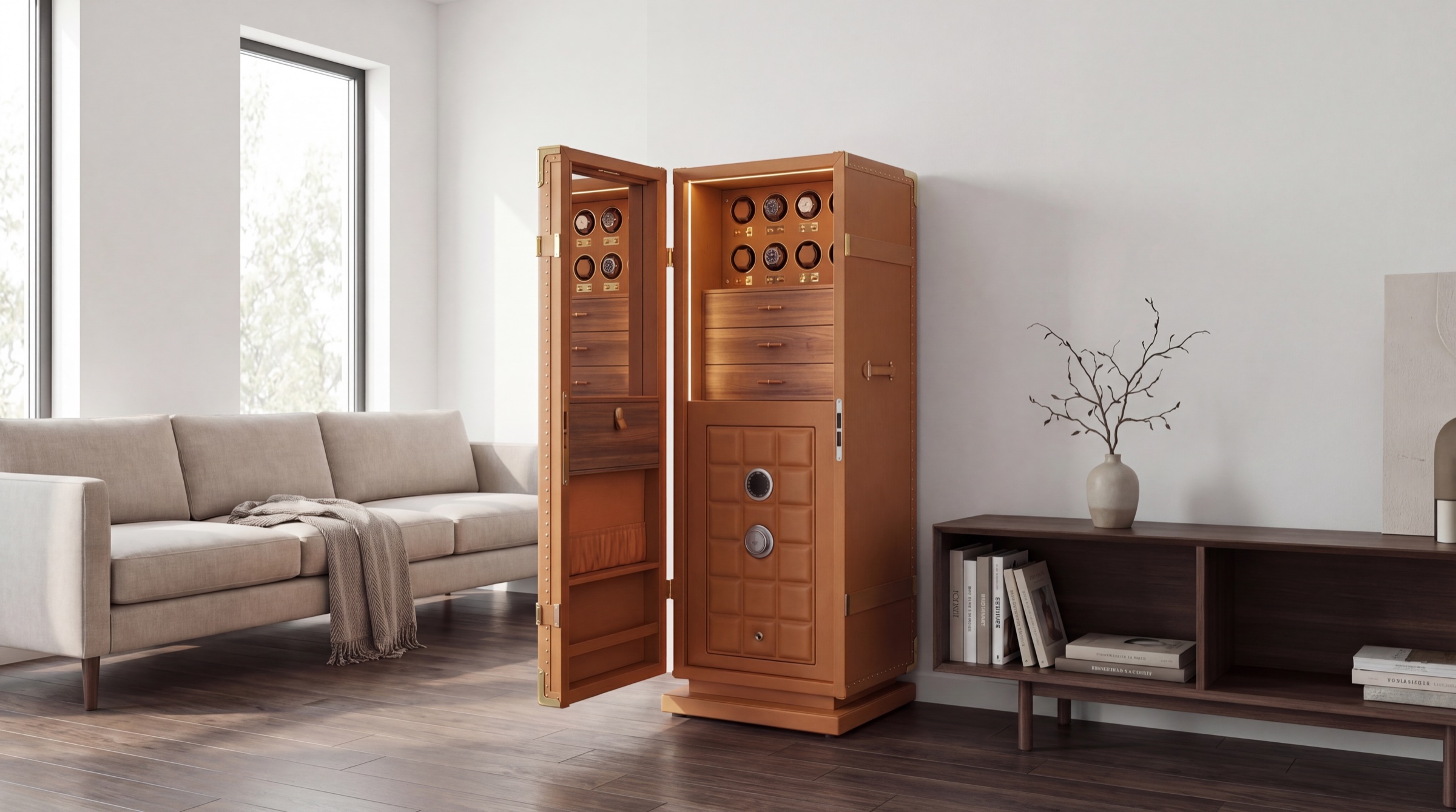
For most active collectors, a high-security watch safe at home is the better choice than a bank vault: it gives you daily access, correct storage with winders, and — when properly built for high burglary resistance — fully insurable protection. A bank vault (safe deposit box) only wins when you leave watches untouched for months and want maximum anonymity from burglars. So the question of watch safe vs. bank vault is less about raw security than about how you actually wear your collection.
Both options can be highly secure, but in different ways. A bank vault benefits from the bank's structural strongroom and on-site supervision, which deters opportunists. A certified watch safe at home, in turn, offers a tested mechanical resistance that can be expressed as a concrete number.
The key standard is EN 1143-1, which measures burglary resistance in resistance units (RU) and assigns a grade (0–VI). A Kronberg Grand Cabinet can be specified to a grade that matches your insured value — whereas with a bank you often don't know that figure for your specific box.
This is the biggest difference. Household insurers usually tie the cover limit for valuables directly to your safe's EN 1143-1 grade: a higher grade means a higher insured limit. A safe certified by VdS or ECB·S pushes that ceiling up considerably.
With a safe deposit box, the bank generally accepts no broad liability for the contents — it owes safekeeping, not replacement value. You therefore need your own policy regardless. We cover the proof insurers ask for in insurance safe requirements.
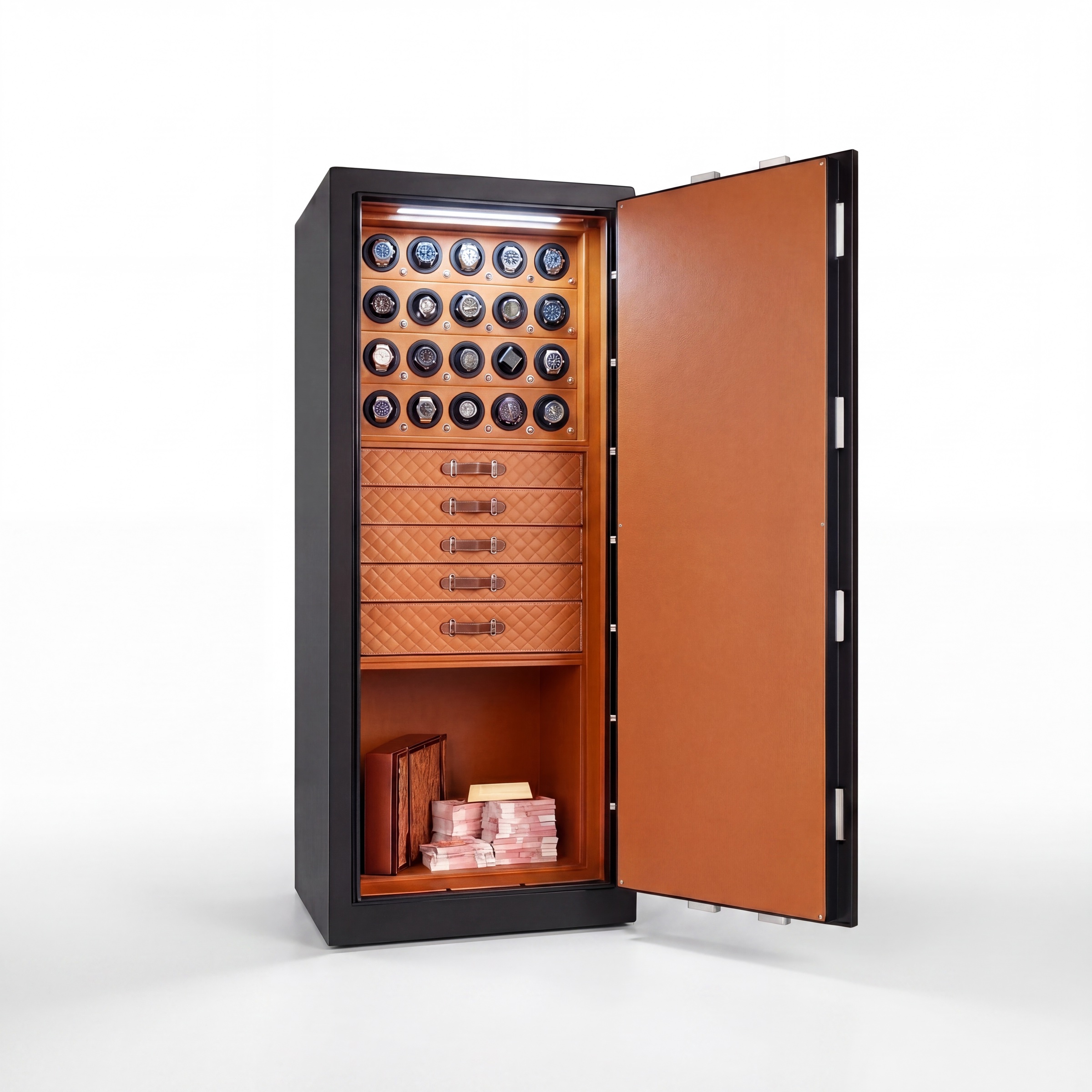
A collector who rotates watches wants them within reach in the morning — not only during banking hours. A watch safe in the dressing room solves this in seconds and keeps automatic watches ready to wear via integrated winders.
A bank vault imposes trips, appointments and waiting. For a pure investment or heirloom collection that is tolerable; for a collection you actually wear it quickly becomes impractical. We expand on the case for home integration in freestanding vs. built-in watch safe.
A bank vault guards your watches — a good watch safe also lets you wear them.
A bank vault carries an annual rental fee that never ends and rises with box size. A watch safe is a one-time investment that stays in your home and adds to the property. Over ten or twenty years, the bank's apparent cost advantage often reverses.
Kronberg models start with the Standard Safe 85 cm from CHF 12'900 for up to roughly 30 watches; the Grand Cabinet, a furniture-grade safe, starts from CHF 29'900. For a full breakdown, read how much a watch safe costs.
One argument for the bank is anonymity: nobody sees your collection, and it stays untouched even in a home burglary. That is a genuine advantage, especially for very rare pieces or during long absences.
A safe kept at home asks for careful discretion in return — delivery, placement and simply not talking about the collection. With professional professional installation and a safe that reads as furniture from the outside, that drawback can be largely neutralised. See the Standard Safe for examples.
It need not be either-or. Many experienced collectors combine both: the worn pieces and automatic watches in their own watch safe, and rarely moved special pieces or pure investments in a bank vault.
| Criterion | Watch safe (at home) | Bank vault |
|---|---|---|
| Daily access | Instant, anytime | Banking hours only |
| Winders / upkeep | Can be integrated | Not possible |
| Insurable value | Scales with EN 1143-1 grade | Bank rarely liable |
| Cost | One-time from CHF 12'900 | Recurring annual rent |
| Anonymity | Discretion required | Very high |
| Climate control | Available | Rarely controllable |
If you are unsure, the decision starts best with an honest inventory: how many watches do you truly wear, and what is pure storage? Our configurator helps plan size and fit-out, and the atelier near Zürich will advise you personally on the right combination.
Both can be very secure but in different ways. A certified watch safe offers a measurable, EN 1143-1-tested resistance plus daily access, while a bank vault protects mainly through anonymity and the bank's structural strongroom.
No. The bank generally only owes safekeeping and is not liable for the value of the contents, so you still need your own valuables or household policy even with a safe deposit box.
A bank vault carries an annual rental fee that rises with box size, while a watch safe is a one-time purchase — Kronberg models start from CHF 12'900. Over several years the owned safe is often cheaper.
No, a bank vault offers no winders, so automatic watches stop. A watch safe can be fitted with programmable winders (turns-per-day and direction) that keep your watches ready to wear.
Yes, many collectors keep worn pieces and automatic watches in their own watch safe and store rarely moved special pieces or pure investments in a bank vault, combining easy access with maximum discretion.
Book a no-obligation personal consultation with a Kronberg advisor. We'll guide you through every option.