When buying a watch winder, the case is the last thing that matters — focus on the motor, the TPD control and how quietly it runs. A good winder keeps any automatic watch wound without over-winding it, and does so silently for years. Those three factors separate a serious winder from a decorative gadget that fails within two seasons.
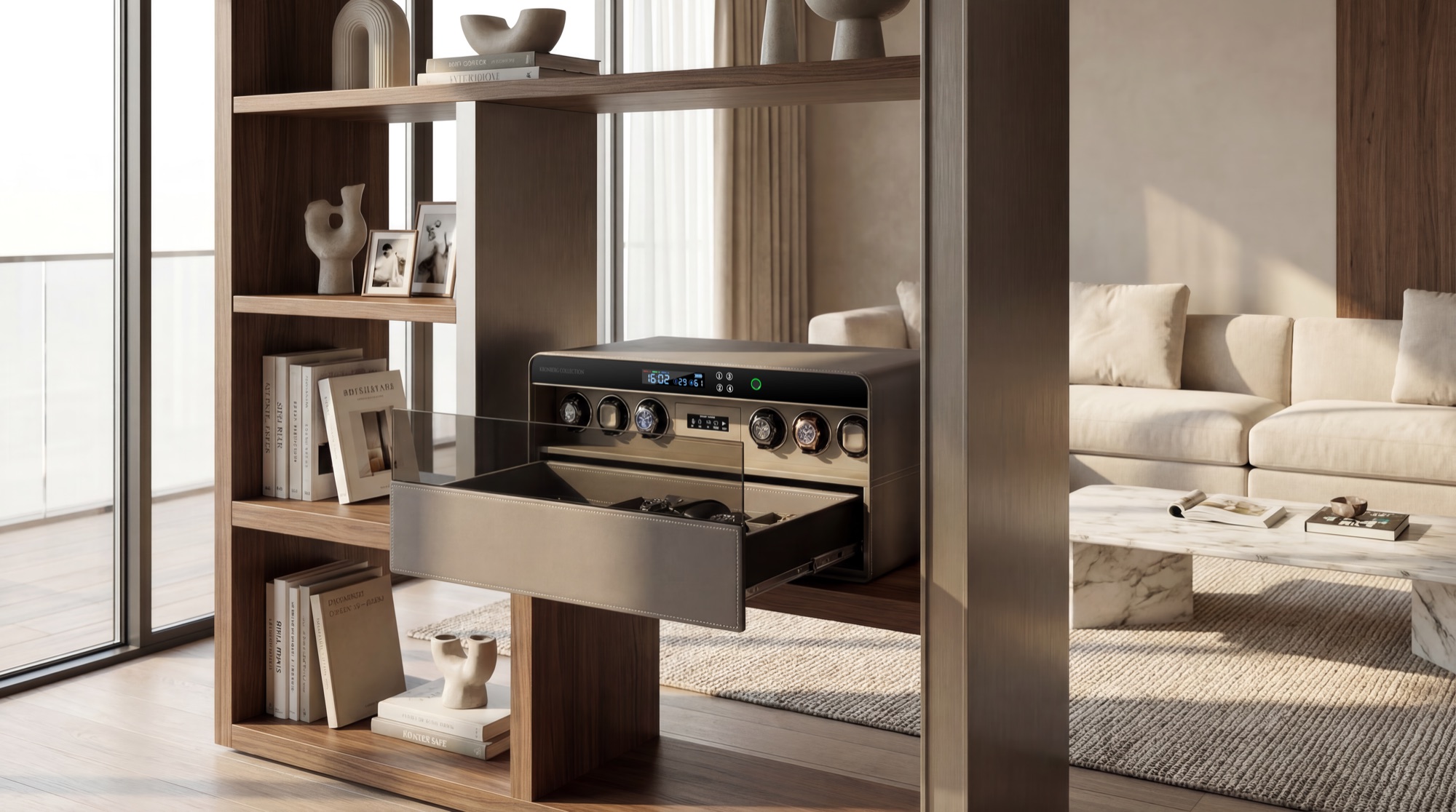
At Kronberg Collection we build watch winders in 3-, 6- and 12-module configurations, each module individually programmable for turns-per-day and direction. This guide covers the criteria that count and where you should look harder before you buy.
The single most important part is the motor. Quality winders use Japanese Mabuchi motors that run quietly and are rated for hundreds of thousands of cycles. Cheap units use noisy drives that wear out fast — the most common reason a winder dies early.
Equally critical is individual programmability. Different calibres need different settings, so a winder where each module sets its own TPD and direction always beats a one-size-fits-all program. For the mechanics behind it, see our explainer on how a watch winder works.
On price, the honest answer is that a real winder costs what a brand-name motor, clean control electronics and genuine craftsmanship demand. Very cheap units save in exactly those places — the motor, the bearings and the circuitry.
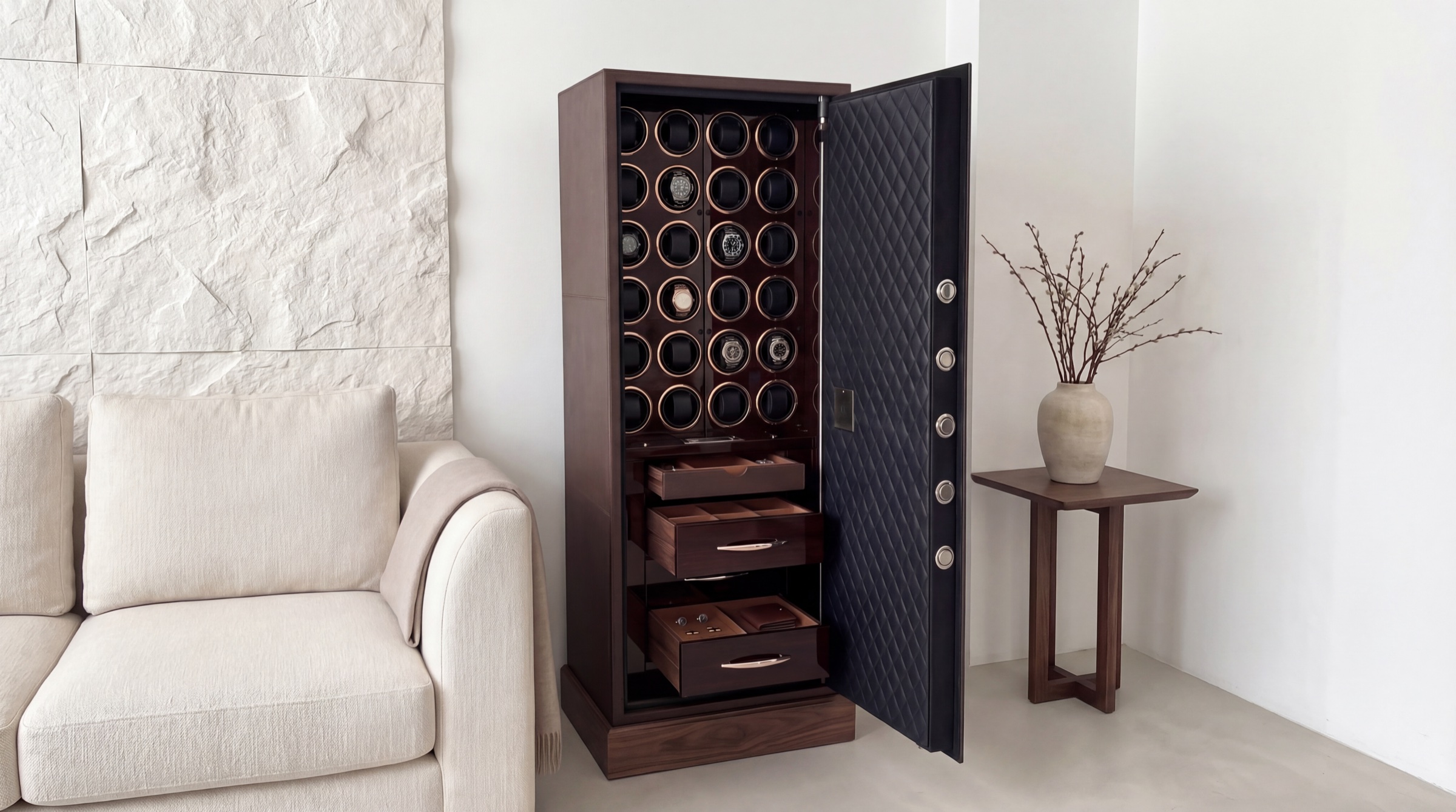
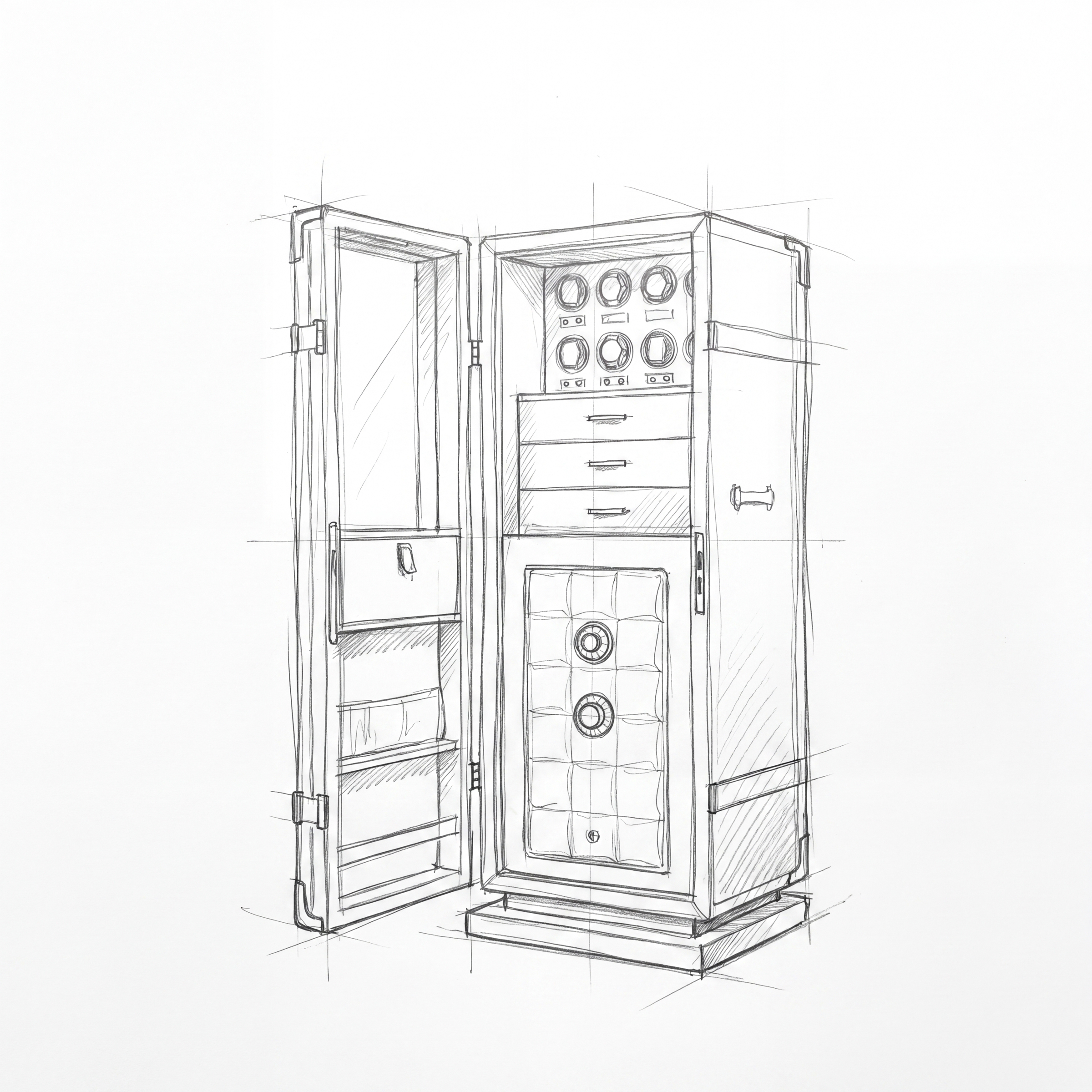
If you are protecting a serious collection, it is often worth thinking bigger: a Standard Safe can house up to 24 or 40 winders inside the strongbox itself — security and motion in one piece of furniture. More on that in built-in watch winders.
Match the module count to your collection, with a little headroom. If you rotate two automatics, a 3-module winder is enough. As the collection grows, a 6- or 12-module unit is the calmer choice because you stop re-seating watches every week.
Look for freely adjustable TPD values (typically 650–1000), selectable direction (clockwise, counter-clockwise, bidirectional) and a rest mode that turns the watch in intervals rather than continuously. That intervalled motion is gentler on the movement and is what most calibres actually want.
| Criterion | What to look for | Why it matters |
|---|---|---|
| Motor | Mabuchi or equivalent, quiet | Lifespan and smooth running |
| TPD | Freely set 650–1000 | Fits any calibre |
| Direction | CW / CCW / bidirectional | Calibre-dependent |
| Rest pauses | Interval mode present | Protects the movement |
| Interior | Full-grain leather, soft cushions | Protects case and strap |
| Power | Mains and/or battery | Reliability if power fails |
"A watch winder is only as good as its motor — everything else is packaging."
A winder usually lives in a bedroom or dressing room. A loud unit gets banished to a cupboard — and then the watch never gets wound. A quiet motor is therefore not a luxury but the condition for the winder being used at all. What to listen for is covered in quiet watch winders.
Also check the bearings on the rotating parts and the rigidity of the housing. Vibration through the case is a clear warning sign of poor construction.
Set correctly, no. A winder running the right TPD with rest pauses keeps the watch moving without stressing it. Trouble only arises from constant over-winding at an excessive TPD with no pauses. We address the myth in are watch winders bad.
For a valuable collection, the winder is part of the interior. We finish our modules in full-grain leather, Alcantara or velour in navy, cognac, cream, forest green or black, matched to your safe or cabinet. If you are unsure which configuration fits, plan it in the configurator or call us on +41 44 974 27 19. Personal advice is always available via the contact page.
Check the motor and the TPD control first. A quiet brand-name motor such as a Mabuchi and freely adjustable turns-per-day (650–1000) matter more than looks, because they decide both lifespan and how gently the movement is treated.
A genuine winder costs what a brand-name motor, clean electronics and real craftsmanship require. Very cheap units cut corners on the motor and bearings and often fail within a few years.
Base it on the number of automatic watches you wear regularly, plus a little reserve. One or two watches suit a 3-module winder, while maturing collections are better served by 6 or 12 modules.
No. Quartz watches run on a battery and hand-wound watches are wound manually — a winder is only useful for self-winding automatic watches.
Yes. At Kronberg Collection, up to 24 or 40 winders can be integrated directly into a Standard Safe depending on the model, combining security and motion in one piece of furniture.
Not when set correctly. With the right TPD value and rest pauses, the winder keeps the watch moving without overloading the movement.
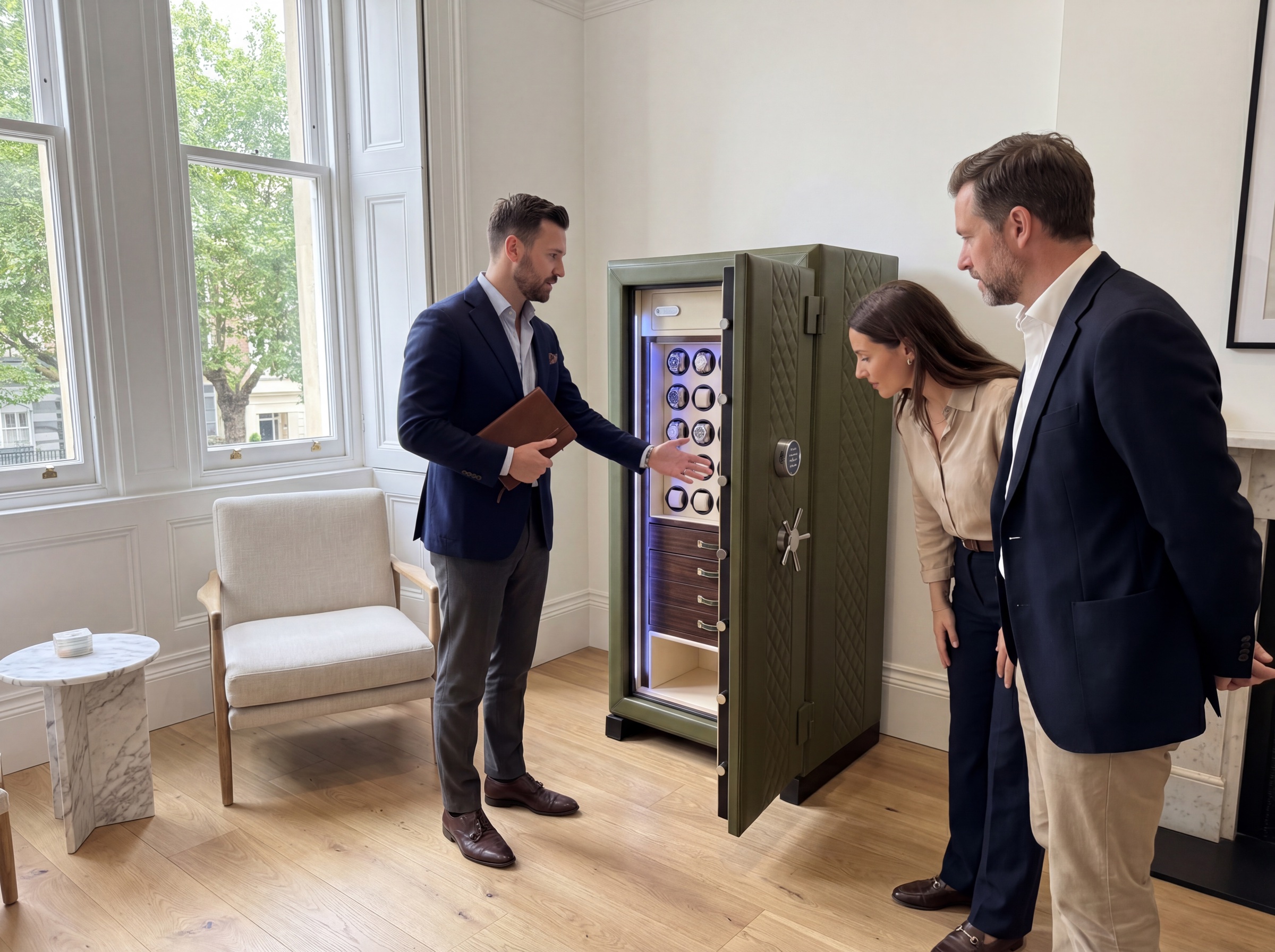
Book a no-obligation personal consultation with a Kronberg advisor. We'll guide you through every option.