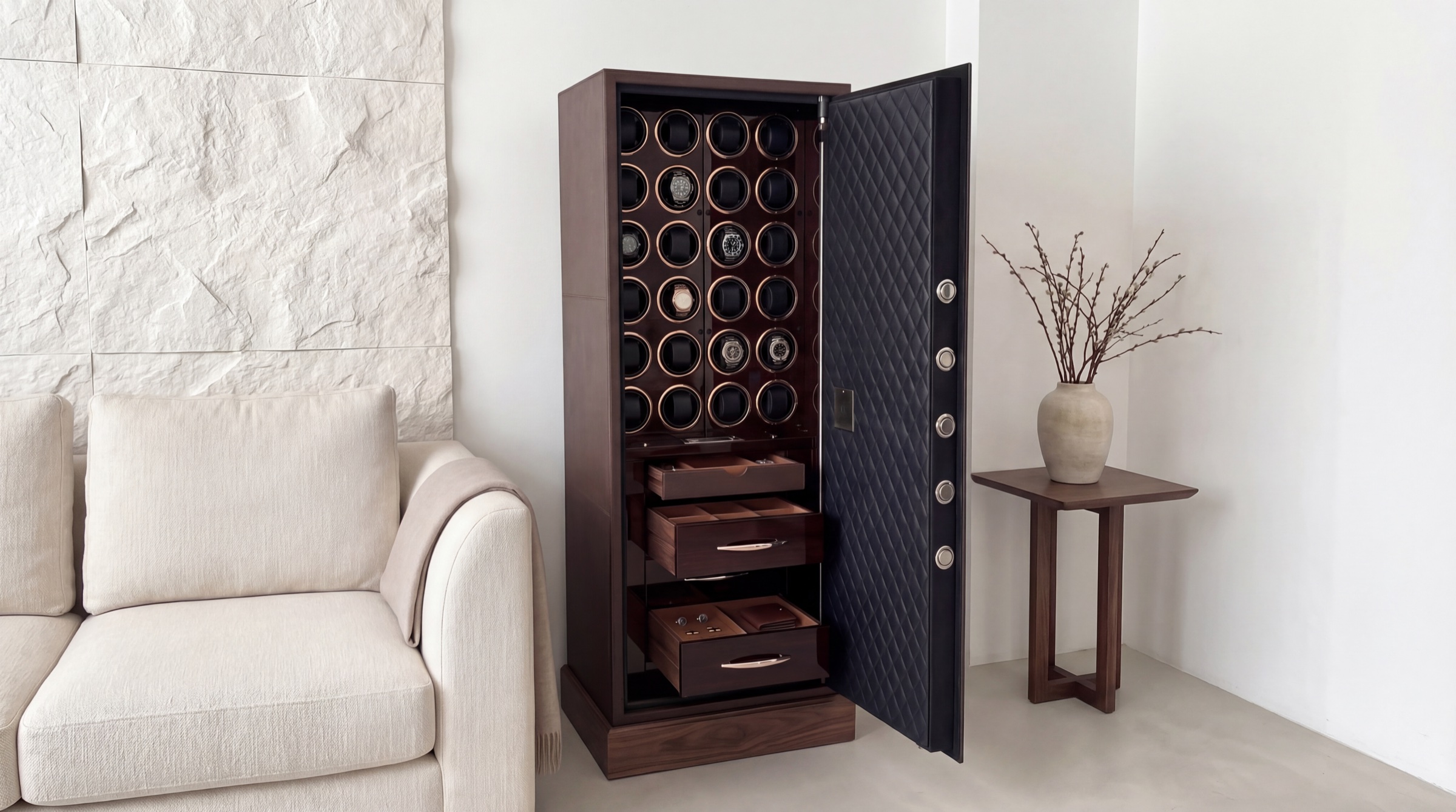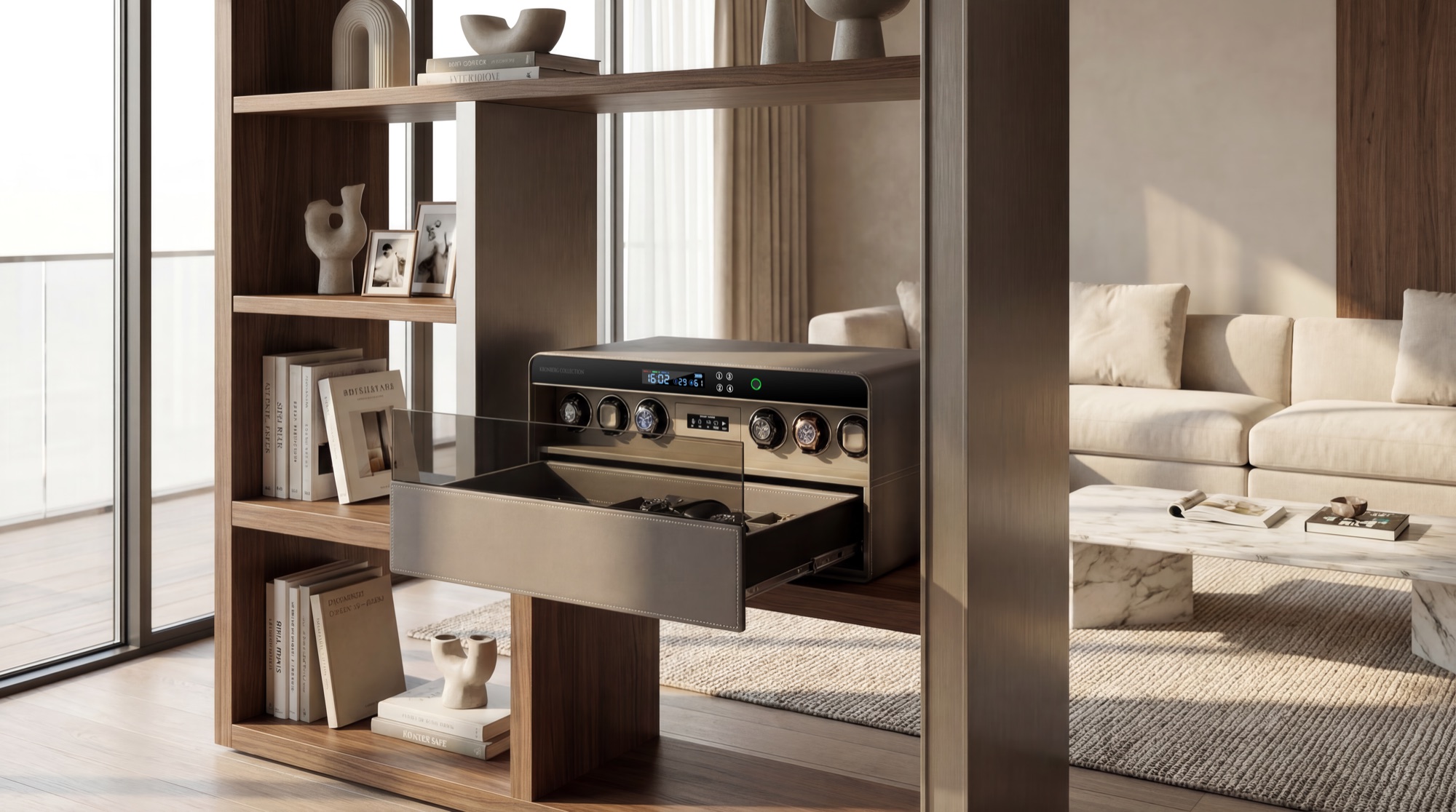
No — a quartz watch does not need a watch winder, and a manual-wind watch gains nothing from one either. A watch winder is only useful for automatic watches with a self-winding rotor, which draw their power from movement on the wrist. Quartz runs on a battery, manual watches are wound through the crown, and rotating either type in a winder neither charges nor protects the movement — at best it does nothing, at worst it spins the mechanism for no reason.
This distinction is the single most important question to settle before you buy a watch winder. Once you can tell the three movement types apart, you save money, avoid pointless wear, and end up placing only the watches that genuinely benefit into the winder.
A quartz watch takes its energy from a battery or accumulator cell, not from motion. The quartz oscillator keeps time whether the watch is still or moving, so a quartz watch winder simply turns the case in circles to no effect — the battery drains at the same rate as if the watch were resting in a drawer.
The edge cases are solar and kinetic quartz. Solar movements need light, not rotation, and a dark winder or safe does nothing for them. Kinetic models (such as Seiko Kinetic) do charge a capacitor through a rotor, so motion can keep them running — but a conventional winder is rarely necessary, and most makers do not recommend one.
A pure manual-wind watch also does not belong in a winder. It has no rotor to convert rotation into winding energy — the mainspring is tensioned solely through the crown. Place a manual watch in a winder and it spins the case without winding anything. That is useless, and in continuous operation it cycles the movement for no purpose.
A manual watch typically runs 36 to 48 hours, with some modern movements lasting considerably longer. If you wear it regularly, you give it a few turns of the crown each morning — part of the ritual and the care. For more on the mechanics, see our guide to watch winder maintenance.
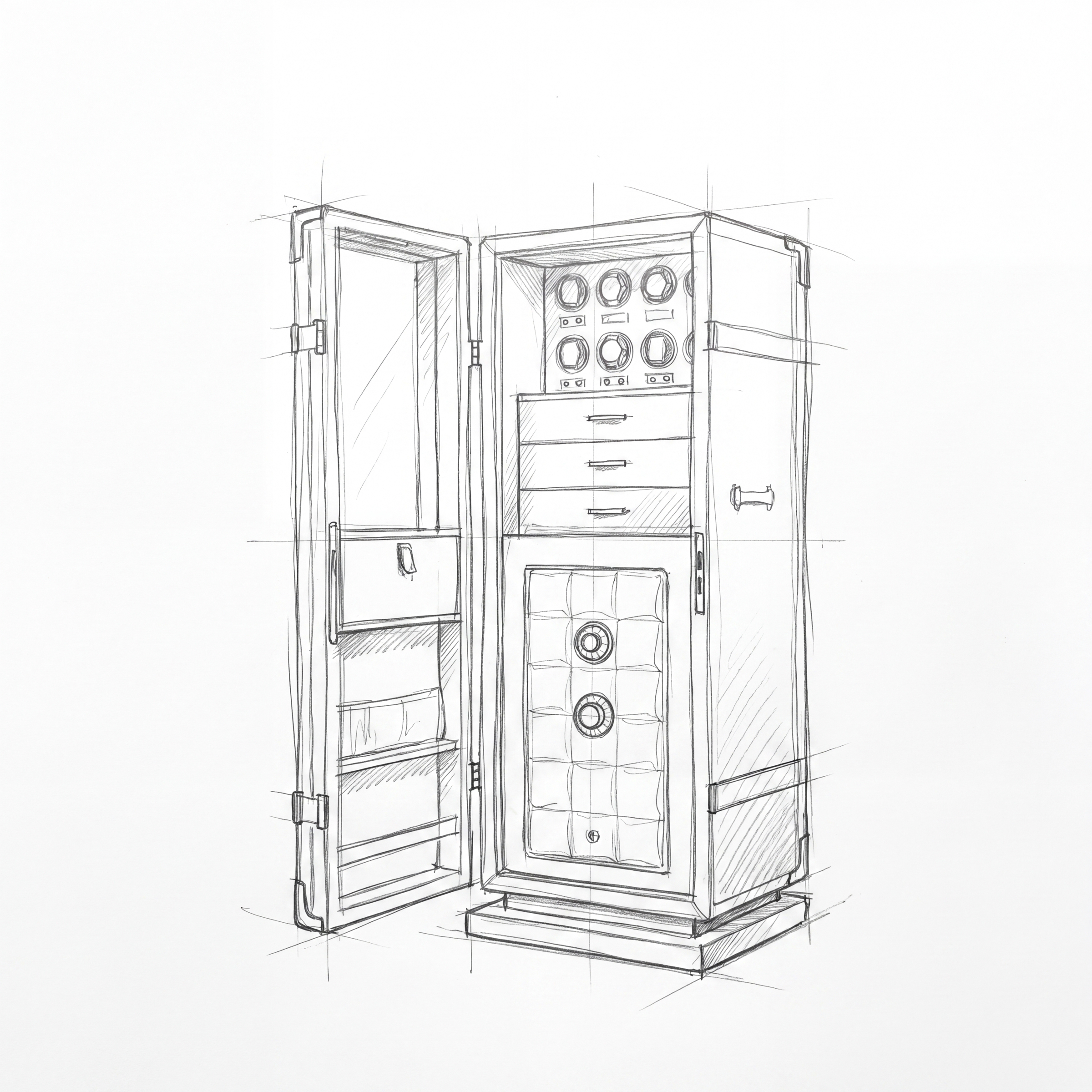
Only automatic watches with a self-winding rotor benefit. If you wear an automatic only occasionally, a winder keeps it ready to wear, so the date, day, moon phase or perpetual calendar never has to be reset. It is precisely the complications that are tedious to re-adjust where a winder earns its place.
We explain how the rotor generates power in how a watch winder works. At Kronberg Collection every winder module is individually programmable for turns per day (TPD) and direction — you will find the right values in our TPD reference table.
| Movement type | Power source | Winder useful? |
|---|---|---|
| Automatic (rotor) | Motion on the wrist | Yes — keeps rarely worn watches ready |
| Manual wind | Crown by hand | No — no rotor, no benefit |
| Quartz (battery) | Battery / cell | No — motion charges nothing |
| Solar quartz | Light | No — needs daylight, not rotation |
| Kinetic / auto-quartz | Rotor charges capacitor | Rarely — usually not recommended |
It does little acute harm, but it serves no purpose. For a quartz watch, continuous turning does not shorten battery life — yet it brings no advantage at all. For a manual-wind watch, the movement runs dry inside the winder without the mainspring ever being tensioned, and over years that permanent idling of the mechanism is not desirable.
"A watch winder replaces the wrist — and only an automatic movement notices the difference."
We address the common myths about so-called winder wear in are watch winders bad for your watch?. In short, a properly set winder does not harm an automatic — it merely substitutes for the motion that wearing would otherwise provide.
Count only the automatic watches you do not wear regularly — that is the number of modules you need. Quartz and manual watches sit alongside them, stored flat and dust-free in a drawer or on a cushion.
At Kronberg Collection we combine winders and fixed resting trays in one piece of furniture, so manual and quartz watches sit protected beside the rotating automatics — as in the integrated builds we describe under built-in watch winders.
Good storage separates by movement type: automatics into the winder, manual and quartz into protected trays. Our 6-module watch winders are programmable module by module, so each automatic gets its own TPD and direction setting.
For a growing, mixed collection it pays to plan a bespoke layout of rotating and resting positions. Use the configurator to combine modules and trays to your inventory, or speak directly with our atelier via the contact page. That way only what wants to move actually moves.
No. A quartz watch runs on a battery and is neither charged nor protected by motion, so a watch winder has no effect on it whatsoever.
You can, but it does nothing useful: a manual watch has no rotor, so turning the case never tensions the mainspring. Wind it by hand through the crown instead.
Only automatic watches with a self-winding rotor benefit, especially those with a date, calendar or moon phase that you wear rarely and would rather not keep resetting.
No, provided the winder and TPD are set correctly. The winder simply replaces the motion of the wrist and keeps the movement ready without overwinding it.
Solar watches need light rather than rotation and should not sit permanently in a dark winder. Kinetic watches do charge via a rotor, but a conventional winder is usually unnecessary and rarely recommended.
Count only the automatics you wear rarely — each needs one module. At Kronberg Collection the 3-, 6- and 12-module winders are programmable per module for TPD and direction.
Book a no-obligation personal consultation with a Kronberg advisor. We'll guide you through every option.