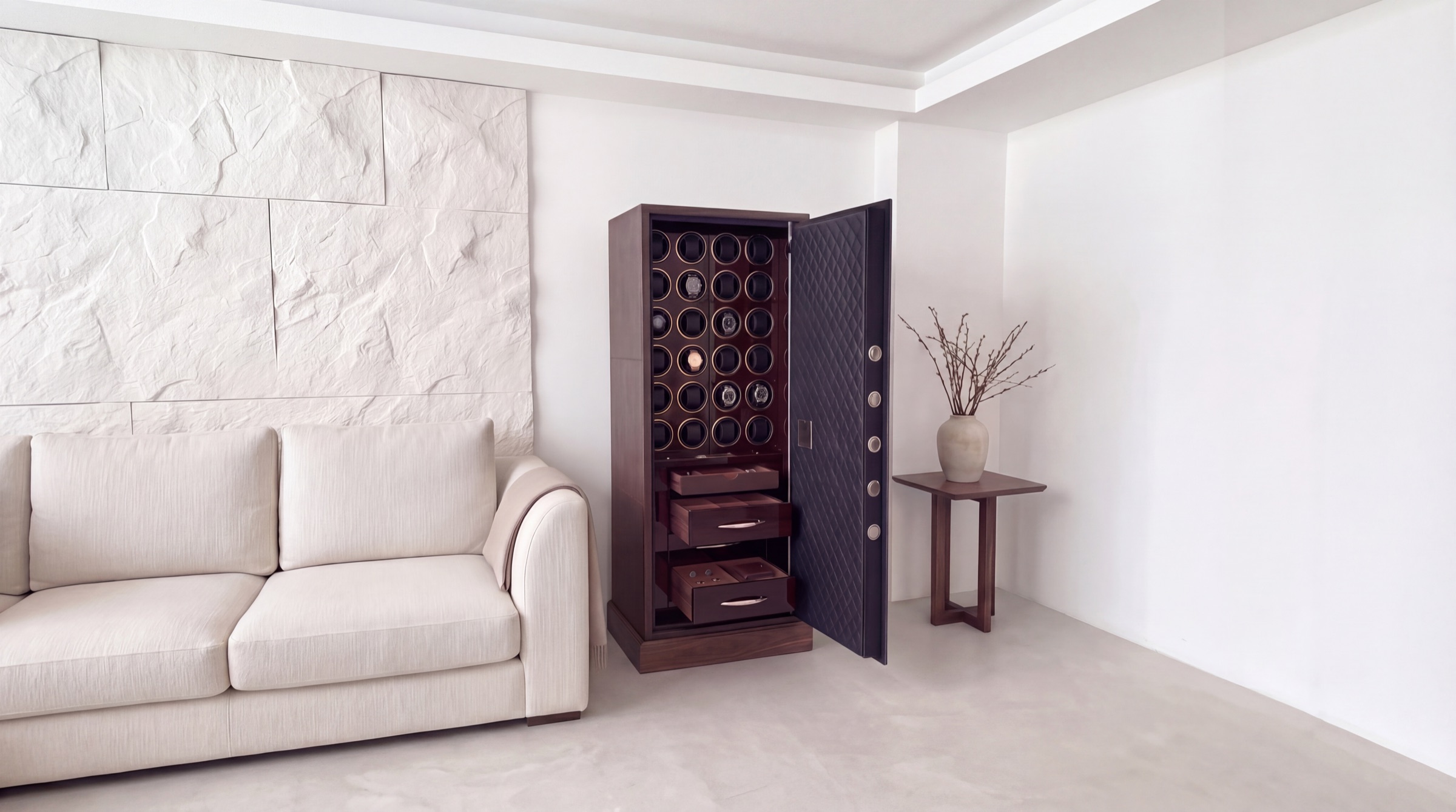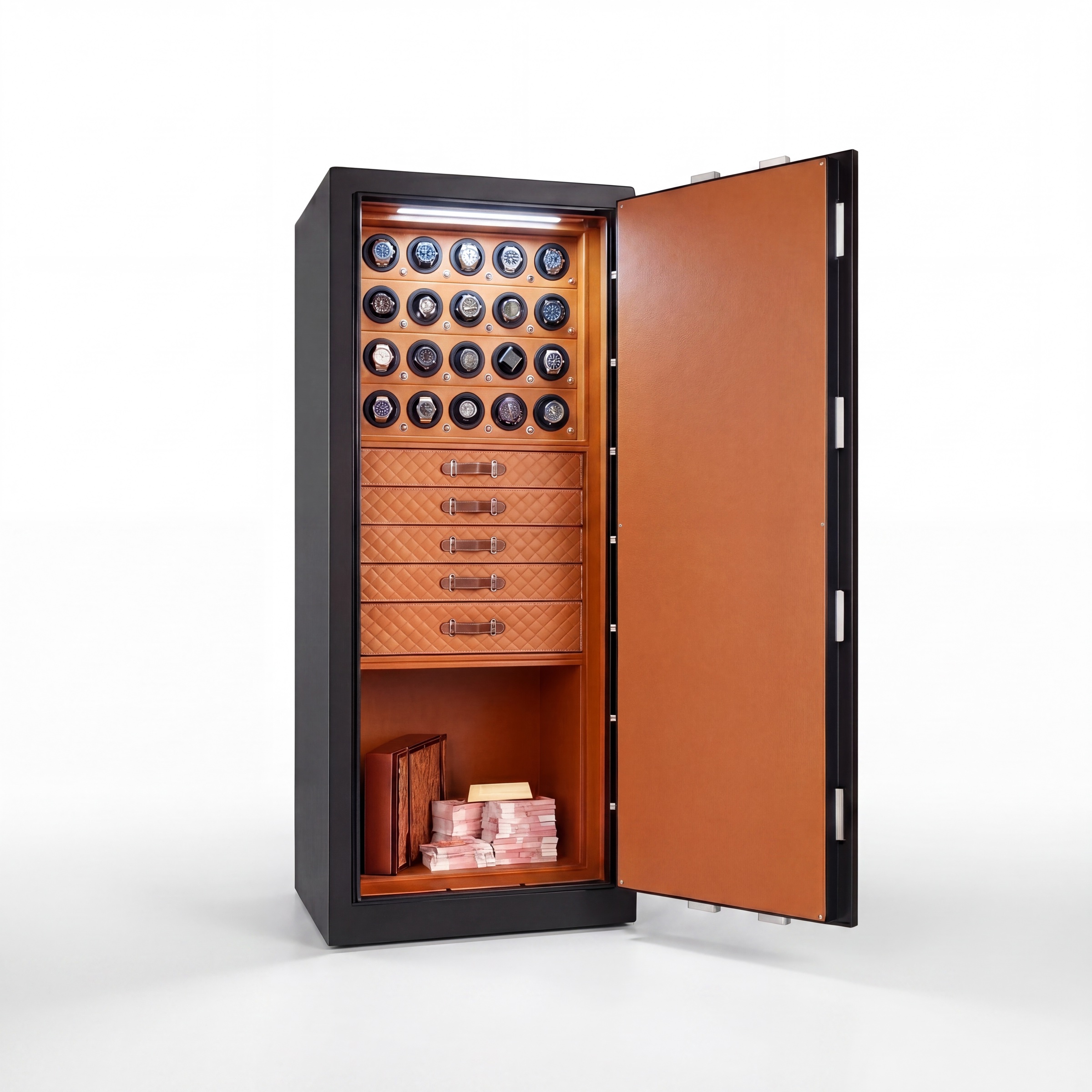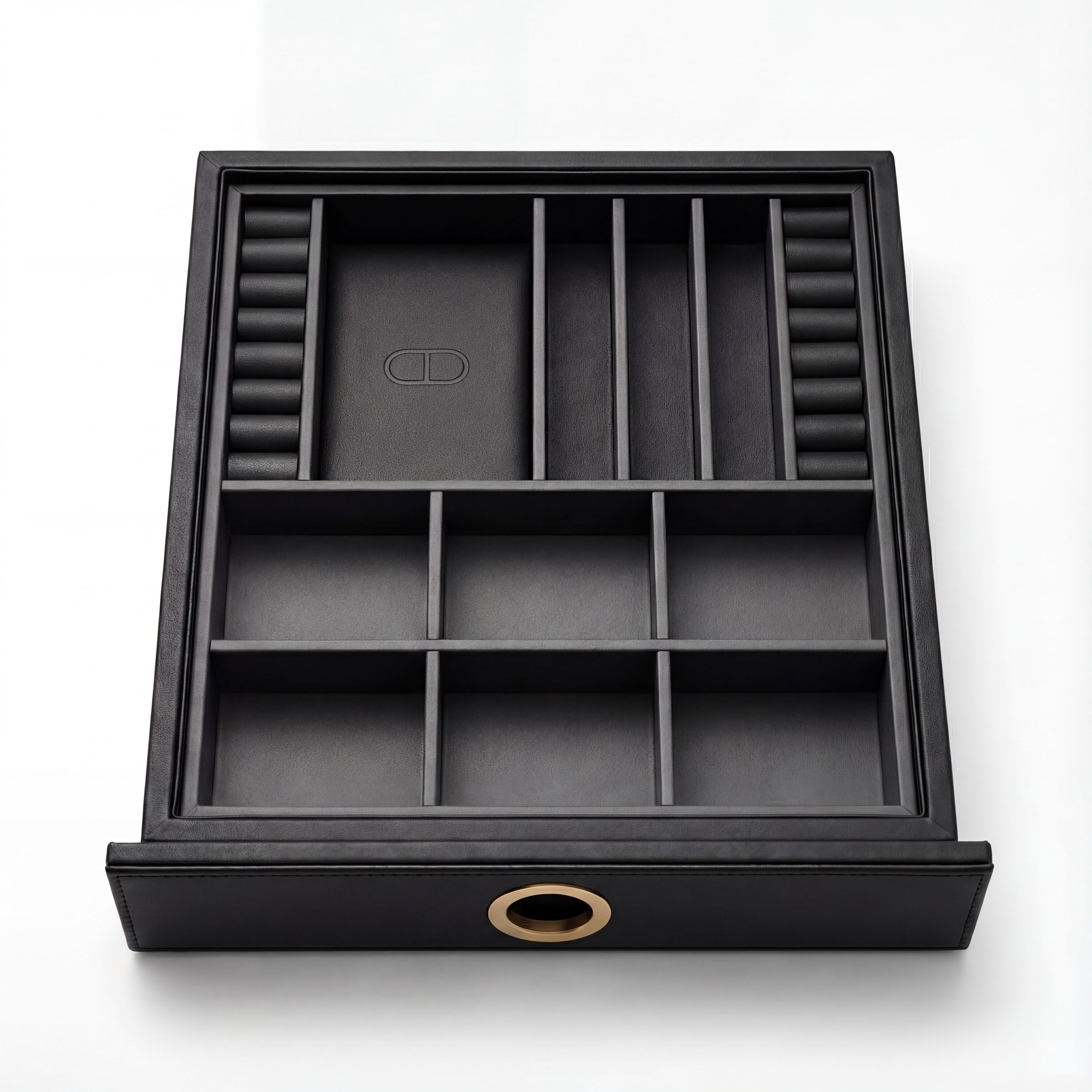
Burglary gets the headlines. It is dramatic, immediate, and generates the kind of news stories that prompt action. Fire destroys differently — silently, completely, and without giving you an opportunity to respond. A well-secured safe can resist a professional burglary for long enough that the thief gives up or the police arrive. A safe without fire protection will not resist a building fire for long enough to matter, unless that fire protection was specifically engineered and certified.
For watch collectors, this distinction matters more than for most. Watches are dense concentrations of precision engineering and irreplaceable value. Understanding what fire does to a watch — and what a fire-rated safe does to protect against it — is essential knowledge for anyone making a serious safe decision.
Modern mechanical watches are constructed from materials with varying thermal tolerances. The lubricants used in a watch movement begin to degrade at temperatures above approximately 50 to 60 degrees Celsius. At 80 to 100 degrees Celsius, synthetic lubricants break down rapidly, causing increased friction, accelerated wear, and ultimately movement failure. Mainsprings and hairsprings can lose their temper at elevated temperatures. Synthetic sapphire crystals are highly resistant to heat, but mineral glass crystals crack under rapid thermal cycling. Enamel dials can survive extraordinary temperatures but are highly vulnerable to moisture damage from steam generated by fire suppression.
The practical conclusion: a watch exposed to the interior conditions of even a moderate building fire — where temperatures regularly exceed 500 to 800 degrees Celsius — will be irreparably damaged within minutes. The case may survive. The movement will not. The insurance payout is cold comfort for a piece that cannot be replaced at any price.
EN 1047-1 is the European standard for fire-resistant data and document storage containers. It covers two categories: paper documents (which char at 170°C) and electronic data media (which degrade at 52°C). For watch collectors, the relevant performance criterion is the interior temperature — the safe must maintain an interior below 52°C while the exterior is exposed to standardised fire conditions.
The testing protocol subjects the safe to a furnace environment with external temperatures rising to approximately 1,000 degrees Celsius, maintained for either 30, 60, or 120 minutes depending on the rating class. After the burn period, the safe is dropped from a height to simulate structural collapse, then subjected to a second burn. The interior temperature and humidity are monitored throughout. A safe that maintains interior conditions below the threshold for the full test duration — and survives the impact — earns its EN 1047-1 certification for that time class.
The relevant time classes for residential watch safe applications are typically S 30 P (30 minutes) and S 60 P (60 minutes). In most residential fires, structural collapse or fire service intervention occurs within 30 to 45 minutes — making a 60-minute rating essentially conservative for most scenarios. For properties with particular fire risk profiles, or for collections of extraordinary value, the 120-minute rating provides the maximum available protection.
This is the most important technical point in this article, and one that trips up many buyers. EN 1300 (burglary resistance) and EN 1047-1 (fire resistance) are entirely separate certifications, testing different properties of a safe's construction. A safe that holds a Grade II EN 1300 certification has demonstrated burglary resistance. It has not demonstrated fire resistance. A safe with a 60-minute fire rating has demonstrated fire resistance. It may or may not have any burglary resistance certification.
The materials required for each function are different and sometimes in tension. Burglary resistance requires dense, hard, thick steel. Fire resistance requires insulating materials — typically concrete, calcium silicate, or a proprietary fire-resistant compound — that absorb and retard heat transfer. A safe that combines both certifications is more complex and heavier than one with either certification alone — but it is the only type of safe that provides meaningful protection against both threat categories simultaneously.
When evaluating any safe, check both certifications independently. The presence of one does not imply the presence of the other.
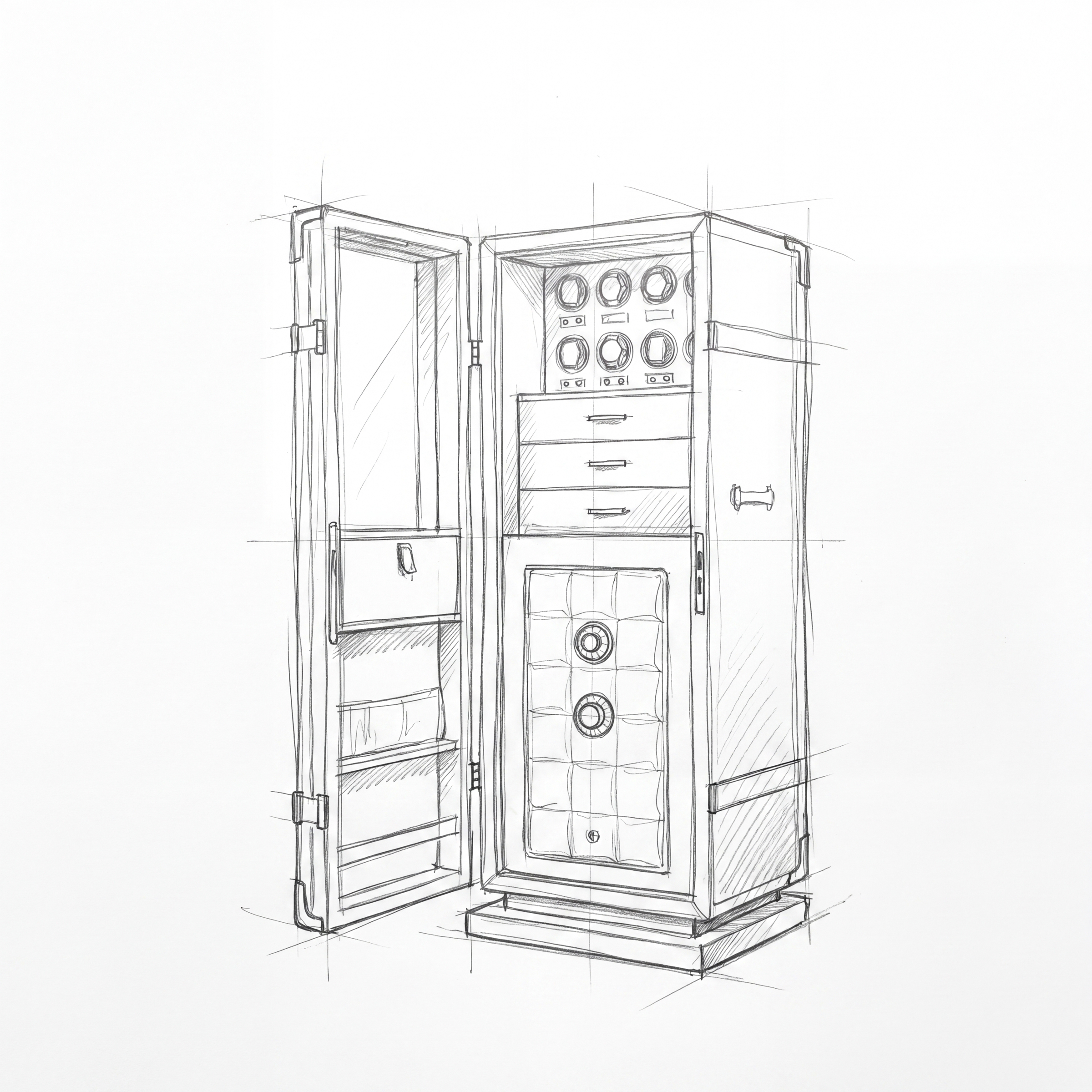
Standard Kronberg safes are built as heavy steel bodies with a high-security lock. Fire protection is available as an optional specification, adding a layer of fire-resistant compound to the door and body of the safe. The level is agreed with you depending on your requirements and budget. The addition of fire protection increases the weight of the safe by approximately 15 to 25% and the price by a comparable margin. We are transparent about these costs and encourage clients to consider them in the context of their insurance requirements and risk assessment.
Many Swiss specialist valuables insurance policies include fire coverage as standard, but require a fire-rated safe as a condition of the fire-specific coverage. Policies vary significantly in their requirements — some specify EN 1047-1 certification, others require a minimum resistance time, and others simply require a "fire-resistant safe" without specifying the certification. We recommend requesting the specific policy wording from your insurer and confirming with them which requirements apply before commissioning your safe.
The cost of fire protection — typically CHF 2,000 to CHF 5,000 additional for a standard residential installation — is almost always recoverable through reduced insurance premiums or wider coverage, over the life of the safe. We are happy to provide the full technical specification of your safe for your insurer.
"A burglar can take one watch. A fire takes everything. The question is not whether fire protection is worth it — it is whether the risk is acceptable without it."
Yes, because a building fire reaches 500 to 800 degrees Celsius and will irreparably damage a watch movement within minutes, while most burglary-rated safes offer no certified fire resistance at all. Fire protection is the only way to guard against the threat that destroys an entire collection silently rather than one watch at a time.
A mechanical watch's lubricants begin to degrade above roughly 50 to 60 degrees Celsius and break down rapidly between 80 and 100 degrees Celsius, causing increased friction and eventual movement failure. The case may survive a fire, but the movement and lubricants will not.
EN 1047-1 is the European standard for fire-resistant storage containers, requiring the safe to keep its interior below 52 degrees Celsius while the exterior is exposed to furnace temperatures of about 1,000 degrees Celsius for 30, 60, or 120 minutes. The safe is also dropped to simulate structural collapse and then burned again before earning its certification.
No, EN 1300 (burglary resistance) and EN 1047-1 (fire resistance) are entirely separate certifications that test different properties, so a Grade II burglary safe has not demonstrated any fire resistance. Always check both certifications independently, because the presence of one does not imply the other.
Adding certified fire protection typically costs between CHF 2,000 and CHF 5,000 extra for a standard residential installation and increases the safe's weight by approximately 15 to 25 percent. This cost is usually recoverable over time through reduced insurance premiums or wider fire coverage.
Book a no-obligation personal consultation with a Kronberg advisor. We'll guide you through every option.