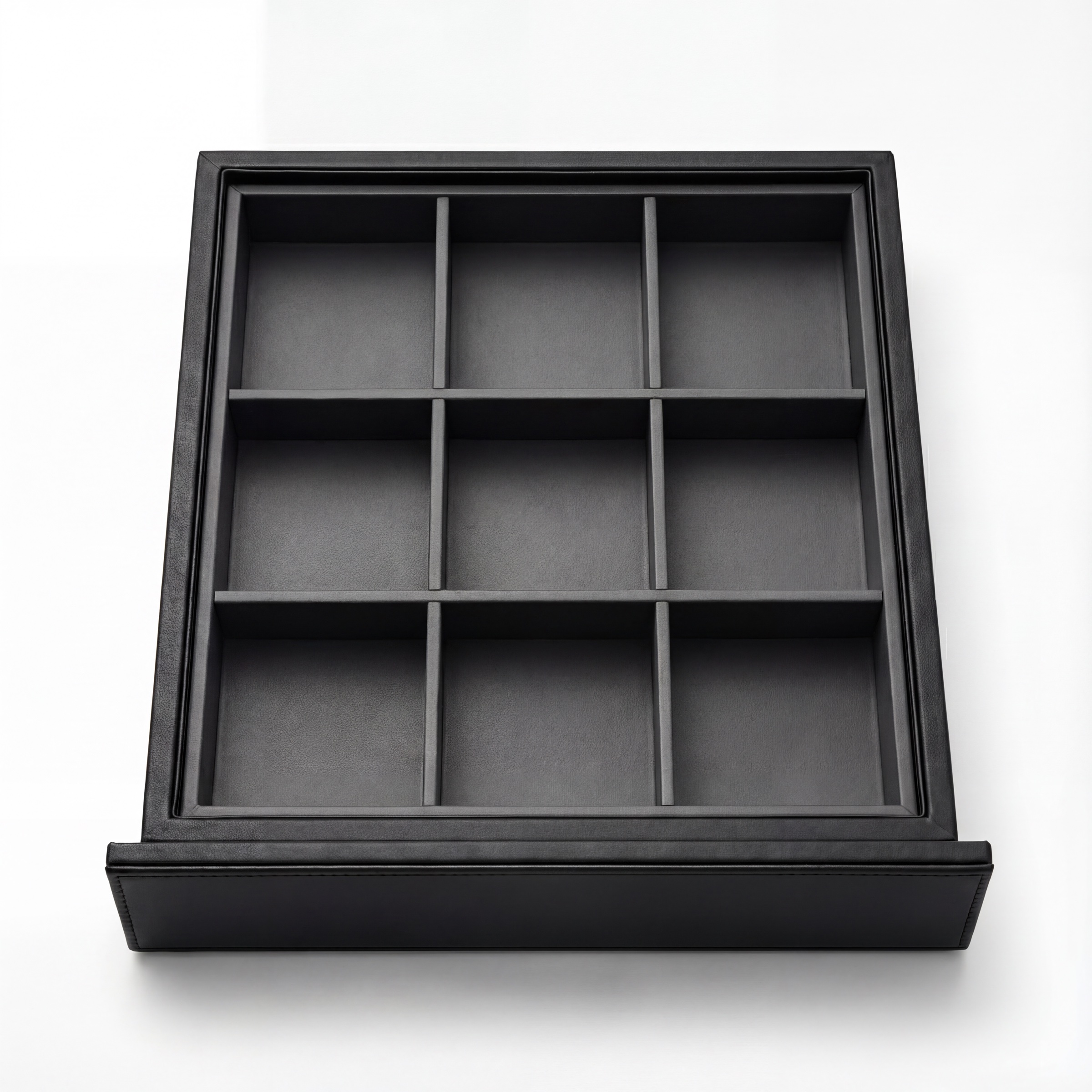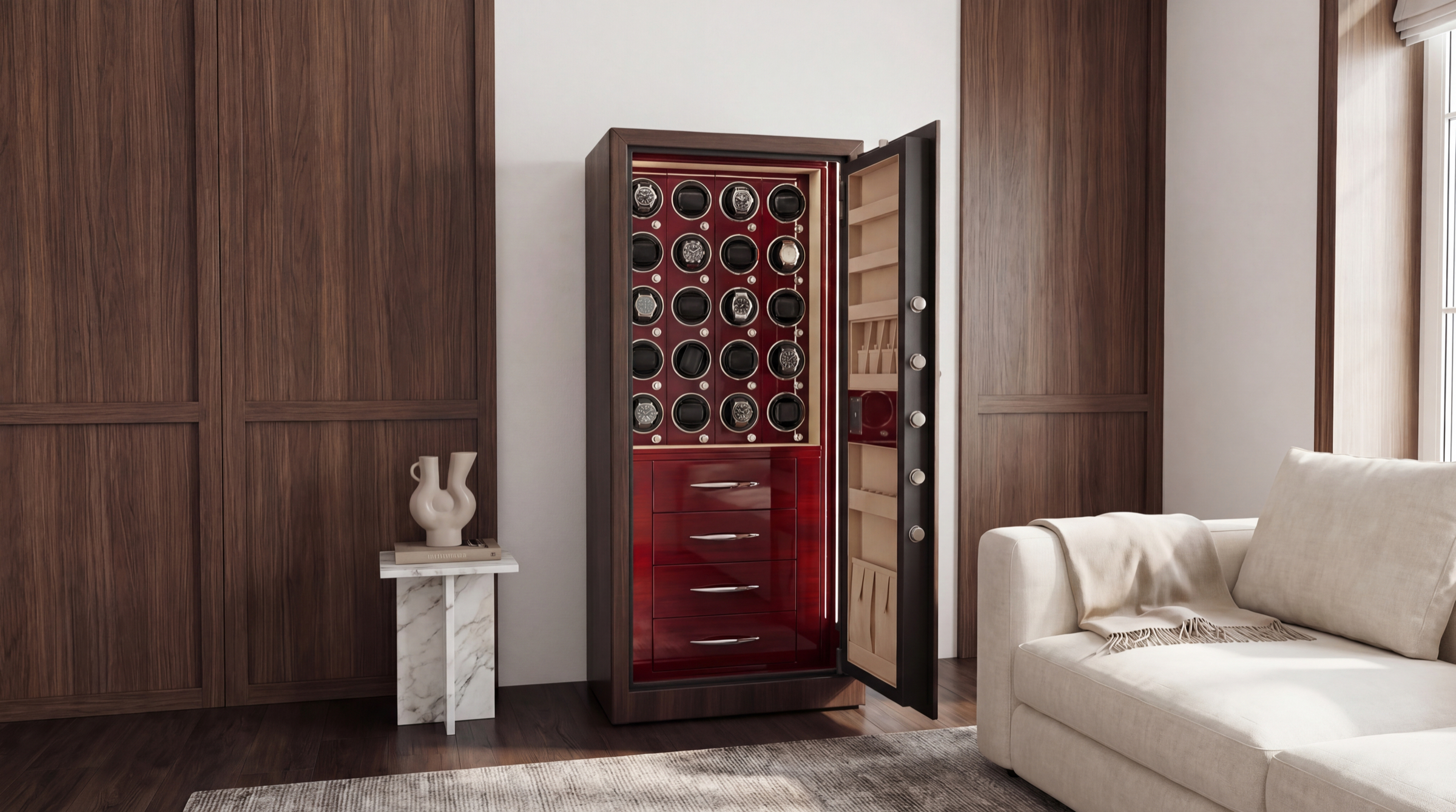
Protecting watches from UV light and dust comes down to one principle: store them dark, closed and sealed — a lined safe or a tight-closing box does far more than an open display case by a window. Ultraviolet light slowly bleaches dials and lume over years, while fine dust acts as an abrasive on the bezel, pushers and movement. Effective watch UV protection and good dust protection together preserve colour, value and function at the same time.
Daylight — and many LED sources too — carries ultraviolet energy that breaks down organic pigments molecule by molecule. The result is a slowly faded watch dial: black turns brown (the prized "tropical dial"), deep blue washes out, and white drifts toward a yellowing cream.
Lacquered and printed dials are especially vulnerable, as is older luminous material. Tritium and early Super-LumiNova lose their even colour under sunlight, which collectors may read as desirable patina or as damage depending on the reference. Where that line falls is something we explore in our guide to patina versus damage.
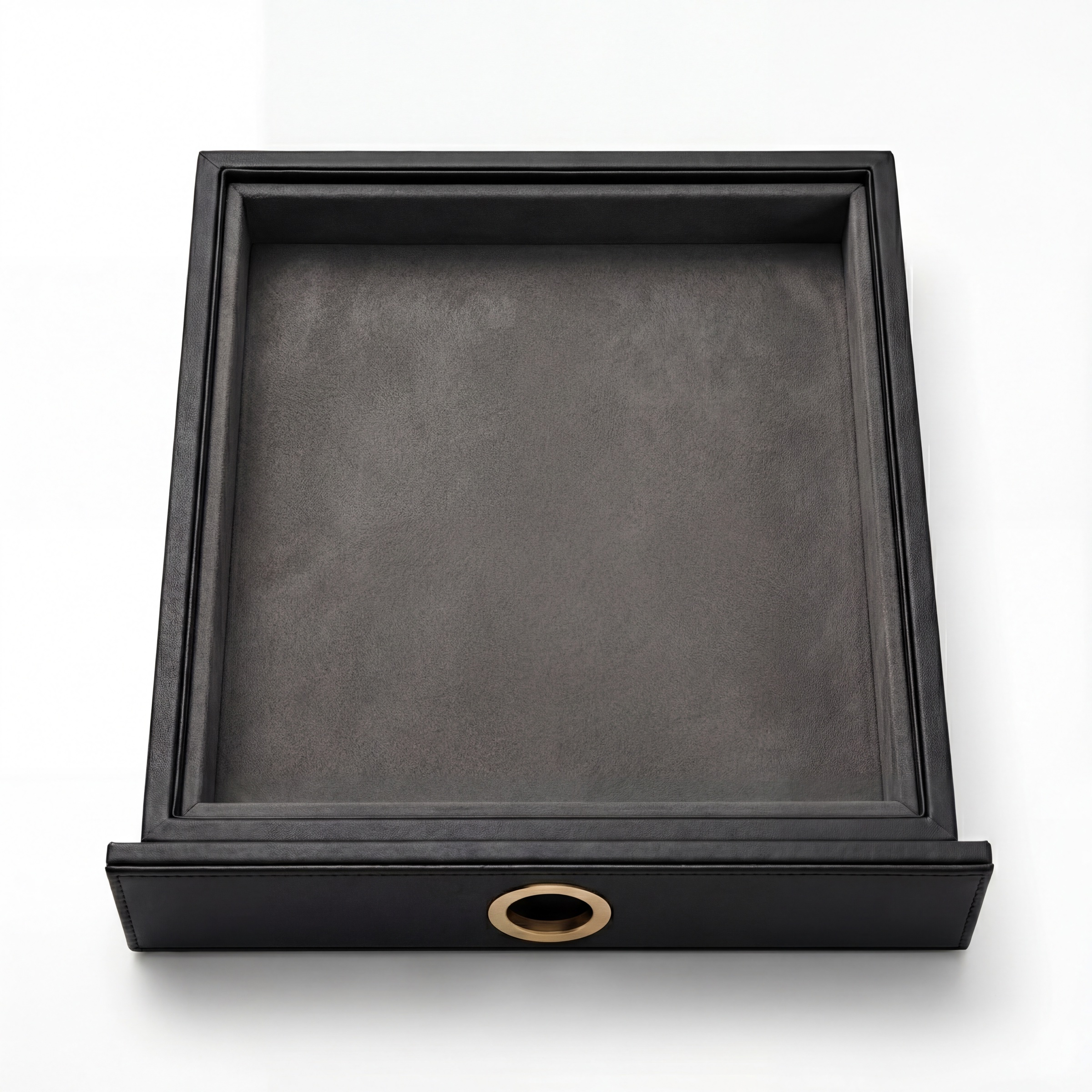
Dust is a mechanical problem, not a cosmetic one. The finest particles work into the pushers, the bezel edge and the crown, where they behave like sandpaper against gaskets and finished surfaces. If dust reaches the movement when a case is opened, it binds with the lubricating oil and accelerates wear.
A dust-free environment lengthens the interval between services and keeps gaskets supple. Paired with the right humidity for watch storage, it creates conditions in which a collection stays stable for decades.
The most effective measure is also the simplest: dark, enclosed storage. A closed safe or a lined drawer shuts UV out entirely and keeps the air virtually dust-free.
"The finest UV-filter glass in the world is a closed door."
A glass display shows the collection but exposes it to constant light. We advise keeping the everyday pieces protected inside the safe and rotating only a few watches into view — ideally behind UV-filter glass and never in direct sun. Our Grand Cabinet shows how security and visibility combine, with enclosed, light-tight compartments.
The table below compares the common storage formats for UV and dust protection.
| Storage type | UV protection | Dust protection | Best for |
|---|---|---|---|
| Open display by a window | Very low | Low | Not recommended |
| Glass case with UV-filter glass | Moderate | Moderate | Short-term display |
| Lined drawer | High | Moderate to high | Everyday pieces |
| Closed watch safe | Complete | High | Valuable collection, long-term |
Everyday watches benefit from protection too. Rather than leaving a worn piece face-up on a windowsill nightstand, place it in a closed compartment or a watch winder inside the safe. That keeps an automatic wound while storing it dark and dust-free.
Wipe the case with a dry microfibre cloth before putting it away to lift loose dust and skin oils. This short habit stops particles from migrating into the gaps and gaskets overnight.
UV and dust protection address light and particles, not air moisture. In humid rooms, basements or lakeside homes, climate control is also worth adding to prevent corrosion and mould on leather straps. When that investment makes sense is covered in our piece on the climate-controlled watch safe, and how to keep watches in top condition over time is detailed in our guide to long-term watch storage.
At Kronberg Collection we line every safe and Grand Cabinet to be light-tight and build the interior modules to measure — from the number of bays to the choice of material. Ask us for personal advice through our contact page, or specify your own safe in the configurator.
Sunlight is the most aggressive source, but many LED and halogen lights also emit UV that can fade dials and lume over years. Constant bright display or shop lighting should therefore be avoided just as you would avoid direct sun.
It depends on the reference — on some vintage models an evenly browned bezel or tropical dial raises collector value, while on modern watches fading is usually seen as a flaw. If you want to preserve the original state, store the watch consistently in the dark.
UV-filter glass cuts the harmful fraction substantially but does not block it entirely, and it does nothing about heat or residual light. For valuable pieces, closed dark storage in a safe remains the safest choice.
Wipe a worn watch with a dry microfibre cloth before storing it; inside a closed, lined safe almost no dust then accumulates. A weekly visual check of the pieces in regular rotation is generally enough.
Any closed safe blocks UV completely because no light gets in; dust protection depends on the lining and the door gasket. Kronberg Collection's lined safes are built precisely for this purpose.
Book a no-obligation personal consultation with a Kronberg advisor. We'll guide you through every option.